Portobello Beachfront Flat or City Centre Self-Catering: Which Edinburgh Actually Suits You?
One option puts you within strolling distance of the Royal Mile, the Castle esplanade, and that bagpiper performing under your window at 11 p.m. The other drops you four miles east along the coast, where the Firth of Forth pulls at the horizon and the loudest thing on the high street is usually a wheelie bin. I've spent years walking into both kinds of apartments as part of my work — clipboard in one hand, sometimes a suitcase in the other — and the gap between them runs wider than the postcode suggests. The trade-off is rarely about price per night alone. It's about the Edinburgh you actually want to wake up in.
The Commute Reality: That Four-Mile Gap Is Smaller Than It Sounds — Until You're Dragging a Case
The headline number is simple. Portobello and Joppa sit roughly three to four miles east of Edinburgh city centre along the Forth coastline, and Lothian Buses Service 26 connects both with Princes Street and Edinburgh Waverley in about twenty to thirty minutes, give or take traffic and the time of day. That's the clean figure. The footnote is everything around it, and the footnote is where most first-time visitors get caught.
In a city-centre flat, you can usually walk out of the building and into the Old Town within fifteen minutes. The pavement outside is generally level granite slabs. Your case rolls. You stop for a pastry at a café that opened six months ago and is already famous. In a Portobello or Joppa beachfront rental, the same case has to negotiate a different journey. It needs to get down to the bus stop first. If you're on a first-floor walk-up with no lift — common in the older tenement conversions along the Prom — and your host hasn't mentioned the stair turn, you find that out before you've even left the postcode. The bus itself is reliable and well-signed. The drivers are unfailingly patient with luggage. But you do still have to make the transfer, twice a day, in whatever the Forth is throwing at the windows.
The commute isn't really a question of distance. It's a question of how many transitions between pavement, door, vehicle, and cobblestone you're willing to repeat on a four-night break.
What changes the calculation is who you're travelling with and why. A solo visitor here for a Fringe run will probably resent every extra bus journey by the third night. A family with children who want sandcastles and a Swim Centre trip will probably resent not having the beach. Two mobility-impaired guests will need a flat with parking, ground-floor access, and a lift — and that combination is easier to find in a small block of Joppa conversions than in a listed Old Town tenement with a spiral stair. This is where the postcode stops being abstract.
Coastal Calm vs Urban Pulse: Two Different Heartbeats
The neighbourhoods operate on different clocks. Listen to them for a minute and you'll hear it.
In a city-centre flat near Grassmarket or New Town, the soundtrack is layered. Refuse collection at seven. A delivery van at eight. The coffee grinder at nine. Tourists laughing on the cobbles below from ten until late. You trade quiet for proximity, and you accept that "quiet hours" are a polite suggestion made to a city that doesn't much care. In a Portobello high-street flat, the morning soundtrack is gull cry, the rustle of someone walking a dog along the Prom, and the slow rattle of the 26 pulling into the stop at the end of the road. Even on a Saturday in July, the loudest thing on Portobello High Street is usually the bus pulling away.
The texture of the day is different too. A city-centre stay tends to be vertical: up to the Castle, down to Holyrood, sideways to a museum, then up again for a rooftop bar. Your feet take the punishment. A Portobello stay tends to be horizontal: along the Prom, out to the Swim Centre and the Victorian Turkish baths, along the sand at low tide, into the independent shops on the High Street for a fish supper, and back. Your lungs take the punishment — in a good way. The light is different. The light in Portobello is the kind that bounces off the water and makes even an unremarkable kitchen look like a film set around 7 p.m. in midsummer.
| Parameter | Portobello/Joppa beachfront | Edinburgh city centre (Old Town / New Town) |
|---|---|---|
| Typical wake-up soundtrack | Gulls, surf, the 26 bus | Refuse truck, deliveries, street musicians |
| Walking time to main sights | 20–30 min by bus (Service 26) to Princes Street | 5–15 min on foot to most major attractions |
| Pavement quality on arrival route | Mostly level tarmac; some tenements lack lifts | Often cobbled; some Old Town closes have uneven setted surfaces |
| Beach access | Immediate or one block | Requires a 20–30 min bus ride |
| Supermarket access | Several within 5 min walk on High Street | Express formats nearby; larger stores a short walk |
| Parking | Often available on-street or with property | Restricted zones, paid permits, very limited |
| Nightlife within walking distance | Pubs and bistros on the Prom; quieter after 11 | Late-night bars, clubs, theatre, festivals on doorstep |
| Best for | Families, beach lovers, returning guests, mobility-conscious travellers wanting parking | First-time visitors, festival-goers, walkers, late-night socialisers |
The row that surprises most guests is parking. If you're arriving with a car, the calculus shifts immediately. Edinburgh city centre operates a Controlled Parking Zone with strict rules for visitors. Portobello and Joppa typically offer free or much cheaper on-street parking, and beachfront conversions frequently come with a private space. For guests travelling from further north in Scotland, that single detail can outweigh a thirty-minute bus ride.
The Licensing Landscape: What STL Regulations Actually Mean for Your Booking
This is the section most comparison pieces skip, and it's the one I think matters most to anyone booking either option in 2025. Every short-term self-catering property in Edinburgh — coastal flat, beachfront cottage, Old Town pied-à-terre, New Town duplex — operates inside the same regulatory net.
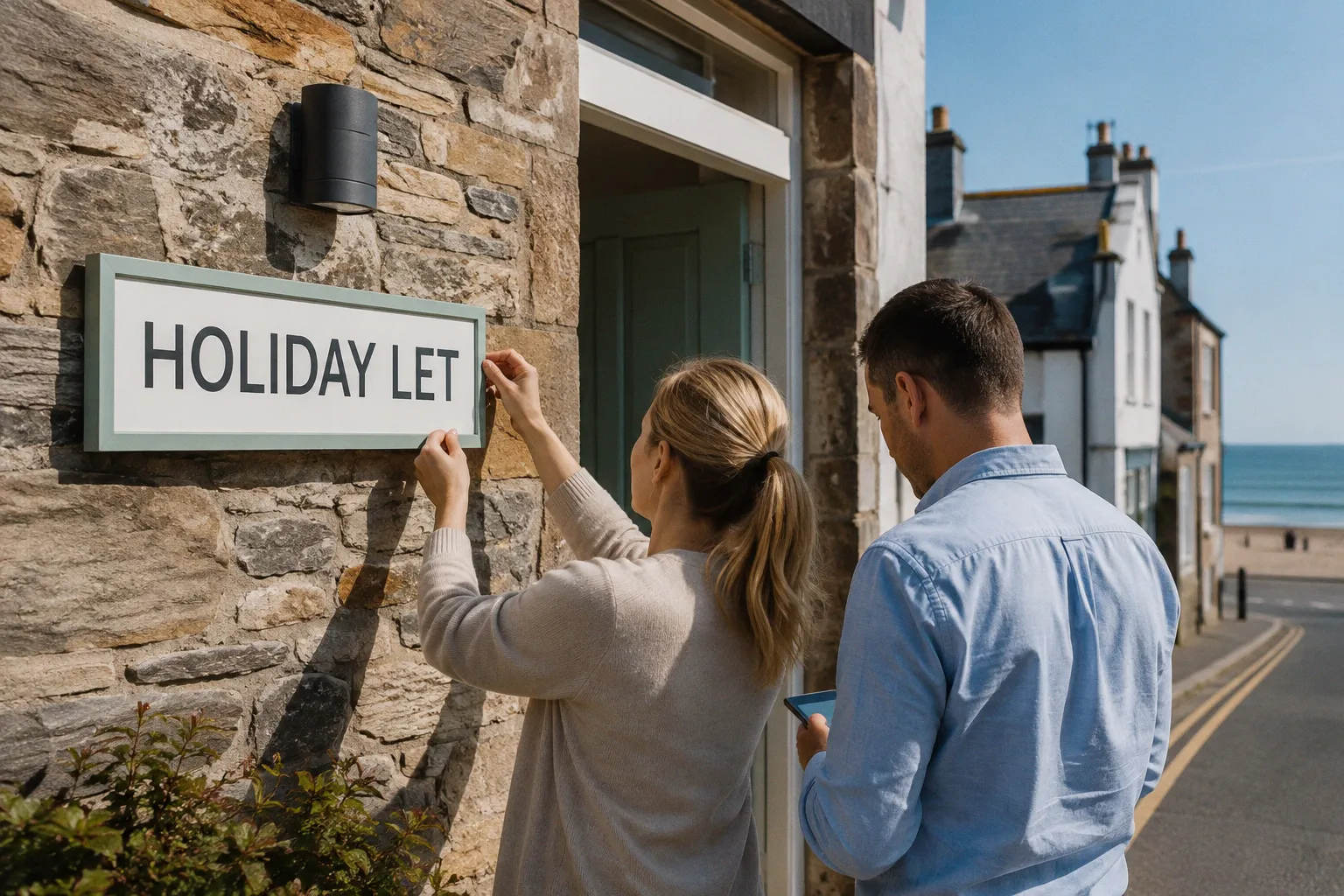
The Civic Government (Scotland) Act 1982 (Licensing of Short-term Lets) Order 2022 brought every short-term self-catering operator in Scotland into a licensing regime. The City of Edinburgh Council boundary was designated a Short-Term Let Control Area on 5 September 2022. Any host operating before 1 October 2022 was required to submit a licence application before 1 October 2023 to continue trading lawfully while their application was assessed. Operating an existing unlicenced short-term let after the statutory deadlines can attract a fine of up to £2,500.
What that means for you, the paying guest, is practical rather than theoretical. A licenced property has been checked, in principle, for basic safety, fire detection, and the right to operate. A licence number should appear on the listing. If you can't see one, ask. The Council publishes a public register. There is no exemption for "coastal" or "seaside" properties simply because they sit beside the water — Portobello and Joppa are inside the same boundary as Princes Street.
A licence number isn't a quality guarantee. It's a floor. What it tells you is that the property has been through the gate at all.
The reason I bring this up in a comparison piece is that unlicenced properties cluster more densely on certain platforms and in certain categories. Whole-property secondary lets in central tenements have been the focus of much of the enforcement debate, but beachfront flats have also been pulled into the same regime. For a guest choosing between the two, the practical test is the same on either side of the four-mile gap: confirm a current licence, confirm the host's identity, and keep your own record of the booking.
Victorian Charm and Modern Amenities: Reading the Building Before You Book
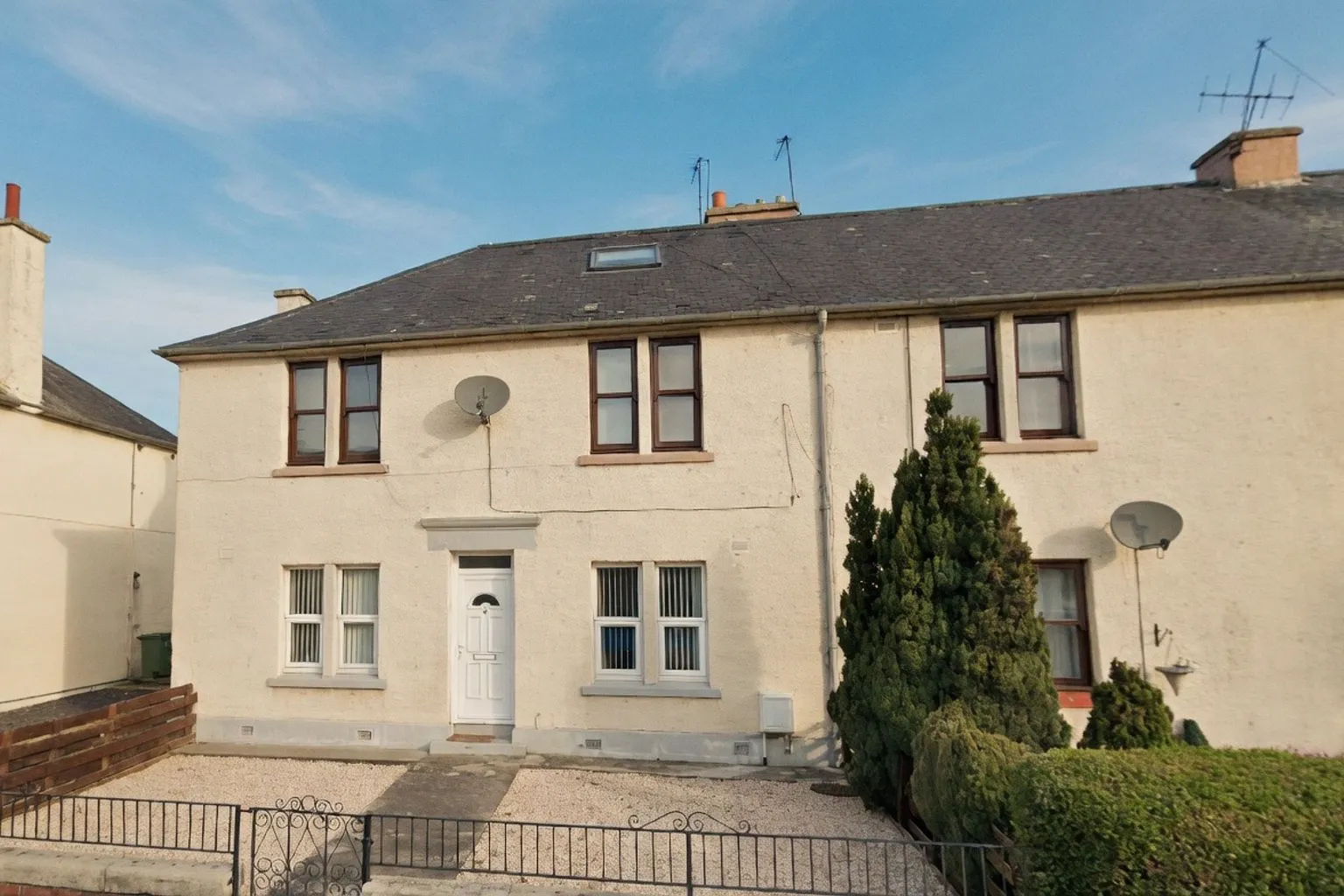
Portobello's housing stock tells the story of its growth. The long sweep of the Promenade is lined with Victorian tenements, most of them three or four storeys, many converted into flats of varying internal quality. Joppa tends slightly older and slightly quieter, with a handful of interwar bungalows and post-war builds sitting closer to the shoreline. Both have their own maintenance quirks.
The Victorian conversions are usually generous in ceiling height and stingy in storage. The kitchen inventory varies wildly. A good one will have a proper oven, an induction hob, a fridge with a separate freezer compartment, cafetière, sharp knives, and a decent pan set. A mediocre one will have a kettle, a microwave, and the lingering optimism of two wine glasses. I check this every time. Water pressure is another giveaway: a beachfront flat that has been refitted within the last five years will usually have a combi boiler with proper flow. An older tenement that hasn't may deliver a thin, sad trickle to the upstairs shower around the same time as the rest of the street. This is not a luxury detail. It is the difference between starting your day and merely surviving it.
The Swim Centre deserves a sentence of its own. Portobello Swim Centre is a working example of a Victorian facility, complete with the Turkish baths that have drawn bathers to this stretch of coast for over a century. If you're booking a Portobello flat and you have even a passing interest in heated pools, steam rooms, and a proper building to wander around in, plan a morning there. It is one of the genuinely distinctive things about staying on this side of the Forth, and it is the kind of detail that makes a coastal stay feel like more than a postcode.
A city-centre flat offers a different inventory challenge. New Town Georgian conversions can be beautiful and brutal in equal measure. The room proportions are usually excellent. The bathrooms are sometimes tucked into a converted wardrobe. The kitchens tend to be smaller but better equipped, because the property has usually been refurbished more aggressively to compete on the platform. Storage for luggage is the most common failure mode in central flats: a guest for four nights does not need a cupboard, but a guest for ten nights absolutely does.
Strategic Booking: When Each Choice Wins
A comparison without a verdict is just two lists. Here's how I'd actually weigh it, guest by guest.
1. You're here for the festivals, the Castle, and one or two key evening shows. Book the city centre. The thirty-minute commute each way will erode your evening energy faster than you expect, and you'll appreciate the door-to-door proximity more than the view.
2. You're travelling with children, a dog, or anyone who needs sand and grass within ten minutes. Book Portobello or Joppa. The beach is the reason you're here, and the High Street handles the rest of the day.
3. One or more guests have limited mobility, including fatigue-based conditions. Book a ground-floor or lift-served flat in either location, but lean coastal if you also need parking and level pavements. Old Town closes and tenement stairs are not friendly to walking aids.
4. You're driving up from elsewhere in Scotland and parking matters. Book coastal. The arithmetic on a four-night stay with a car usually settles the question by itself.
5. You want to mix sightseeing with recovery. This is the genuine trade-off case. A city-centre flat maximises input. A coastal flat maximises output — sleep quality, sea air, lower light pollution, quieter streets. If you're a first-time visitor who'll never come back, prioritise input. If you're a returning guest who already knows the Castle, prioritise the coast.
The honest answer is that neither option is universally better. The honest question is which Edinburgh you actually want to wake up in.
What I would not do, on either side, is book a property without confirming a current STL licence number, asking the host directly about lift access and stair count if it isn't in the listing, and reading the most recent three reviews with attention to the things that matter — water pressure, kitchen equipment, mattress firmness, street noise at night. A glossy photograph is not an assessment. A licence number is a floor, not a ceiling. The four-mile gap between Princes Street and the Portobello Prom will feel much shorter if you've done that bit of reading first.
For my own stay, given the choice on a non-festival week and with a car in the boot, I'd take a ground-floor Joppa conversion with parking, walk the dogs on the Prom at six in the morning when the light is doing something absurd over the water, take the 26 into town for one full day, and spend the rest of the time within a hundred metres of the sea. That is a personal preference, not a verdict on yours. The job of this piece is to make sure you know which questions to ask before you decide which Edinburgh you want.