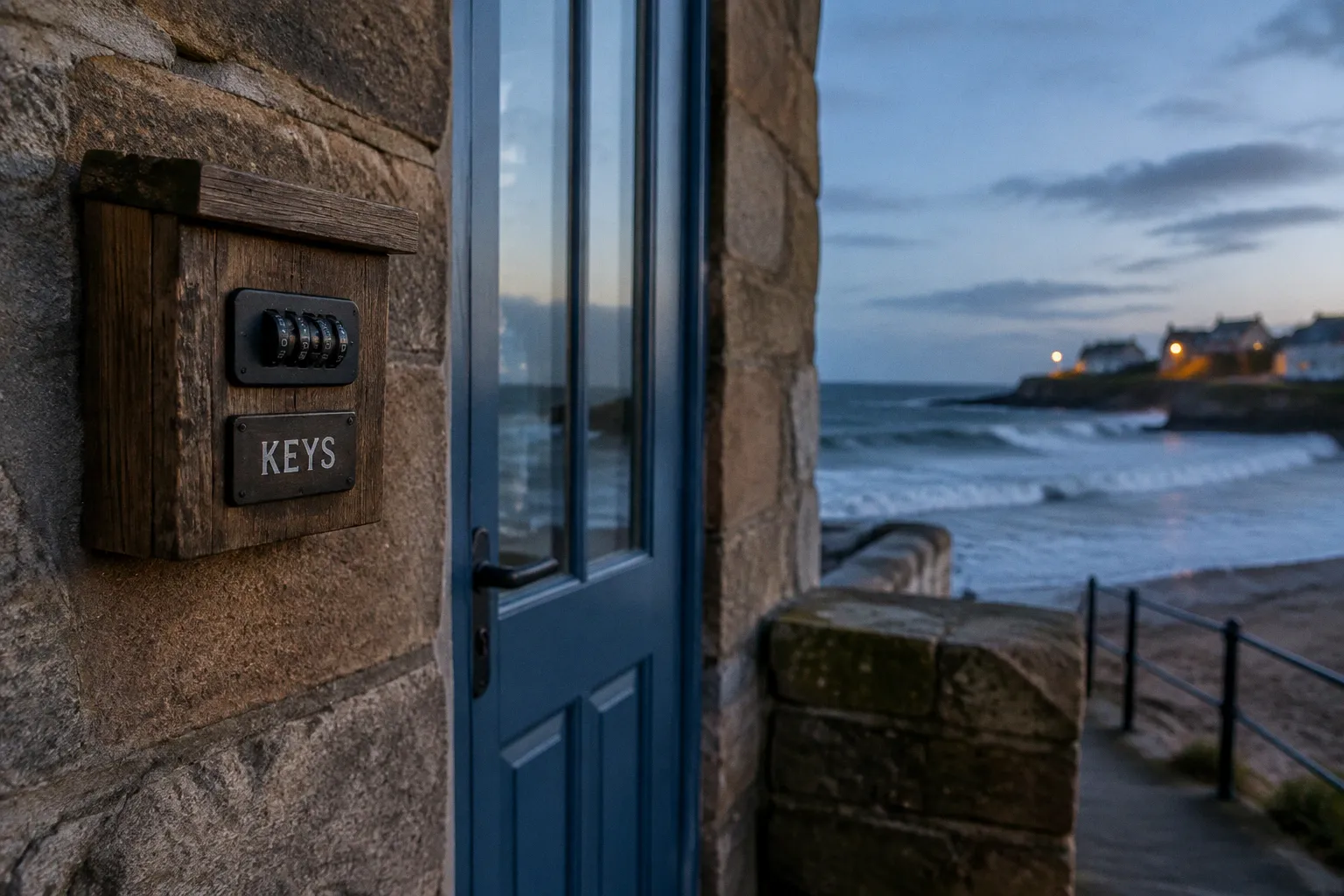
In Joppa, Portobello, Musselburgh and the wider East Edinburgh coast, wind-driven rain reaches places that an inland property rarely has to defend: exposed stone joints, window reveals, chimney breasts, parapets and the lower edges of solid masonry walls.
The guest notices the consequences before they know the cause. A bedroom smells faintly stale after the windows have been shut. Paint blisters beside the skirting board. Towels never quite dry. The mattress feels clammy on the sea-facing side, while the kitchen cupboard beneath the sink has begun to swell. None of these details is dramatic on its own. Together, they point to a building struggling to move moisture through its structure.
For hosts, coastal cottage damp proofing methods for Edinburgh properties are not simply a matter of applying the strongest available sealant. Traditional cottages and older terraced houses often depend on the ability of their walls to absorb, release and evaporate moisture. Close that route with an impermeable coating, and the problem may disappear from view while becoming more serious inside the masonry.
The building is not failing because it is old
I have inspected enough holiday accommodation to be wary of blaming age for every defect. A period stone cottage can be dry, comfortable and remarkably resilient. The issue is usually a mismatch between the original construction and the way the property is now being maintained.
Traditional solid stone walls do not behave like modern cavity walls. They have no neat internal void separating the weather-facing outer leaf from the heated interior. Their performance depends partly on vapour permeability: moisture can move through porous materials and evaporate naturally when the conditions allow it.
That arrangement becomes much harder to manage beside the North Sea. Coastal homes in East Edinburgh and East Lothian receive persistent exposure from wind-driven rain, salt-laden air and rapid changes in temperature. A wall that appears sound from the sitting room may be wetter on its seaward elevation, particularly around poorly maintained pointing or cracked render.
The practical consequences for a self-catering property are easy to recognise:
- External walls take longer to dry after periods of rain.
- Salt carried through porous masonry appears internally as white deposits or powdery staining.
- Paint may blister or lift where moisture is moving towards the room.
- Furniture placed tight against a cold wall restricts air movement and creates a localised mould risk.
- A heated room can feel comfortable while the wall behind a wardrobe remains cold and damp.
This is why managing moisture in seaside holiday rentals begins with the fabric of the building, not with a guest-facing appliance. A dehumidifier can reduce airborne humidity. It cannot repair defective pointing, redirect rainwater or make a sealed wall breathe again.
In a coastal cottage, a dry-looking wall is not necessarily a dry wall. The visible finish may be the newest and least informative layer.
What I look for from room to room
When I assess a rental for practical comfort, I do not begin with the styling. I begin at the threshold and follow the route water and air take through the property.
Entrance, porch and hallway
The entrance tells you how the property handles wet weather brought in by people. Is there somewhere to hang waterproof coats without pressing them against a painted wall? Can wet shoes drain or dry without being left on a timber floor? Does the hallway smell musty even though it has no obvious leak?
A narrow hall with no ventilation can hold moisture for hours after a family returns from the beach. If the floor is tiled, inspect the junction between the tiles and the skirting. Darkening, crumbling paint or a persistent tide mark may indicate moisture rising from the floor or entering through the lower wall.
In older masonry, rising damp is often discussed as though it follows a perfectly uniform line. Real buildings are less obliging. Moisture may be concentrated where external ground levels are high, where paving bridges a damp-proof course, or where a downpipe discharges against the wall. Salts carried through the masonry can remain visible after the wall surface has dried, so a white bloom is not automatically proof of an active leak. It is evidence that water has travelled through the material and left minerals behind.
Bedrooms
Bedrooms are where a minor building problem becomes a poor guest experience. A room can be warm at bedtime and still have an uncomfortably cold external wall by morning. Condensation from breathing, combined with restricted circulation behind furniture, creates a predictable risk at the head of the bed and in corners.
I pay attention to the spatial flow around the bed. Can you walk around it without brushing a damp-feeling wall? Is the headboard pressed against the seaward elevation? Are curtains heavy enough to block the radiator and hold moisture around the window reveal? Does the wardrobe sit hard against an external wall, with no opportunity for air to move behind it?
Mattress firmness is not the only detail affecting sleep. A room that smells of salt, cold plaster or wet fabric will feel unwelcoming even if the linen is clean. In coastal accommodation, ventilation is part of bedding quality because a poorly dried room makes everything feel heavier: sheets, towels, curtains and the mattress itself.
Hosts should also inspect the lower corners behind bedside tables. These are easy for cleaners to miss and difficult for guests to report without feeling awkward. Early mould often appears as small dark marks in places where the air is still, rather than as a dramatic patch across the centre of the wall.
Kitchen and utility areas
The kitchen is already a high-moisture room, so its extraction system needs to do more than make a reassuring noise. I check whether steam clears from the window and splashback after boiling water, whether the extractor vents outside or merely recirculates, and whether the filter is clean enough to work.
Kitchen inventory matters here too. A property may provide a generous collection of pans and crockery while omitting a drying rack, adequate cloths or somewhere sensible to hang wet tea towels. Guests then improvise, often leaving damp fabric over radiators or on worktops. It is a small operational failure with a cumulative effect.
Look beneath the sink for swollen chipboard, soft cabinet edges and a stale smell. A slow plumbing leak can be mistaken for general coastal damp, while a damp wall can be blamed on a leaking pipe. The distinction matters: one requires plumbing repair; the other may involve external drainage, masonry or ventilation.
Bathroom
A bathroom should be able to clear moisture after a shower without relying on the guest to keep the window open in winter. Check the extraction time, the condition of the grille and whether the fan continues running after the light is switched off. If the room has no effective mechanical extraction, guests may leave the door open, sending warm vapour into the corridor and adjacent bedrooms.
I also look at the seal around the bath or shower, the floor-to-wall junction and the area behind the toilet. Water repeatedly escaping at these points can saturate a floor or partition and produce a smell that appears to come from the whole building.
Accessibility is part of this assessment. A guest with limited mobility may not be able to manage a stiff window latch, climb to reach a high ventilation switch or carry wet towels to a distant drying point. A bathroom that technically has ventilation but is difficult to operate is not functioning well for every guest.
Salt damp, condensation and penetrating moisture are different problems
The phrase “damp” is useful in conversation but not precise enough to guide a repair. The source determines the remedy.
| Sign in the property | More likely explanation | What deserves investigation |
|---|---|---|
| White, powdery deposits on lower masonry | Salts brought to the surface by moving moisture | Whether the moisture is rising, penetrating or residual |
| Blistered paint around a chimney breast or external wall | Moisture behind an impermeable finish | Chimney flashing, pointing, render and wall breathability |
| Mould in corners behind furniture | Condensation combined with cold surfaces and poor air movement | Heating pattern, furniture clearance and ventilation |
| Damp patch below a window or beside a downpipe | Penetrating moisture | Guttering, pointing, sill details and external drainage |
| Localised swelling beneath a sink or washing machine | Plumbing leak or appliance connection | Pipework, traps, hoses and cabinet condition |
| Musty smell without obvious staining | Hidden moisture, trapped air or damp furnishings | Wall cavities, floor voids, upholstery and ventilation |
The distinction between salt damp and condensation is particularly important in a holiday let. Condensation can increase quickly when several guests shower, cook and dry clothing indoors. Penetrating damp may worsen during wind-driven rain even when indoor humidity is modest. They can occur together, but they are not interchangeable.
One useful sign is the position and pattern of damage. Moisture entering through a window surround often follows gravity and appears below or to one side of the opening. Condensation usually favours cold corners, window reveals and areas behind large furniture. Rising moisture tends to affect the lower section of a wall, though the height and pattern can vary with the construction.
In older properties, moisture may also carry salts as it moves through porous masonry. These salts can create efflorescence, damage paint and make a wall look wet long after the original water has evaporated. Painting over the mark may improve the photograph for a few weeks. It does not explain why the mark appeared.
Why modern sealants can make an old wall worse
The quickest-looking solution is often the least suitable one. A non-breathable cement render, plastic-based coating or dense waterproof paint can prevent rain from entering at the surface, but it can also trap moisture already held within a solid stone wall.
This is not an argument against every modern material. Some buildings need carefully designed waterproofing, and some damp-proofing interventions are appropriate. The point is that a period coastal property requires diagnosis before treatment. A sealed surface may conceal deterioration until the stone, mortar or internal plaster has suffered.
Traditional stone cottages generally perform better when compatible, vapour-permeable materials are used. Lime mortar and lime-based finishes can allow moisture to evaporate through the wall rather than forcing it towards the interior. But even breathable materials will not compensate for a blocked gutter, defective flashing or paving that directs water towards the façade.
The external inspection should move from the roof down:
1. Roofline and chimneys: Look for damaged flashing, defective chimney haunching and water marks around chimney breasts.
2. Gutters and downpipes: Check for overflow, leaks at joints and discharge close to the wall base.
3. Pointing: Hard, cracked or missing joints can allow wind-driven rain into the masonry.
4. Render and coatings: Identify hollow areas, cracks, trapped moisture and finishes that prevent evaporation.
5. Windows and sills: Examine failed sealant, open joints, blocked drainage channels and staining below the frame.
6. Ground levels: Ensure paths, decking and soil are not bridging the lower wall or directing water towards it.
7. Air bricks and vents: Confirm that they are not blocked by paint, planting or later alterations.
A chemical damp-proof course may be appropriate in some cases, particularly where rising damp has been properly diagnosed. It should not be treated as a complete answer to salt contamination, poor drainage or impermeable wall finishes. The external causes still need attention.
Choosing coastal cottage damp proofing methods for Edinburgh hosts
The right approach is usually a sequence of interventions rather than one dramatic treatment. A specialist survey should identify whether the property has rising, penetrating or condensation-related moisture, and whether several sources are interacting.
For hosts, the main options tend to fall into four groups.
Repair the route by which water enters
This is often the most overlooked work because it happens outside the guest’s view. Repointing, repairing gutters, adjusting downpipe discharge and renewing failed seals around windows can make a greater difference than repainting the interior.
Where the building is historic or constructed from solid stone, the materials need to be compatible with the wall. A repair that is technically waterproof but prevents evaporation may shift the problem further inside.
Improve breathability rather than sealing indiscriminately
Removing a dense modern coating and replacing it with a suitable breathable finish can help a wall dry. This is not a cosmetic swap. The old coating may need to be removed carefully, and the wall may require a drying period before new work is applied.
A breathable system does not mean leaving the property exposed. It means managing water with the right combination of roof maintenance, pointing, drainage and compatible finishes.
Control indoor humidity
Ventilation should be usable, quiet enough for guests and maintained between bookings. Extractor fans need cleaning, filters need replacing and trickle vents should not be painted shut.
For dehumidifier placement in coastal properties, position matters. Put the unit where moisture is generated or where air can circulate through the affected area, rather than hiding it behind furniture. Leave clearance around the intake and outlet. A machine in a closed corner will make noise without effectively drying the room. In a bedroom, its operating sound and overnight instructions need to be considered; in a utility or bathroom-adjacent space, it may be more practical.
A dehumidifier is support equipment, not a substitute for ventilation or building repair. If it runs continuously to keep a room comfortable, the host should ask why the property is producing or retaining so much moisture.
Treat confirmed rising damp carefully
Where rising damp is established, a specialist may recommend a damp-proof course or another control measure. The cost depends on the extent of the affected wall, access, finishes and whether plaster needs to be removed and replaced.
Available Edinburgh cost data puts overall damp proofing at an average of about £1,220, with a typical range of £772 to £1,942. Dedicated damp surveys average about £206, with a reported range of £148 to £289. Rising damp control can be more expensive, averaging around £2,164 and reaching as high as £3,309 in the supplied figures.
These numbers are planning figures, not a quotation. A small coastal flat with a localised defect and a larger stone cottage with several exposed elevations are not comparable jobs. The cost of failing to diagnose the source can be higher than the cost of the survey: repeated redecoration, damaged flooring, musty soft furnishings and disrupted bookings all follow from treating the symptom.
Making the property work between guest stays
A good maintenance plan is visible in the way the property behaves, not in the number of products stored in the cupboard. The house should dry predictably after a wet changeover and remain comfortable when the next guests arrive.
During each turnover, the cleaning team should notice more than crumbs and fingerprints. They should report:
- New staining, flaking paint or white deposits on walls.
- Mould behind beds, sofas, wardrobes and curtains.
- Wet or swollen cabinet interiors.
- Condensation that remains on windows long after cooking or showering.
- Unusual smells from cupboards, floor edges or upholstered furniture.
- Radiators blocked by furniture, curtains or drying laundry.
- Fans that are noisy, weak or not operating at all.
The report does not need to become a bureaucratic form. A dated photograph and a short note about location can be enough to show whether a mark is stable or spreading. That information is more useful than a vague comment that the room felt damp.
Heating also needs a sensible pattern. Intermittent bursts may leave external walls cold even when the room air feels warm. A modest, consistent background temperature can help surfaces remain above the point at which condensation forms. It should be paired with ventilation, not used to bake moisture into a closed room.
Furniture placement deserves the same attention. Keep wardrobes, sofas and beds slightly clear of external walls where possible. Do not crowd the narrowest room with storage simply because the floor plan allows it. A guest needs enough space to move, open a window and reach a radiator safely. Spatial flow is not just a design concern; it affects air movement and cleaning access.
For a beach guest house or self-catering cottage, provide a practical drying arrangement. Hooks near the entrance, a washable mat, a heated towel rail that actually warms towels, and a designated place for wet outerwear all reduce the amount of moisture guests release into bedrooms and living areas.
Guarantees are useful, but they are not a maintenance plan
Professional damp-proofing and waterproofing work may come with guarantees of 10, 20 or up to 30 years, depending on the treatment and installation. That can be reassuring, particularly for a holiday property where a concealed defect could affect bookings and guest reviews.
Still, a guarantee is only as useful as its scope. Before accepting the paperwork, I would want the host to know:
- Which walls and treatments are covered.
- Whether external drainage and pointing are included or excluded.
- What maintenance the owner must carry out.
- Whether replastering and decoration are part of the work.
- How salt contamination will be dealt with after the moisture source is controlled.
- What happens if another source of water is later identified.
A guarantee for a chemical injection course does not necessarily cover penetrating damp through a defective gutter. A warranty for internal waterproofing does not make an impermeable coating suitable for every historic stone wall. The document should match the diagnosis, not simply provide a comforting number.
The guest experience is the final test
Hosts sometimes separate building maintenance from hospitality, but guests do not. They experience the property as one system. A sticking window, a weak extractor, a damp-smelling wardrobe and a cold wall beside the bed become part of the same judgement: does this place feel properly cared for?
That judgement is especially sharp in a coastal rental because the setting raises expectations. Visitors come for the beach, the salt air and the weather changing over the Firth of Forth. They do not expect the building to defeat the climate completely. They do expect it to be prepared for it.
The best Edinburgh coastal property ventilation tips are therefore practical rather than decorative: give moisture a route out, keep air moving around furniture, maintain extraction, dry the entrance zone and investigate recurring smells before they become visible damage. Outside, keep rainwater away from the wall and preserve the ability of traditional masonry to release what it absorbs.
Coastal cottage damp proofing is successful when the intervention respects both the building and the people using it. For an older stone property, that may mean breathable lime work and drainage repairs rather than blanket sealing. For a newer holiday flat, it may mean correcting ventilation, plumbing or thermal bridges. The method should follow the building.
A seaside rental does not need to feel sterile or over-engineered. It needs to feel dry where you sleep, fresh where you cook, safe to move through, and straightforward to use after a wet walk from the shore. That is the standard I would set for any host: not a property that merely hides damp, but one that has been made capable of living with North Sea air.