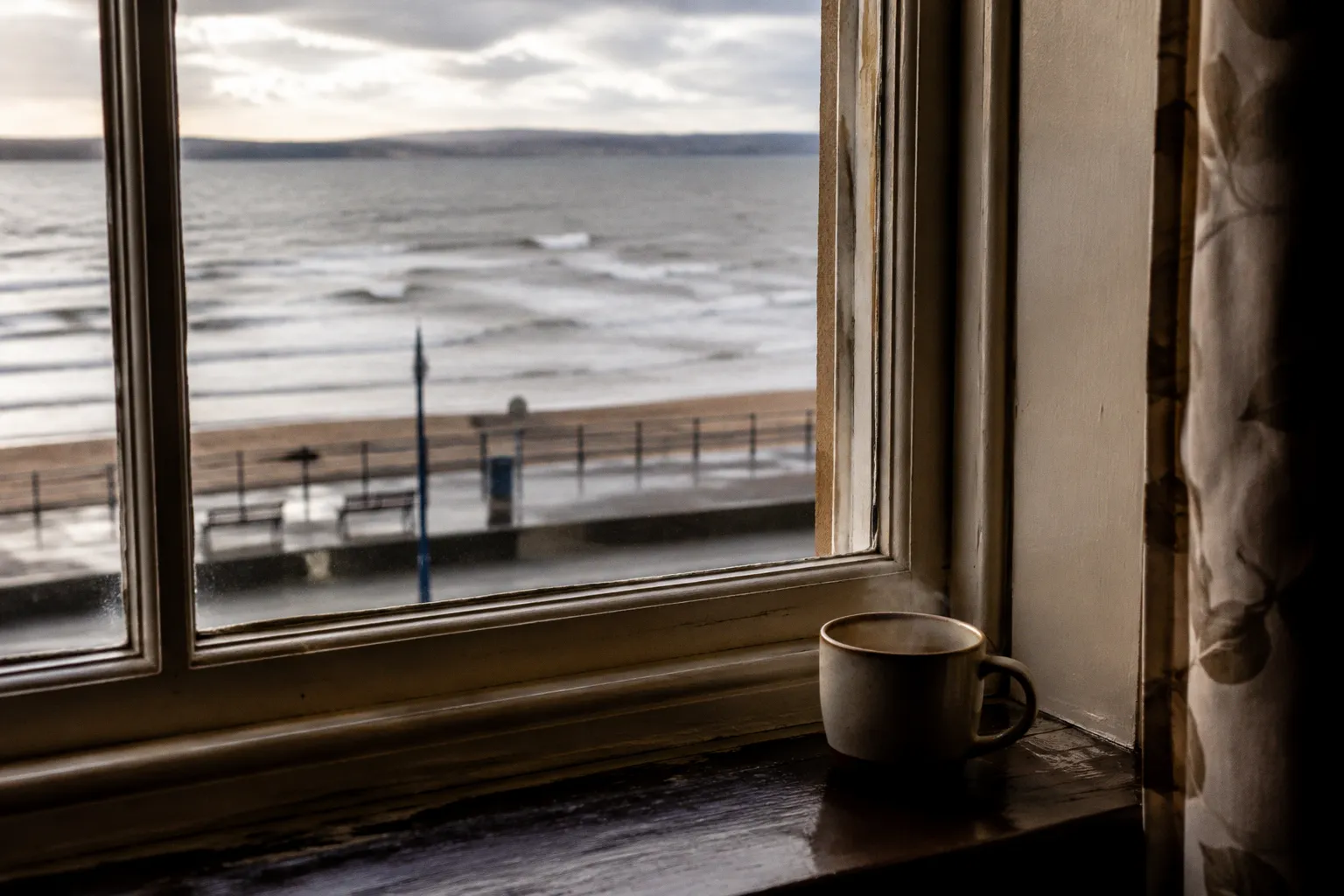
Instead, you meet a wall of cold - the kind that settles into the sheets and keeps you awake until three in the morning. The radiator ticks dutifully, but the room never actually warms.
This is the core problem I keep returning to when assessing seaside accommodation around Edinburgh's coast: not whether the property has heating, but whether the heating can keep up with what the Firth of Forth throws at the building. Standard solutions designed for inland properties simply don't hold up where salt spray, wind-driven rain, and biting east winds converge on the same elevation. After a winter of inspections across Joppa, Musselburgh, and the Leith Shore, I want to share what is actually working in well-run coastal guest houses, and what is costing operators (and their guests) both money and comfort.
The Physics of Coastal Heat Loss: Beyond Standard Insulation
Most inland heating advice assumes your enemy is cold air alone. On the coast, your enemy is cold air loaded with moisture and salt, driven horizontally at speeds that press against the building envelope with unusual force. A coastal property in Edinburgh can lose heat considerably faster than its inland equivalent, not because the air is colder in absolute terms, but because wind strips the thin layer of warmer air that normally clings to external surfaces.
This effect, often described as wind chill on buildings, means a 5°C February night at Joppa presents a much harsher test than the same temperature in Morningside. The wind pulls heat from every surface it can reach: walls, window frames, the underside of the eaves, even the roof tiles. If your insulation is doing its job for a sheltered property but your seals, glazing, and cavity protection have not been chosen for exposure, you will feel cold spots near the windows and along the outer corners of the room, regardless of how long you leave the heating on.
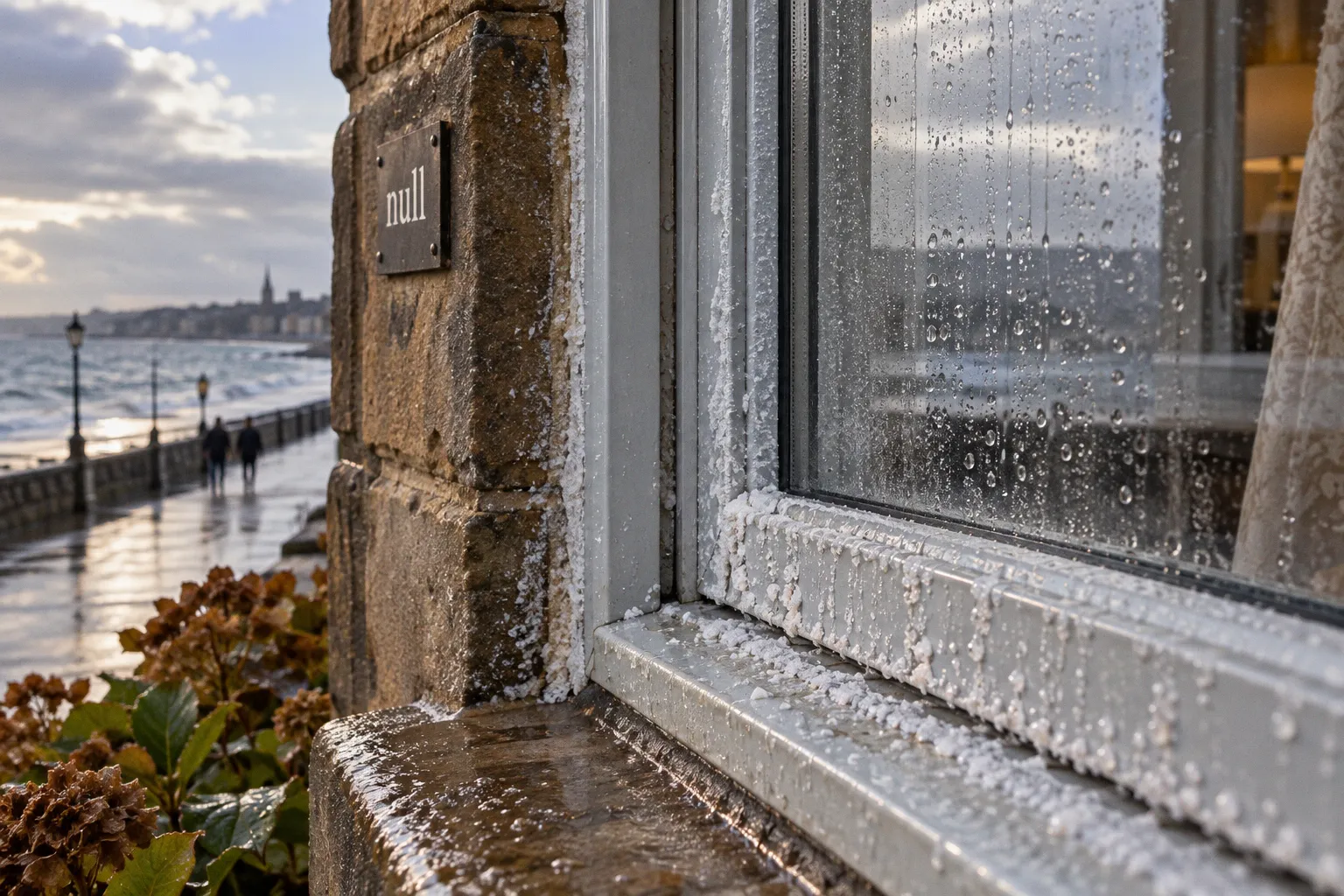
The biggest culprit I see in older Portobello and Joppa conversions is poorly managed cavity wall insulation. What works perfectly in a suburban semi-detached becomes a liability within sight of the sea. Wind-driven rain and ocean moisture can be absorbed into the cavity, and once that moisture is trapped against the inner leaf of the wall, you get cold spots, musty odours, and eventually visible dampness around skirting boards. I have walked into bedrooms where the heating was working fine, but the wall behind the bedhead was cold to the touch even at full output. That is almost always moisture in the cavity, not a failing boiler.
Corrosion-Resistant Infrastructure for Marine Environments
A radiator that corrodes from the inside out is invisible until it fails. By then, your guest is standing in a cold room with a leaking valve and no hot water.
This is the part that doesn't make it onto the glossy listing. Salt spray and high humidity don't just affect the exterior of a coastal building - they attack every metal component exposed to the air or the water system. External fixings, handrails, downpipe brackets, even the screws holding your window frames together are under constant assault. I have inspected properties where standard zinc-plated fixings had corroded through within five years, leaving rust streaks down rendered walls and weakened structural connections.
The specification that actually holds up is marine-grade (A4/316) stainless steel for any external hardware, plus specialised protective coatings on items too large or expensive to replace in that grade. If you are assessing a guest house and you spot standard galvanised brackets on the sea-facing elevation, expect visible rust within a decade. It is not a question of if.
Inside, the same logic applies to plumbing and heating components. Boiler flue terminals and external heat pump units need corrosion-resistant casings. Installer guidance for coastal properties increasingly specifies anti-corrosion coatings on the outdoor unit and protective placement strategies - mounting the unit away from direct spray zones, on a marine-grade bracket, ideally sheltered by a small canopy that does not restrict airflow. Skipping this step to save a few hundred pounds at installation typically costs several thousand within the lifespan of the unit.
Optimising Thermal Performance with High-Spec Glazing and Cavity Protection
Glazing is where coastal guest houses either win or lose the heating battle. I have stayed in rooms where the window was technically double-glazed but functionally useless against a January haar rolling in off the Forth. The frame leaked, the seal had perished, and the gap between glass and curtain was wide enough to channel a steady cold current down the wall behind the bed.
For exposed coastal locations, triple-glazed units designed for marine environments can reach U-values as low as 0.8 W/m²K. That figure matters because it represents the rate of heat transfer through the window: lower is better, and the difference between a standard 1.4 W/m²K unit and a 0.8 unit becomes very visible on your heating bill across a full winter season. For guest houses running multiple rooms across five or six heating months, this is not a marginal upgrade; it is the difference between profitability and a constant operational drain.
Cavity protection requires a different conversation. If you are operating a building with cavity walls near the coast, the insulation needs to be either correctly specified closed-cell foam, or the cavity needs to be drained and ventilated to the outside to prevent moisture accumulation. The cheapest option - loose-fill insulation blown into a cavity that has any exposure to wind-driven rain - is the one that comes back to bite you. I have seen rooms where the outer leaf had to be rebuilt specifically because the original insulation had absorbed so much moisture it was effectively wicking cold water into the building.
A practical test for any guest: stand near the window, run your hand along the frame, and check for draughts. Then look at the external corners of the room. If the paint is discoloured or the wallpaper is lifting near the ceiling, there is a moisture problem in the wall that no amount of radiator heat will resolve.
Smart Control Systems for Guest Turnover and Energy Management
Smart controls in a seaside guest house are not about being modern. They are about stopping the heating from running in an empty room all afternoon because a guest checked out at eleven and the next one is not due until six.
Here is a problem I keep encountering in person: a guest checks out at 11am, the room is not cleaned until 3pm, and the next guest does not arrive until evening. In a well-managed property, that room is unheated for seven hours. In a poorly managed one, the heating runs the entire time because no one has overridden it. Multiply that across five or six rooms and you are spending a significant portion of your winter energy budget heating empty space.
Smart thermostats allow managers to cap maximum temperatures (useful for guests who insist on opening every window while running the radiator at full), to schedule setbacks during vacancy periods, and to monitor individual room performance remotely. If a room is consistently failing to reach its target temperature, that tells you something about the building - a draught, a failing radiator valve, a moisture problem in the wall - that you would not otherwise pick up until a guest complained in writing.
For guests themselves, a well-programmed system means walking into a room that is genuinely warm, not merely "turned on". I have tested properties where the thermostat in the hallway read 21°C but the bedroom was still 16°C because the system had not been allowed enough pre-heating time. A smart controller with a proper schedule handles this automatically. As a guest, this is the difference between a room that warms you within ten minutes and one that never quite catches up before bedtime.
Navigating 2025 Regulatory Standards for Heat Pump Installations
Air-source heat pumps are increasingly the right answer for coastal guest houses, because they transfer heat rather than generate it from fuel. In temperate winter climates like Edinburgh's, they can reach 300% to 500% energy efficiency, meaning you get three to five units of heat for every unit of electricity you put in. For a property running heating through half the year, the operational savings are substantial and worth specifying correctly.
Two caveats matter here. Standard inland heat pumps and standard untreated external wall renders do not perform reliably in coastal environments without anti-corrosion protection. The same logic that applies to fixings and brackets applies to the outdoor unit. If you are installing a heat pump at a seaside property, specify a coastal-rated unit with anti-corrosion treatment on the casing and on critical internal components. The price differential at purchase is real, but so is the lifespan difference.
The regulatory landscape has also tightened. Heat pump installations in England must comply with MCS-020 noise and siting standards under permitted development regulations updated in 2025. While Scottish building standards operate under a separate framework, MCS standards are the de facto benchmark most qualified installers work to, and they govern where the outdoor unit can be sited relative to property boundaries and neighbour-facing windows. For a guest house with rooms occupied by paying guests, siting is not just a planning nicety - it is a guest experience issue. A noisy outdoor unit placed beneath a bedroom window will produce complaints regardless of how efficient the system is on paper.
| Specification | Standard inland option | Coastal-appropriate option |
|---|---|---|
| Heat pump outdoor unit | Standard coated steel casing | Anti-corrosion treated, coastal-rated unit |
| External fixings and brackets | Zinc-plated or galvanised | Marine-grade A4/316 stainless steel |
| Window glazing U-value | ~1.4 W/m²K (double-glazed) | As low as 0.8 W/m²K (triple, marine spec) |
| Cavity wall insulation | Loose-fill or partial fill | Closed-cell foam or drained/ventilated cavity |
| Heating controls | Manual thermostat | Smart thermostat with remote scheduling |
What I Look For Now
After a winter of assessing Edinburgh's coastal guest houses, my priorities when reviewing a property have shifted. I used to lead with the view, then the bed, then the bathroom. Now I lead with the wall nearest the window in the room I will be sleeping in. If that wall is cold to the touch and the window frame is draughty, nothing else in the property compensates.
The guest houses that are getting it right are doing a few consistent things. They have invested in marine-grade hardware that will not degrade, they have specified glazing and cavity treatments for their actual exposure rather than copying what works inland, and they are using smart controls to manage the gap between guest turnovers. None of this is glamorous. None of it photographs well for the listing. But it is the difference between a coastal stay that genuinely warms you and one that leaves you reaching for an extra blanket at midnight.
For anyone booking a seaside stay in Edinburgh between November and March, my practical advice is simple: ask about the glazing specification, ask about the heating controls, and bring slippers. The Forth winds are older than the buildings they test, and they always win the argument against underprepared insulation.