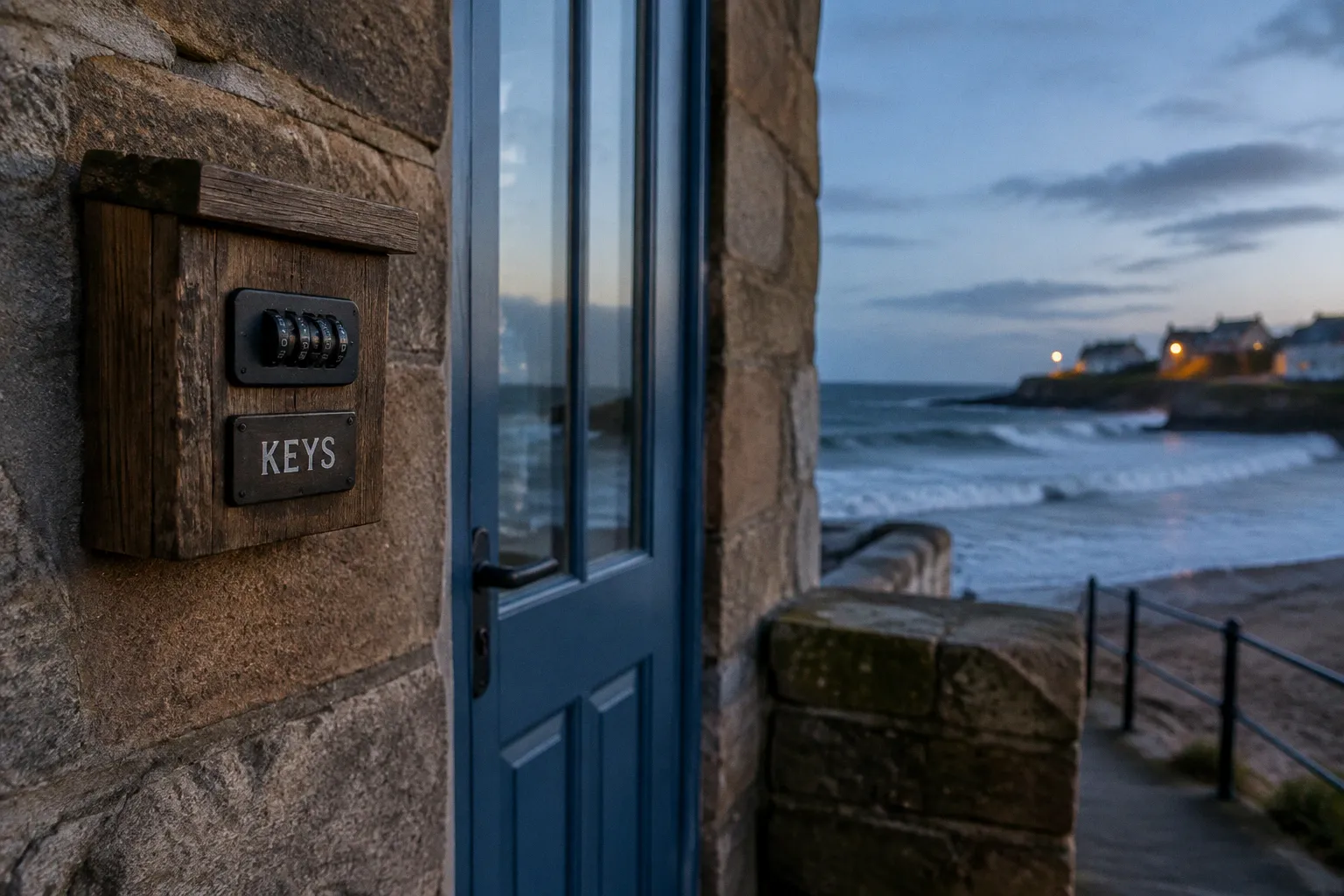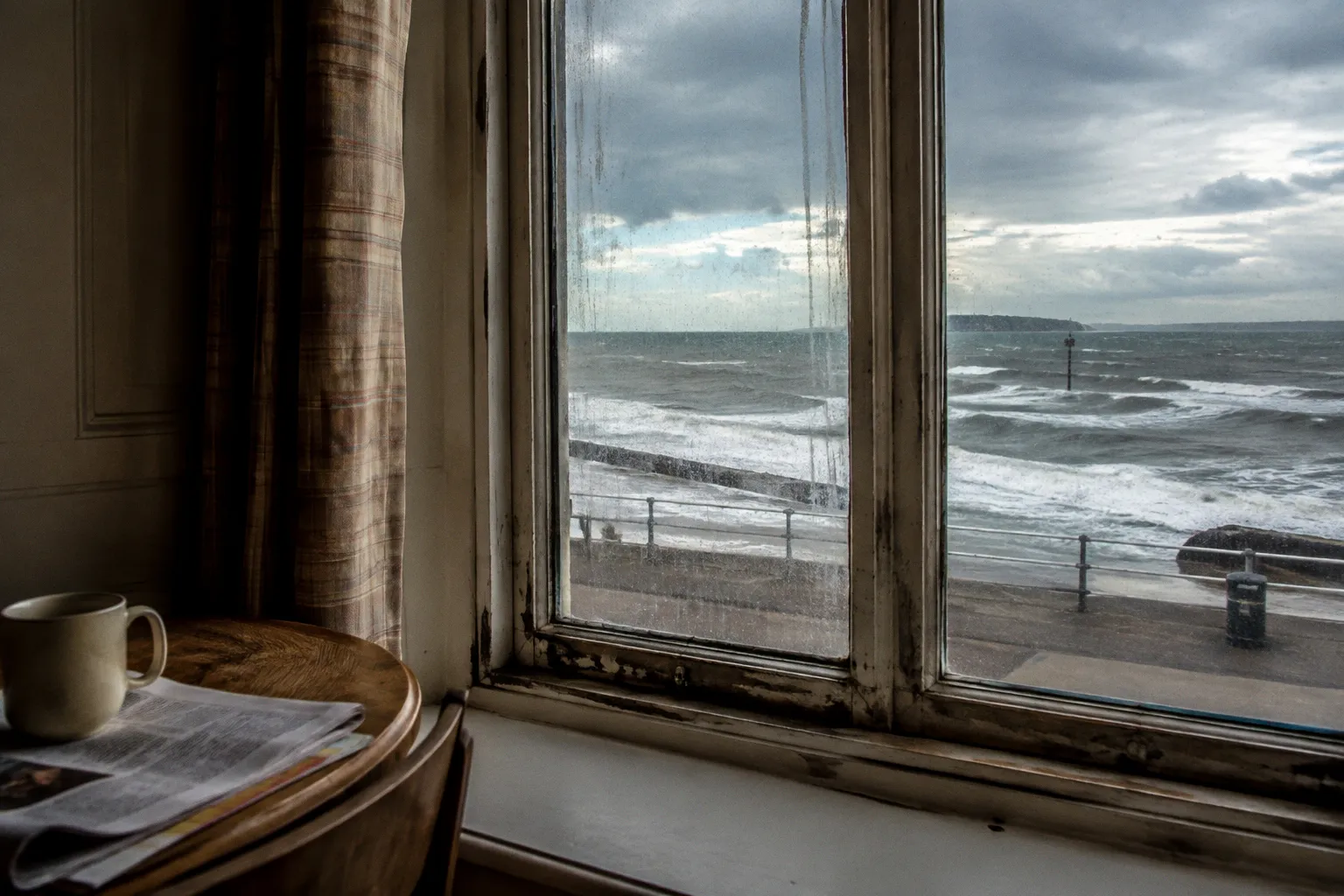
In winter, the Firth of Forth brings damp air, sharp winds and long periods when a radiator is working hard simply to keep a room from feeling cold. You may arrive with wet coats, sandy shoes and luggage, turn the heating up, and still notice a chill around the sash windows before you have taken off your boots.
That is the central problem with a portobello beachfront holiday flat winter heating system: warmth is not only about the boiler, radiators or thermostat. It is about where heat leaves the building, how quickly cold surfaces pull warmth from the room, and whether the flat’s layout allows you to live comfortably without heating every space at full power.
Portobello is a residential coastal suburb around 3 miles, or 5 kilometres, east of Edinburgh city centre, directly facing the Forth. Many properties close to the beach occupy traditional tenements whose character comes with practical compromises. A Victorian or early twentieth-century flat may have generous ceiling heights, timber sash-and-case windows and suspended floors. Those details are attractive in photographs. In a winter rental, they also determine whether the bedroom feels settled and quiet or whether you spend the night listening to wind at the glass and searching for an extra blanket.
The thermal reality of a tenement on the Forth
When I assess a self-catering property, I do not begin with the word “cosy”. It tells you very little. I want to know whether the room can hold its temperature, whether the entrance traps draughts, whether the bed sits beside a cold external wall, and whether the bathroom can be warmed quickly after a wet walk along the promenade.
Coastal exposure does not automatically mean that a flat is poorly insulated. Some Portobello properties have modern windows, efficient heating controls and carefully upgraded fabric. Others retain much of their original construction. The difference is felt most clearly when the weather turns.
Traditional Edinburgh tenements commonly lose heat through several predictable points:
- Single-glazed windows can account for an estimated 30–40% of heat loss.
- Uninsulated roof spaces and ceilings can contribute roughly 20–25%.
- Suspended timber floors in ground-floor units may account for around 15–20%.
- Gaps around frames, skirting boards, doors and service penetrations create local draughts that feel worse than their total area suggests.
- High ceilings increase the volume of air that must be heated, particularly in sitting rooms with tall sash windows.
These figures are useful because they change the question. If a guest complains that a flat is cold, the answer may not be to install a larger radiator. A more powerful radiator can raise the temperature near the heat source while leaving the window wall, floor edge or bedroom corner uncomfortably cold. The property needs to retain warmth as well as produce it.
A warm radiator does not prove that a flat is thermally comfortable. The room must also stop giving that heat straight back to the Forth.
There is another feature of coastal accommodation that photographs rarely communicate: surfaces matter. A room may show a reasonable air temperature on a thermostat while still feeling cold because the sash window, stone wall or uninsulated floor is colder than the air around you. You feel that difference when sitting still, working at a table or getting into bed. It is why a guest may describe a room as draughty even when no obvious stream of air crosses the floor.
Where a Portobello holiday flat loses heat
A useful assessment follows the heat through the property rather than treating the flat as one undifferentiated space. The entrance, living room, bedroom and bathroom each create a different thermal experience.
The entrance and hallway
The front door is often the first place you notice a problem. Coastal guests arrive carrying luggage, coats and perhaps a dog towel after a beach walk. If the door has a loose seal or opens directly into the main living space, cold air can travel through the flat every time someone comes in.
In a tenement, the shared stairwell may also be noticeably colder than the apartment. That is not unusual, but it makes the flat’s own door and threshold important. You should not need to wedge a rolled towel against the bottom of the door to stop a draught. A proper brush strip or compression seal is a small intervention with a large effect on comfort.
The hallway also affects spatial flow. If there is nowhere to hang wet coats, they end up over dining chairs or against radiators, restricting airflow and increasing condensation. A narrow entrance with no drying area is not merely inconvenient in winter; it changes how the whole flat functions.
The best arrangement is simple:
- A door that closes firmly without requiring force.
- A draught seal that does not prevent the lock from engaging.
- Hooks positioned away from the radiator.
- A hard-wearing mat that can contain water and grit.
- Enough circulation space to move luggage without blocking the heat source.
These are modest details, but they are the details that separate a property designed for coastal use from one that has simply been furnished near the sea.
The sitting room
The sitting room usually carries the greatest thermal load. It may have the largest windows, the highest ceiling and the most external wall area. It is also where you spend the longest uninterrupted period, particularly during a dark winter afternoon when the beach is windy and the city is a bus journey away.
With traditional sash-and-case windows, inspect the relationship between the seating and the glass. A sofa pushed hard against a window can feel cold even when the rest of the room is comfortable. Curtains can help, but only if they are full-length, close properly and do not cover the radiator in a way that sends heat into the window recess.
The room should offer more than one usable position. If the only comfortable chair is beside the radiator, the property has a spatial problem, not just a heating problem. A guest should be able to read, eat, work or watch television without choosing between a cold draught and excessive heat.
Furniture placement also determines whether the room can be heated efficiently. Large pieces of furniture directly in front of radiators obstruct convection. A radiator hidden behind a sofa may still become hot, but it will distribute warmth poorly. This is particularly noticeable in rooms with high ceilings, where warm air can collect above head height while the sitting zone remains cool.
In my assessment, I look for:
- Cold air movement at the meeting point between frame and wall.
- Condensation or blackening around window reveals.
- Curtains that close fully without trapping radiator heat.
- Radiators with clear space in front of them.
- A thermostat that is easy to locate and adjust.
- Seating that is not all arranged along the coldest external wall.
- A rug or other floor treatment where a suspended timber floor feels noticeably cold.
A rug is not a substitute for floor insulation, but it can make a real difference to the guest experience. It gives the room a warmer contact surface and reduces the sensation of cold rising through the floorboards. The important distinction is that a rug improves comfort at foot level; it does not repair heat loss through the structure.
The bedroom
The bedroom reveals poor thermal performance more quickly than the sitting room because you are still for several hours. A room that feels acceptable while you are moving around can feel distinctly cold at 2 a.m.
Bed position matters. Placing the headboard against an external wall or beneath a large window may use the available space efficiently, but it exposes the sleeping area to the coldest surfaces. In a well-furnished flat, the bed does not need to occupy the warmest part of the room, yet it should not be forced into the draught path simply because the rest of the layout has been prioritised for photographs.
Mattress firmness is usually discussed as a comfort issue, and it is one. In winter, bedding and bed position matter just as much. A mattress that allows you to settle comfortably, a duvet appropriate to the season and curtains that close tightly will make the room feel more usable without requiring the heating to run continuously overnight.
I am wary of the phrase “extra blankets available” when it is used to excuse a cold bedroom. Additional bedding is useful, but it should be clean, accessible and stored somewhere dry. It should not be a substitute for a properly sealed window or a radiator that can be controlled independently.
The practical bedroom questions are direct:
1. Can you close the curtains fully around the window, including the sides?
2. Is the bed clear of the most obvious draught line?
3. Can you adjust the temperature without leaving the bed?
4. Is there somewhere to dry clothing without covering the radiator?
5. Does the floor feel cold beside the bed, particularly in a ground-floor flat?
6. Is the window openable for ventilation without making the room impossible to reheat?
That final point is important. A property needs ventilation, especially after showers or when drying wet coats, but opening a large sash window for long periods in a windy coastal climate can remove the heat the system has just produced. Trickle ventilation, controlled extractor fans and sensible guest guidance are more effective than relying on guests to improvise.
The kitchen and bathroom
Kitchens often feel warm because appliances and cooking add heat, but that warmth can be misleading. A kitchen with a cold external wall, a poorly sealed back door or an extractor that draws air aggressively from the room may still create an uncomfortable working area.
The kitchen inventory affects winter comfort more than many owners realise. If there is no drying rack, guests place wet towels over chair backs. If there is no proper pan lid, cooking takes longer. If the only bin is positioned beside a radiator, airflow is restricted. These are small functional failures, but they accumulate during a week-long stay.
In the bathroom, water pressure becomes part of the thermal experience. A strong shower that reaches temperature quickly is valuable after a cold day, while a weak or fluctuating supply leaves you standing in a poorly heated room for longer. The extractor should remove steam without creating an aggressive draught under the door. If the bathroom relies on a heated towel rail as its primary heat source, it needs to be capable of warming the room rather than merely producing warm towels.
For a seaside rental, I also look for somewhere to hang wet swimwear and beach clothing without creating condensation. A heated rail is useful, but it should not be overloaded with thick towels. A separate drying arrangement, good extraction and a clear explanation of the controls make the space much easier to use.
Windows are the first serious retrofit decision
Single glazing is often the most visible thermal weakness in an older seaside flat. It is also the area where owners face the greatest tension between conservation, appearance, cost and guest comfort.
Traditional sash-and-case windows are part of Edinburgh’s architectural identity. Replacing them carelessly can damage the appearance of a building and create planning or conservation issues. But retaining original windows without improving their performance leaves the property vulnerable to cold surfaces, rattling frames and draughts.
The most effective approach depends on the building, but the options generally include:
- Repairing timber frames so that sashes close properly.
- Installing discreet draught seals.
- Using secondary glazing where replacement is unsuitable.
- Upgrading to slimline double glazing where the building and approvals allow it.
- Improving curtains or shutters without blocking radiators.
- Replacing damaged panes and repairing putty lines.
Slimline double glazing can reduce the window U-value from around 5.0 for single glazing to approximately 1.4. That is a substantial improvement in thermal performance. It does not mean every original window should be removed, nor does it guarantee that a flat will feel warm if the roof, floor and wall junctions remain untreated. It does show why the glazing specification matters more than a listing description that simply says “period windows”.
A guest does not need to know the U-value to notice the result. You notice it when the inner pane no longer feels icy beside the sofa. You notice it when condensation is reduced and the curtain fabric is not damp at the hem. You notice it when the bedroom remains comfortable after the heating cycles down.
Draught-proofing is not the same as sealing the room
A well-sealed window should stop uncontrolled air movement while still allowing the property to ventilate. Over-sealing a damp older building can create its own problems if moisture has nowhere to escape. The goal is controlled ventilation, not a permanently closed box.
For a Firth of Forth beachfront flat, draught-proofing should cover more than the sash meeting rail. The frame-to-wall junction, window box, skirting board and nearby floorboards can all contribute to the sensation of cold. A guest may identify the window as the source because that is where the coldest surface is, while the actual air leakage comes from a gap beside the frame.
The most useful property information is specific. A listing or welcome guide can explain that original windows have been draught-sealed, that secondary glazing is installed in the bedrooms, or that the flat has independent heating controls in each main room. Those statements are more meaningful than broad claims about comfort.
| Thermal feature | What it changes for the guest | What can still go wrong |
|---|---|---|
| Repaired and draught-sealed sash windows | Less air movement and fewer cold spots near the glass | Cold surfaces may remain if the glazing is still single-pane |
| Slimline double glazing | Much lower heat transfer through the window | Poor installation or unsealed surrounding masonry can leave draughts |
| Secondary glazing | Retains the appearance of original windows while adding an insulating layer | Condensation and access for cleaning need to be managed |
| Heavy curtains fitted correctly | Reduces radiant chill at night and after heating cycles | Curtains covering radiators can trap heat at the window |
| New high-output radiators | Warms the air more quickly | Does not solve heat loss through roof, floor or glazing |
| Floor rugs and sealed boards | Improves contact comfort underfoot | Offers limited structural insulation on its own |
Roofs, ceilings and floors are easy to overlook
Windows attract attention because guests can see them. Roof and floor insulation are less visible, yet the figures are significant. In Edinburgh residential properties, uninsulated loft spaces can account for roughly 25% of total household heat loss. In a top-floor holiday flat, the ceiling is not an abstract part of the building envelope; it is the surface above the bedroom that may remain cold long after the heating starts.
Roof-space insulation needs to be installed carefully. Blocking ventilation at the eaves can create moisture problems, while poorly fitted insulation leaves cold bridges around hatches, rafters and service penetrations. A guest will experience the result as a room that loses warmth quickly or a ceiling surface that feels cold, even if the heating system is working normally.
Ground-floor flats present the opposite issue. Suspended timber floors can account for an estimated 15–20% of heat loss in typical properties. Floorboards may be draughty at the perimeter, especially where skirting boards are old or where air moves through the underfloor void. A ground-floor Portobello rental can therefore feel cold from below, particularly near external walls and windows.
The correct repair is not simply to cover every gap with expanding foam. Traditional buildings need materials and interventions appropriate to their construction. Floorboards may require careful sealing, underfloor insulation or improvement to the suspended floor zone, while preserving ventilation and avoiding trapped moisture.
From a guest’s point of view, the signs are straightforward:
- Cold floorboards concentrated around the room edges.
- A noticeable difference between the middle of the room and the area near the skirting.
- Rugs that have been added only in the places where guests sit.
- A bedroom that cools rapidly despite an apparently adequate radiator.
- A top-floor room with a cold ceiling or uneven temperature across the space.
There is no shame in an older property having some thermal character. The issue is whether the owner understands it and has made the accommodation workable. A flat with original floors can be comfortable if the draughts are controlled, the heating is responsive and the guest has suitable bedding. A newly decorated flat can be unpleasant if the building fabric has been ignored.
The most reliable winter retrofit is rarely a single dramatic upgrade. It is the unglamorous combination of sealed gaps, sound windows, insulated roof space, controlled ventilation and heating that guests can actually operate.
Heating controls should work for real arrivals
A self-catering property is not occupied in the same way as a permanent home. Guests may arrive after the heating has been off, open the door with cold luggage, cook immediately, shower, dry clothing and go to bed at different times. The heating system needs to respond to those patterns.
A timer hidden behind a cupboard door is not good enough. Neither is a thermostat placed in a hallway that warms quickly while the sitting room remains cold. Controls should be visible, labelled in plain language and positioned where a guest can use them without searching through an unfamiliar flat.
The welcome information should answer practical questions:
- Is the heating on when guests arrive?
- Which control adjusts the whole flat?
- Can bedrooms be heated separately?
- How long does the system usually take to bring the flat up to temperature?
- Is there a boost setting, and what does it do?
- Which windows should remain closed during high winds?
- How should guests ventilate the bathroom after a shower?
- Where can wet coats and beach clothing be dried?
This is particularly important for winter short lets, where guests may be unfamiliar with Scottish heating systems. Confusing controls lead to two predictable outcomes: the flat is overheated in one room and cold in another, or guests stop adjusting the system because they cannot tell what it is doing.
Radiator performance also deserves a room-by-room view. A radiator that is hot at the top and cold at the bottom may need attention. A radiator that never warms fully may indicate a valve, balancing or boiler issue. These are maintenance matters rather than guest education. You should not have to diagnose the central heating while on a seaside break.
The property manager should also understand recovery time. Turning the thermostat down overnight can save energy, but an exposed flat with high heat loss may take a long time to warm again. A sensible schedule should allow the property to reach a comfortable temperature before guests wake or return from the beach. Otherwise, the system appears ineffective when the real problem is poor timing.
The Bath Street precedent: modern lessons beside the beach
Portobello does not have to choose between coastal identity and better environmental performance. A modern eco-oriented tenement block on Bath Street, near Portobello beach, was constructed from 2013 using a Baugruppen cooperative model, with architect John Kinsley involved in the project.
Its relevance to holiday accommodation is not that every older flat can be rebuilt as a contemporary cooperative development. It is that the coastal setting itself does not prevent careful, energy-conscious design. Orientation, insulation, shared decision-making and the relationship between building fabric and daily use can all be addressed before a guest arrives.
Older properties need a different route. Their strengths are often substantial rooms, established locations and architectural detail. The work is more surgical: improve the weakest parts without erasing the building. That may mean slimline glazing rather than standard modern frames, roof insulation that respects ventilation, floor upgrades that preserve timber, and heating controls that are simple enough for short-stay guests.
For owners and assessors, the modern precedent also makes one point clear: energy performance should be considered as part of the accommodation experience, not as a technical issue hidden from the person paying to stay. A guest does not need a sustainability lecture. They need a bedroom that holds its warmth, a bathroom that clears steam and a living room where the window seat is usable in January.
What I would want to know before booking
When reviewing an Edinburgh coastal self-catering property for winter use, I look beyond the number of bedrooms and the distance to the sand. The following details tell me much more about how the flat will perform:
- Whether the main windows are single-glazed, secondary-glazed or double-glazed.
- Whether the property is ground floor, middle floor or top floor.
- How the flat is heated: gas boiler, electric panel heaters, storage heating, heat pump or another system.
- Whether the thermostat controls the whole property or individual rooms.
- Where guests are expected to dry coats, towels and beach clothing.
- Whether the bathroom has effective extraction.
- Whether the bed is positioned directly beside a large external window.
- Whether radiators are blocked by sofas, curtains or drying laundry.
- Whether the entrance door has been draught-proofed.
- Whether the listing gives a realistic description of winter conditions rather than relying on vague comfort language.
A property does not need to be perfectly insulated to be worth booking. Portobello’s older flats can offer a strong sense of place, excellent access to the beach and a more generous spatial layout than many purpose-built rentals. But the description should allow you to make an informed decision. If you are travelling with a baby, have reduced mobility, are sensitive to cold, or plan to spend long days indoors, thermal performance becomes part of accessibility and not merely a matter of preference.
The same is true for dogs. A genuinely dog-friendly coastal flat needs a practical drying zone, a floor that can cope with wet paws and heating that does not depend on leaving a door open to a cold stairwell. The phrase should describe how the property works, not simply confirm that an animal is permitted.
A winter stay should feel settled, not constantly managed
The best Portobello beachfront holiday flat winter heating arrangement is not the one with the most conspicuous equipment. It is the one that disappears into the background because the building holds a steady temperature and the controls make sense.
You should be able to come back from a windy walk, hang your coat somewhere sensible, wash the sand from your shoes, make tea and sit down without rearranging the room around a radiator. You should be able to sleep without placing towels along the window sill. You should not have to choose between ventilation and warmth, or between using the dining table and blocking the only heat source.
For an older Victorian seaside holiday flat, good performance comes from coordinated decisions: improve the windows where possible, insulate roof and floor zones properly, manage draughts without trapping moisture, and provide heating controls that reflect how short-stay guests actually use the rooms.
That is the standard I would apply to any Portobello coastal holiday rental. Character is valuable, but it should not be used to excuse avoidable discomfort. Facing the gales on the Forth is part of the location. Feeling them through the bedroom wall is a building-management failure.