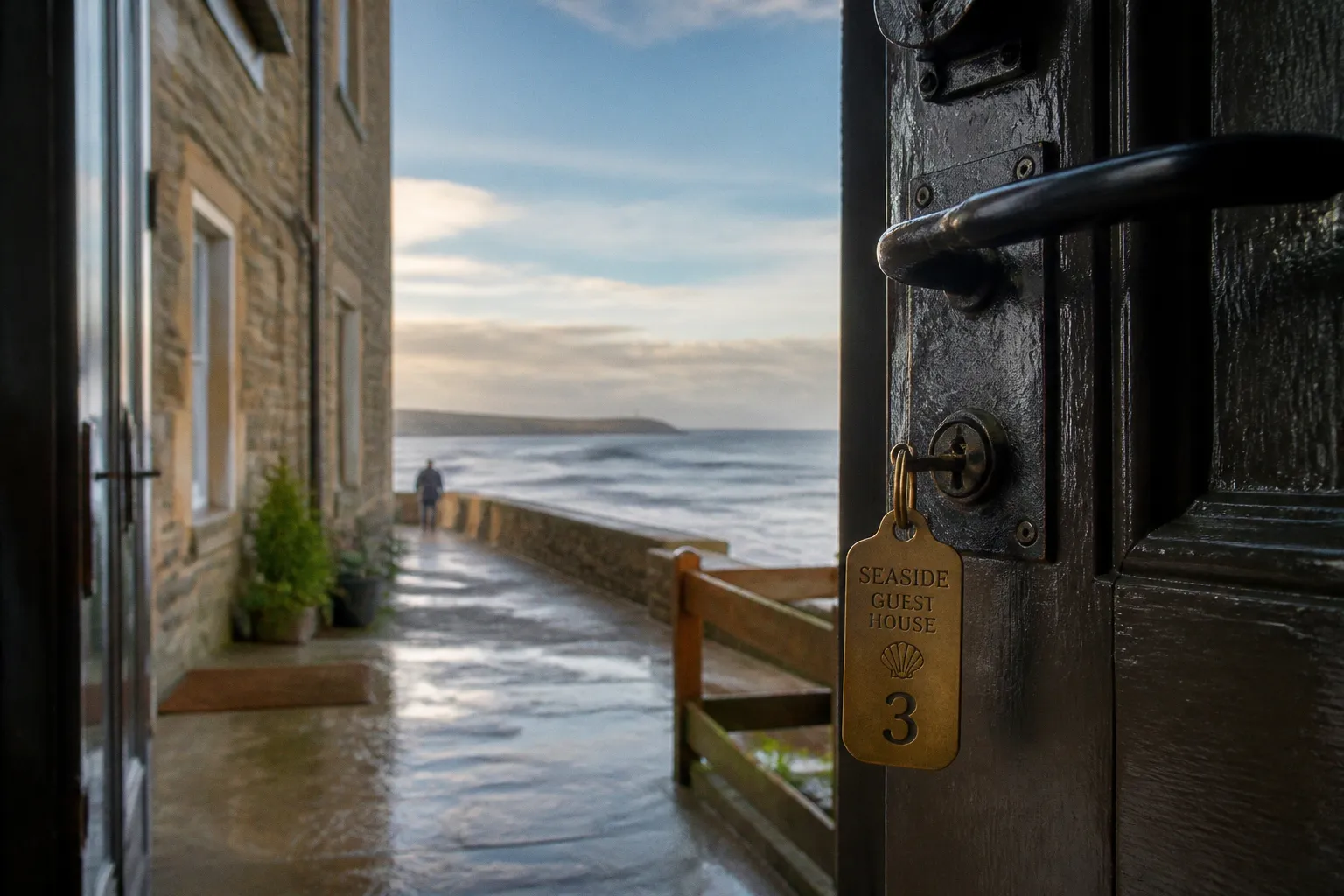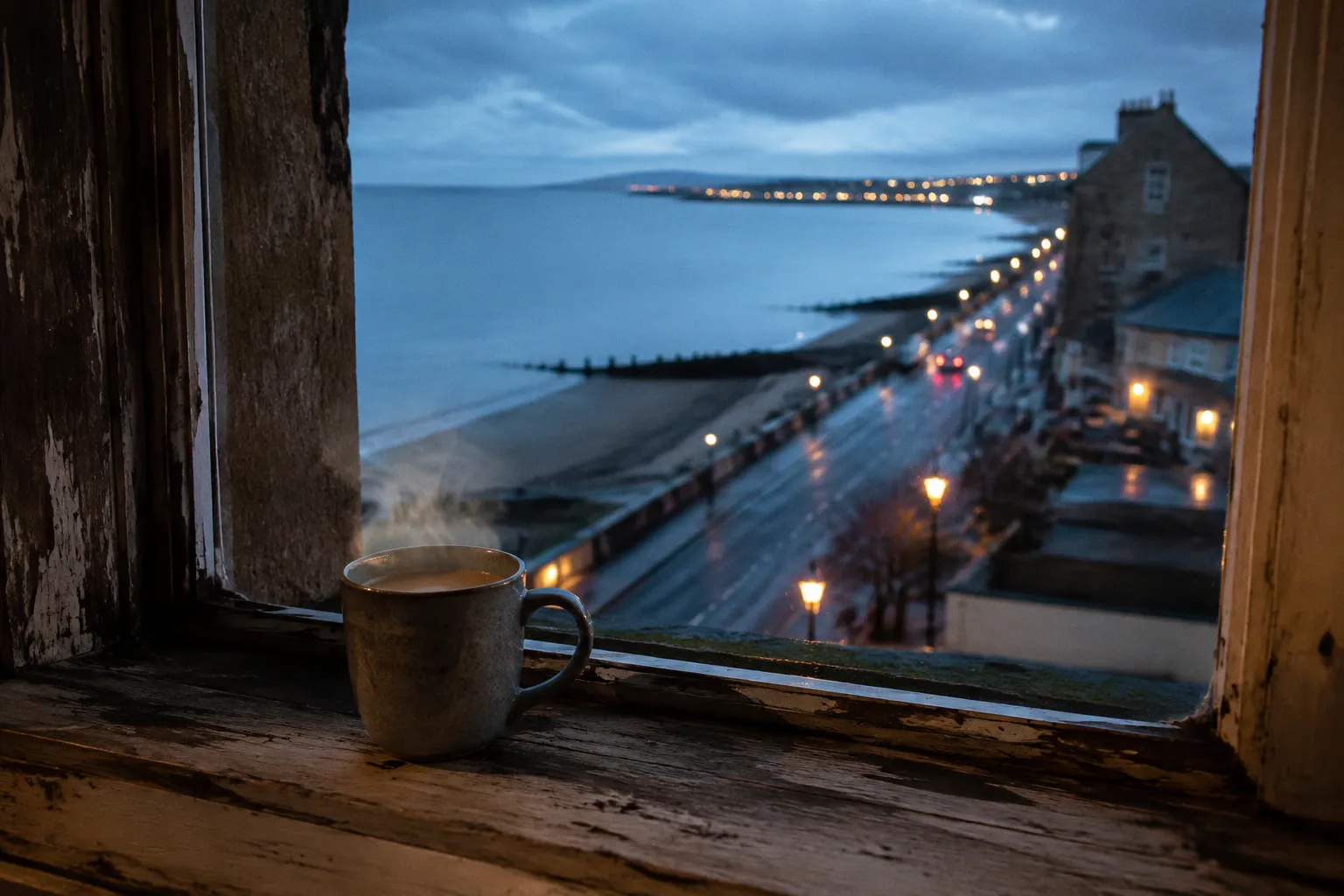
A two-mile curve of sand runs east from the old Edinburgh city boundary, and every summer weekend it fills with the same dense mix of day-trippers, open-water swimmers, dog walkers, joggers, and families who have been coming here since long before the trams reached the terminus at the bottom of the High Street. Portobello is not packaged. It is a working neighbourhood that happens to face the Firth of Forth, and that distinction shapes every practical decision a visitor will make — where to leave the car, when to step into the water, where to eat, and how to read the beach itself. Most of the hard-earned lessons here come from residents who have watched outsiders misread the place, sometimes expensively, sometimes dangerously, and the lessons tend to fall into a small number of predictable categories.
The Reality of Parking and Transport in a Residential Hub
Portobello's beach is wrapped in streets that were laid out for a Victorian seaside town and then absorbed, over the course of a century, into a city of half a million people. The roads never caught up. Parking here is the single most common mistake visitors make, and the council has made clear, without much diplomatic cushioning, that it intends to keep it that way.
Since 29 January 2024, Edinburgh has enforced a citywide ban on pavement and double parking with no exemptions. The standard penalty charge notice is £100, reduced to £50 if settled within fourteen days. Pulling two wheels onto the kerb to "leave room for pedestrians" is not a defence — the council position is unequivocal, and there are no exemptions regardless of how much pavement remains clear. Visitors who arrive in the morning and assume a quiet residential street will tolerate them for an hour tend to discover otherwise by lunchtime, usually by way of a yellow envelope tucked under the wiper.
A few practical points worth absorbing before you set off:
- Lothian Buses serve the beach on routes 15, 26, and 45, all of which terminate or pass through Portobello town centre. Cash passengers need the exact fare — the drivers do not give change.
- The streets nearest the promenade — including stretches of Portobello High Street and the side roads running down toward the sand — are densely residential and subject to restrictions that change between summer and winter seasons.
- The proposed year-round Controlled Parking Zone for Portobello has been the subject of sustained legal and community dispute; its current status is not settled, and visitors should not assume that the absence of a ticket on a windscreen equals permission to stay.
- Where legitimate parking does exist, it fills early. The main pay-and-display lots near the promenade are sized against demand rather than convenience, and turnover on a July Saturday is brisk.
The simplest working assumption is also the most accurate: treat Portobello as a place you reach by tram, bus, or on foot, and treat any kerb as out of bounds. The new tram extension to Newhaven has not yet reached Portobello, but the existing 15 and 26 services run frequently enough that waiting is rarely the limiting factor.
A residential beach does not negotiate. The kerb belongs to someone who lives behind it, and the £100 notice reflects that.
Navigating Water Quality and Seasonal Health Risks
The Firth of Forth is not the Mediterranean, and SEPA does not pretend otherwise. The agency's standing advice is that bathing is not advised during or for one to two days after heavy rainfall, because of the risk to bathers' health from water pollution — primarily the result of combined sewer overflows discharging into the firth after storms. Portobello has its designated bathing water, and SEPA monitors it formally between 15 May and 15 September each year, but the official monitoring season is not a guarantee of clean water on any given day. It is a sampling programme, not a clean-water certificate.
A few patterns worth knowing before you commit to going in:
- Summer water temperatures typically hover between 8°C and 16°C. That range sounds harmless until you are chest-deep in it without a wetsuit, when the cold becomes a judgement problem rather than a comfort problem. Cold-water shock is real, and it happens fast.
- The beach itself runs roughly 1.5 kilometres of sand, but the cleanest and most consistently used swimming is found at the western end, near the outflow from the Edinburgh Leisure outdoor pool, where the year-round open-water community congregates.
- Lion's mane jellyfish — large, reddish-brown, sometimes thirty centimetres across the bell — are a known presence in these waters, most reliably between August and October. They sting.
- Recent spikes in bacterial readings have been investigated by SEPA, and at least one analysis has pointed to gull fouling rather than human sewage as a contributing factor. The point is not which source dominates on a given day; the point is that water quality varies visibly, and visible caution is the norm among locals.
The open-water swimming community at Portobello is its own quiet institution. Locals swim year-round, almost always in wetsuits, almost always with brightly coloured tow floats. They will tell you, without ceremony, when conditions are wrong. New visitors should listen, because the community's collective knowledge of currents, runoff timing, and rip behaviour is not available on any single website.
Safety Protocols for an Un-Lifeguarded Shoreline
Portobello's beach does not have on-duty lifeguards during the summer months, and this is the single fact most often missed by visitors who have flown in from beaches elsewhere in the British Isles or further afield. The sand is patrolled informally by the swimming community and by people walking the promenade, but in an emergency the response comes from the coastguard or ambulance, not from a flagged zone with a first-aid station and a row of yellow-and-red flags.
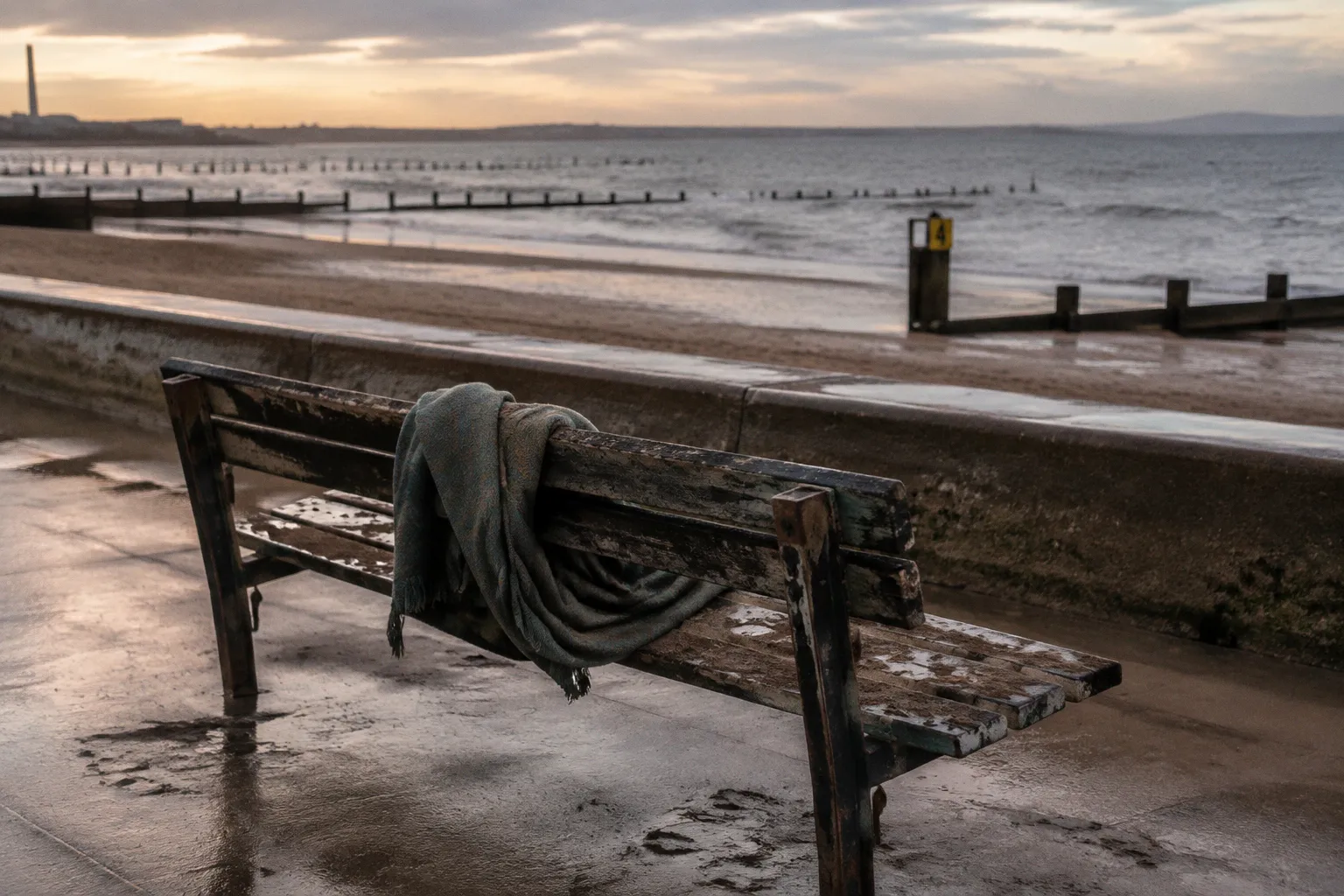
What the beach does have is a piece of quiet municipal engineering. Six numbered safety markers have been fixed to the beach defence groynes and the sea wall since April 2021, so that someone phoning for help can say "I am near marker four" rather than attempting to describe a position on a curving 1.5-kilometre stretch of sand. This is genuinely useful, and visitors who intend to swim should note the nearest marker before they go in. The markers are small, painted on metal discs bolted to the structures, and easy to miss until you know to look for them.
A working list of protocols, written from observation rather than any official checklist:
- Swim parallel to the shore if you are not confident in your open-water ability. The firth's currents tend to push swimmers east along Portobello, and a swimmer who panics and tries to fight straight back to their towel can quickly find themselves out of their depth and out of position relative to their landmarks.
- Tell someone on the sand where you have gone in and roughly when you intend to come out. The community standard is to swim with a buddy; solo winter swims do happen, but they happen among people who have spent years building up to them.
- Treat the absence of flags as the absence of flags. There is no flagged bathing zone, no lifeguard tower, no public announcement system for water hazards. The promenade is a public space, not a managed beach resort.
- Watch for the seasonal rhythm. The Portobello Loony Dook on New Year's Day draws hundreds of swimmers into the firth in the middle of winter — a tradition worth witnessing from the promenade, with a flask, even if you have no intention of joining in.
- Jellyfish blooms are not theoretical between August and October. If the water looks unusually thick, or carries visible reddish-brown masses near the surface, stay out.
The beach will not warn you. The numbered markers along the groyne are the only concession to the visitor who arrives without local knowledge, and even they require you to read them.
Dining and Local Culture Beyond the Tourist Trail
Portobello's food scene has shifted noticeably in the last five years, and the centre of gravity has moved east toward Joppa. Joppa Rocks, which opened in spring 2021 at 84 Joppa Road, is the most visible example: a seafood restaurant built into a former public toilet block, with tables angled toward the firth and a short menu built around East Coast shellfish and day-boat fish. The building's conversion has been one of those quietly successful Edinburgh adaptations — a piece of seaside civic infrastructure repurposed for a use that locals actually wanted — and reservations are advisable on summer evenings, particularly at weekends.
The promenade itself is lined with cafes of varying seriousness, and the practical lesson here is timing. The good ones fill up between roughly 10:30 and 12:00 on weekend mornings, and again from about 15:00 onward for the post-swim crowd. Arriving at 11:45 and expecting a window seat is a common mistake; arriving at 14:30 for a late lunch is a different one, because several of the smaller places close between meal services and reopen only for dinner.
| Setting | What to expect | Best timing |
|---|---|---|
| Promenade cafés (mid-Porto) | Casual, coffee-led, mixed menu | Early morning or after 15:00 |
| Joppa Road restaurants | Seafood-led, sit-down, reservations advisable | Evening, especially weekends |
| High Street bakeries | Walk-up, queues build by 10:00 | Before 09:30 or after 14:00 |
| Outdoor pool café (seasonal) | Limited menu, dependent on pool opening | Midday when pool is operating |
A note on the pool: the Portobello Outdoor Pool is run independently of the beach and has its own seasonal schedule. Whether it is open on a given day cannot be assumed; visitors planning around it should check the operator's current posting rather than rely on memory or last summer's habits. The pool itself is a separate venue with its own lifeguarded enclosure and should not be confused with the open beach, which remains un-lifeguarded.
The deeper point about dining in Portobello is that the neighbourhood is not laid out for tourists. The best meals come from places that also serve the locals who live there year-round, and that means behaving like a resident rather than a day-tripper: walking a little further east along the coast toward Joppa, booking ahead where booking is offered, accepting that some of the most interesting rooms are not on the main drag. The promenade has its pleasures — an ice cream, a coffee, a slow walk in the haar if the morning has rolled in off the firth — but it does not hold the strongest kitchens.
Closing
Portobello rewards visitors who treat it as a community first and a beach second. The £100 fine for pavement parking is not bureaucratic theatre; it is the council's answer to a problem the neighbourhood has lived with for years. The SEPA warning about bathing after rainfall is not pedantry; it is the firth speaking through the only channel it has. The lack of lifeguards on the sand is not a budget failure; it is the structural reality of a city beach inside a residential zone that has never been converted into a managed resort.
The hard-earned lessons are simple. Reach the beach by tram or bus, and assume that any kerb you might be tempted to use belongs to a household that has already lost patience. Read the water before you swim, respect the swimmers who already know it, and step out at the first sign of rainfall or any visible change in clarity. Eat where the locals eat, walk a little further east if you want the best table in the house, and accept that the strongest kitchens sit on Joppa Road rather than the High Street. Walk the promenade slowly enough to read the numbered markers on the groyne.
Portobello is honest. The firth is colder than it looks, the parking is stricter than it feels, and the food is better than the postcode suggests. Visitors who arrive expecting any of those things to be otherwise will leave mildly frustrated; visitors who arrive ready to learn will leave with a working knowledge of a shoreline that does not need to be sold to anyone.