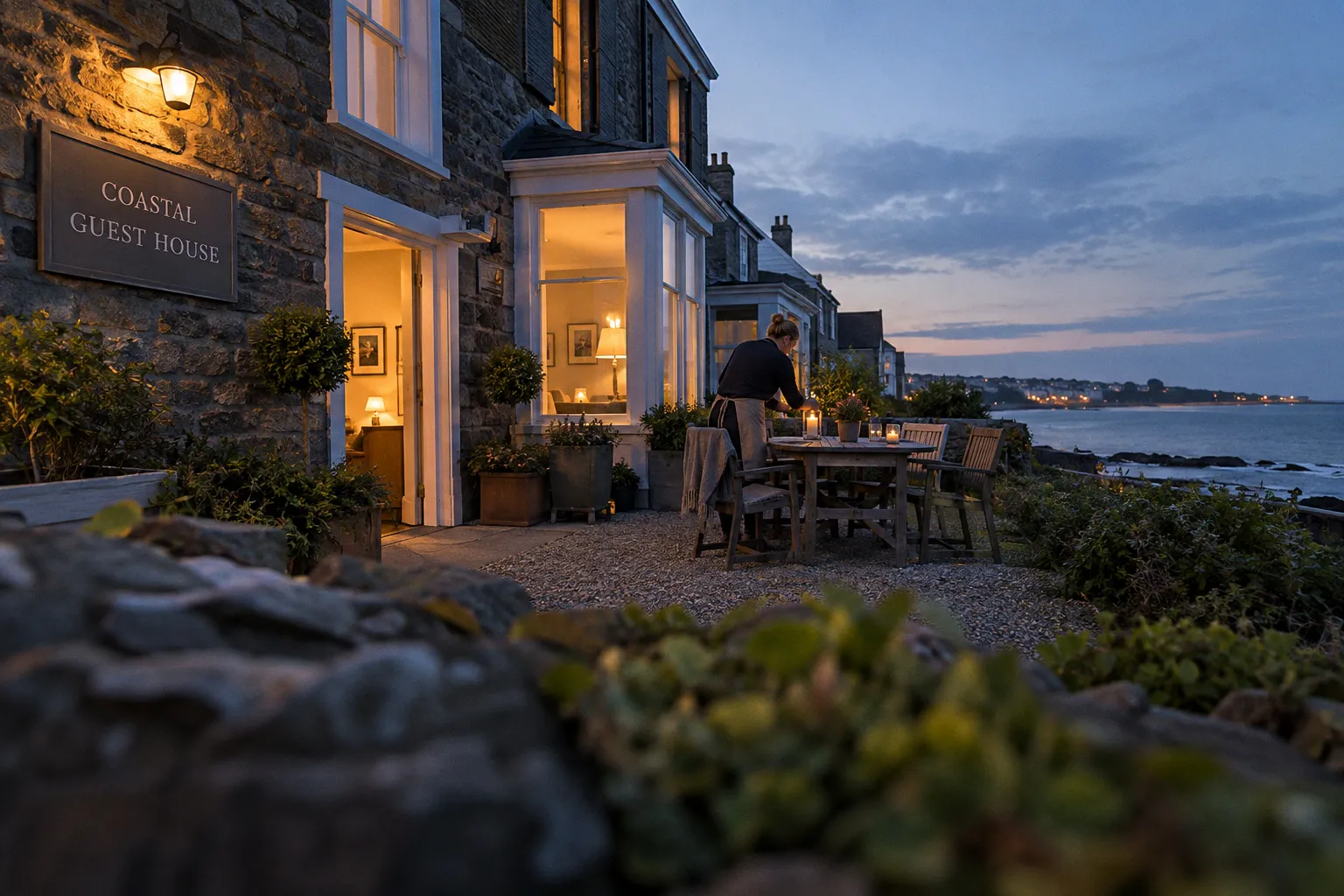
For independent operators running coastal and self-catering stock from Edinburgh's New Town out to East Lothian's shoreline, the question is what that headline read actually means at property level — and what the latest transaction tape is signalling about coastal asset values heading into the quieter months.
What the autumn signals point to
Hotel Dive's framing puts discretionary spend behind luxury inventory and rebranded flags. That is the macro picture, not the local one. For a small guest house or self-catering cottage, the practical test is whether the existing proposition — sea-view rooms, walkable coastal access, a recognisable breakfast — still holds the gap a flag would otherwise fill. The cost of conversion is rarely justified below twenty keys; the alternative is sharpening what is already on the table.
The report names destination dining as a demand driver. For coastal properties that already run a kitchen or partner with a local restaurant, the meal becomes part of the booking decision rather than a line item to absorb. Guests book the experience, not the bed. Operators who treat breakfast as a sunk cost rather than a selling point should revisit the maths: a stocked table with local provenance justifies a higher average daily rate than a continental buffet sourced from a cash-and-carry.
The transaction tape worth tracking
A separate signal from Hotel Owner: a coastal hotel in North Wales listed at £4m. Comparable coastal listings remain the closest proxy UK owners have for current asset values on the shore. For operators weighing capital decisions — refinance terms, acquisition, or simply benchmarking the replacement value of their own property — the asking price, and what the asset eventually clears at, is the data point worth following into autumn.
Listing price is not sale price. Coastal hospitality transactions in the UK secondary market tend to trade at a discount to guide, and the discount widens when the operating accounts are thin. Anyone using a comparable to value their own asset should be asking the agent for last year's GOP and occupancy, not just the bedrooms count.
What this means for an East Lothian cottage
Strip the headlines back to operations. Occupancy into October depends on three levers: a clear shoulder-season rate strategy, an up-to-date listing on every channel that matters for self-catering, and a dining or provisions story that makes the property worth the drive. Hotel Dive's analysis confirms demand is present in the segments operators here already serve; the North Wales listing confirms at least one coastal asset is on the market at a published price. The work between now and the spring bookings opening is the unglamorous part — pricing, photos, and a kitchen worth photographing.