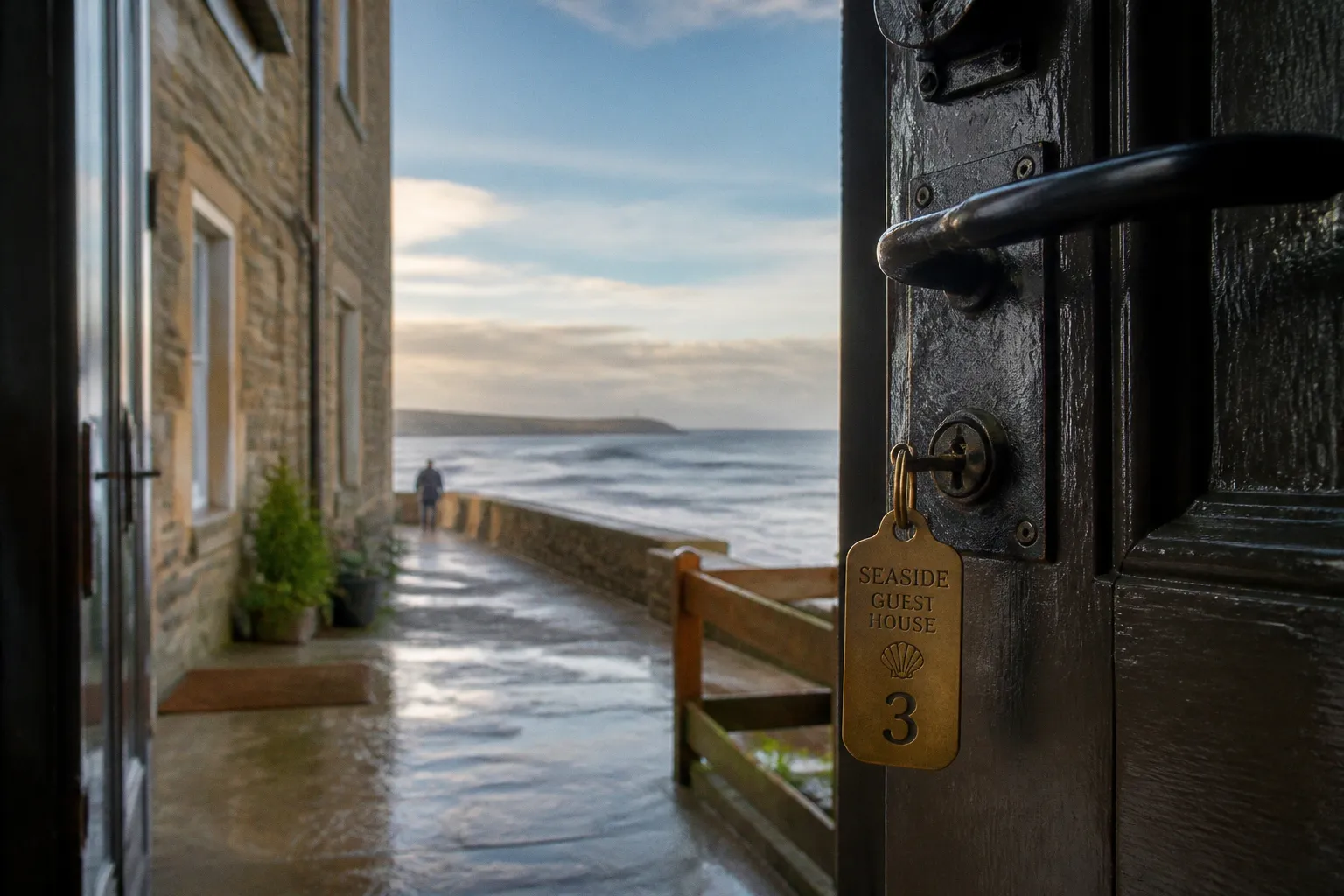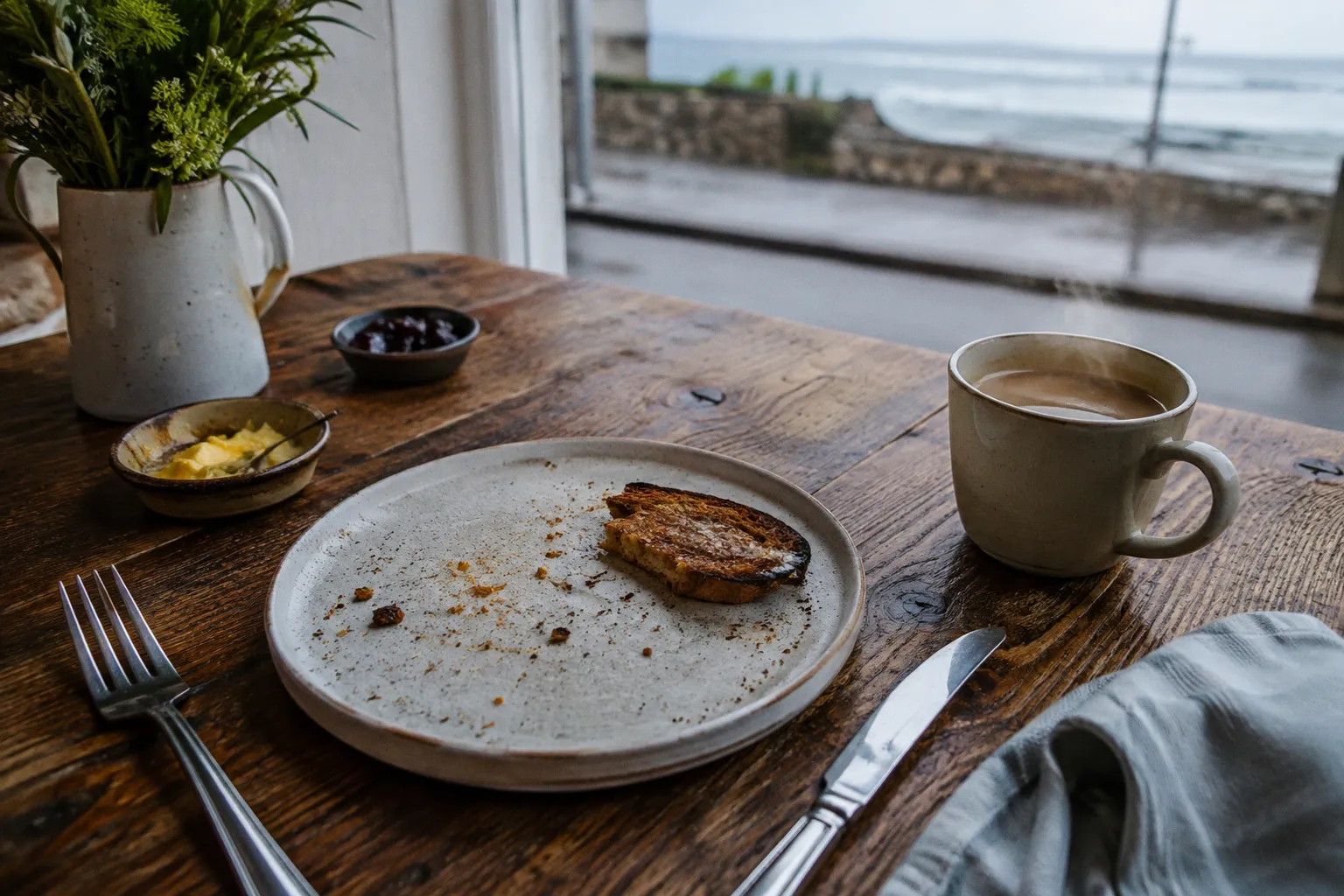
But the operators behind Edinburgh’s heritage guest houses and East Lothian’s coastal retreats are quietly reconsidering whether that image still earns its place on the website header.
Across the Firth of Forth, morning service has become one of the most contested line items on an operator’s ledger. Independent innkeepers have always understood breakfast as the social contract of the stay: the moment a guest enters the dining room and the relationship becomes personal. The question now is not whether to host that moment, but whether the cooked component still justifies the cost, the waste and the operational weight it carries.
Dropping cooked breakfast at a B&B is no longer a hypothetical exercise. It is an active decision in properties ranging from New Town Georgian townhouses to sea-facing cottages along the East Lothian coast. The decision is rarely about whether guests like bacon. Of course they do. It is about whether a small property can continue to deliver a made-to-order menu without allowing breakfast to dominate the business.
The Legal Reality of Morning Service in UK Guest Houses
Here is the fact that reframes the entire debate: UK B&B operators are not generally under a legal requirement to serve a cooked breakfast. There is no universal tourism rule or industry mandate obliging a guest house to plate up a Full Scottish, Full English, Welsh or Irish breakfast every morning.
A property can offer a continental breakfast, a limited morning tray or no breakfast at all, provided the arrangement is lawful, accurately described and clear to the guest before booking. Food safety obligations still apply where food is served. So do the ordinary rules around allergen information, hygiene, business registration and honest advertising. The absence of a cooked breakfast is not an exemption from those responsibilities; it simply means that the operator has more freedom over the format of the service.
That distinction matters because the cooked breakfast has often operated as an unofficial entrance fee to the category — a performative proof that one is, indeed, a proper bed and breakfast rather than a room in someone’s house. The prestige is real. In coastal Scottish markets where competition for heritage credentials runs deep, that prestige has historically outweighed the spreadsheet.
But the spreadsheet is winning.
A cooked breakfast is not a legal obligation. It is a cultural one — and cultural expectations are precisely what operators now have permission to redesign.
The practical risk is not that a council inspector will demand a sausage on the plate. It is that a guest books one kind of experience and receives another. A listing that presents itself through images of a full Scottish breakfast cannot quietly replace it with packaged cereal and a flask of coffee without damaging trust. The legal question may be straightforward; the commercial and reputational question is more delicate.
That is why the strongest operators do not frame the change as removing breakfast. They describe what is being offered instead, show it clearly and make the value legible before arrival. A room-only rate, a pre-booked continental option and a limited cooked menu are all viable models. Confusion is not.
Operational Pressures: Why Hosts Are Moving Beyond the Full Scottish
The arithmetic is where the romance tends to die. A proper Full Scottish plate — bacon, sausage, Lorne square, black pudding, tattie scone, tomato, mushroom and egg — runs through a surprising amount of product per cover. Even at modest portions, the ingredient cost is only the beginning. Waste, preparation time, refrigeration, cooking fuel, equipment wear, washing-up and the host’s labour all sit behind the advertised price.
Eggs are a useful example because they expose the difference between a menu that looks simple and one that is operationally demanding. A guest may order two eggs, but the kitchen still needs to be prepared for different preferences, substitutions, timing requests and late changes. One person wants poached eggs; another wants them hard. One guest avoids pork; another asks for gluten-free toast. None of these requests is unreasonable. Together, they turn a small breakfast service into a short-order kitchen.
Then there is the staffing question. Smaller guest houses rarely run a breakfast chef. The host — often the owner-operator — is also the cook, the dishwasher, the front-of-house and the person making polite conversation with the couple from Munich who arrived the previous evening. Producing a series of individual cooked plates during a narrow service window is a sprint that no amount of mise en place quite fixes. It is also a sprint repeated, almost identically, every morning of the year, regardless of occupancy.
The problem becomes sharper when demand is uneven. A property may have several rooms occupied, but not every guest will eat at the same time, choose the same dish or eat breakfast at all. Early departures, day trips, dietary restrictions and guests who prefer to find coffee elsewhere all create gaps in the forecast. The operator is left balancing two undesirable outcomes: prepare too much and waste food, or prepare too little and make the service feel constrained.
The pandemic years accelerated what was already a slow shift. Operators who moved towards room-delivered trays discovered that many guests valued privacy, flexibility and speed more than the conventional dining-room ritual. Continental offerings — cereal selections, natural yoghurt, fresh fruit, mini loaves, granary bread, croissants, jams, tea, coffee and fruit juice — can be prepared with less live cooking and served across a wider range of arrival times.
That does not make them automatically better. It makes them easier to control.
A cooked breakfast can still work well when the property has enough volume, a dependable kitchen layout and a service pattern that is easy to predict. It becomes harder to justify when a single host is carrying the whole operation, especially if breakfast is included in every room rate whether or not it is eaten.
The pressure points behind a cooked service
For a small Edinburgh or East Lothian property, the decision usually turns on a combination of pressures rather than one dramatic cost.
- Occupancy is not the same as breakfast demand. A full house does not guarantee a full dining room. Guests may leave early, eat lightly or opt out altogether.
- The service window concentrates labour. Cooking, plating, serving and clearing happen within the same short period, leaving little room for interruption.
- The menu creates stock complexity. Bread, eggs, meat, vegetarian alternatives, preserves and accompaniments all need to be available even when only a few guests order them.
- The room itself has a cost. A dining room must be heated, cleaned, reset and maintained whether breakfast is busy or quiet.
- The host’s presence is part of the product. Time spent managing a demanding breakfast service is time not spent on arrivals, housekeeping, maintenance or guest communication.
The full Scottish therefore needs to be assessed as a complete operating system, not as a plate of ingredients. Its value may be substantial, but so is the machinery required to deliver it consistently.
Designing a High-End Continental Experience That Retains Value
This is where the design-conscious operator pulls ahead. Dropping the cooked breakfast is not, on its own, an upgrade. It is only an upgrade if what replaces it carries its own architectural weight. A limp basket of supermarket croissants and a plastic pot of apricot jam is not a continental breakfast; it is a confession that the kitchen has given up.
The properties making the transition successfully treat the morning offering with the same care they bring to a bedroom refurbishment. The brief is similar: tactile, considered, generous in texture and restrained in ornamentation. A pressed-glass dish of seasonal fruit — Scottish berries when the calendar permits, forced rhubarb in early spring, or a carefully chosen preserve later in the year — sets a tone. A ceramic crock of granola, a good loaf from a local bakery and butter served at the right temperature communicate more than a long list of generic products.
Fresh bread, sliced at a sensible thickness and served on a wooden board rather than a folded napkin, transforms the act of breakfast from a functional handover into a small ceremony. The point is not theatricality. It is that every object should appear to have been chosen rather than merely purchased.
A high-end continental model also needs contrast. Soft yoghurt needs something crisp beside it. Fruit needs acidity or texture. Sweet pastries should not be the only source of indulgence. A savoury element — good cheese, oatcakes, a vegetable spread or smoked fish where it suits the property and the price point — can prevent the meal from feeling like a collection of hotel portions.
The coastal setting offers useful material without requiring a theme park version of Scotland. Local bakery products, seasonal fruit, preserves, oat-based items and well-sourced dairy can establish a sense of place more effectively than tartan napkins or a menu crowded with declarations of provenance. In a sea-facing cottage, the breakfast should feel connected to the landscape without becoming a costume.
The move away from the frying pan is not a downgrade. It is a re-curation of the morning moment, with higher margins and a sharper visual identity.
The welcome tray has a part to play as well. A small bottle of pressed apple juice, a proper cafetière, a reliable grinder and loose-leaf Scottish breakfast tea are inexpensive gestures that read as care. A guest feels considered rather than processed. In a New Town Georgian townhouse, that distinction is the entire product.
Presentation must, however, remain subordinate to service. A beautiful tray that arrives late, lacks milk or leaves the guest guessing whether the yoghurt contains allergens is not a high-end experience. The continental model works when it is generous in the details that affect comfort: clear labelling, proper crockery, fresh water, enough coffee and an easy way to request replenishment.
The volume of a continental offering also rewards a slower approach. There is no egg to finish and no plate to move from pan to pass at speed. The host can move through the dining room, top up the fruit, refill the cafetière and have a conversation. The room retains its function as the social heart of the stay. The relationship does not collapse simply because there is no hot plate involved.
| Parameter | Traditional Cooked Model | Curated Continental Model |
|---|---|---|
| Kitchen workload per guest | High — short-order cooking and several separate components | Low to moderate — preparation, plating and replenishment |
| Food cost per cover | More exposed to protein, egg and portion variation | More predictable when the range is tightly controlled |
| Waste risk | Higher when demand and menu choices are difficult to forecast | Lower when quantities, storage and replenishment are managed carefully |
| Staffing demand | Concentrated cooking and clearing during the service window | Mostly preparation, hosting and replenishment |
| Guest perception | Traditional and hospitality-classic | Considered, flexible and design-led |
| Margin pressure | Costs rise with menu complexity and live cooking | Costs are easier to model, though premium ingredients still matter |
| Best suited to | Full-service properties with reliable breakfast demand | Small operators and design-led stays with varied schedules |
A continental breakfast is not automatically inexpensive. Premium bread, fresh fruit, specialty coffee, good preserves and individually portioned products can quickly consume the saving if the operator keeps adding items in pursuit of abundance. The design discipline is knowing when the spread feels complete.
Sustainability and Waste: The Hidden Cost of Made-to-Order Eggs
Food waste is the line item that rarely makes it onto the marketing page, but it has become impossible to ignore. A cooked breakfast model is, in its structure, a forecasting problem. The operator must estimate how many guests will request each component and how much preparation is needed to keep the service moving. Overproduction is often the safer choice because nothing reads worse than a guest being told that the Lorne squares have run out halfway through the morning.
The result can be waste in several forms: unused ingredients, over-prepared components, opened packs that are difficult to carry into the next service, and food returned from plates. The waste is not limited to meat. Eggs, mushrooms, tomatoes, toast and garnishes all become part of the same calculation.
A buffet-style or room-delivered continental model can flatten some of that risk, but only if it is run as a controlled service rather than an invitation to overfill every dish. Bread, yoghurt, fruit, granola and jam can often be portioned or replenished in smaller quantities. The guest who opted into breakfast, the late riser who arrives after the main rush and the walker who leaves early can draw from the same carefully assembled offer, rather than requiring a separate production run for each pattern of demand.
The important point is not that one format eliminates waste. It does not. A continental buffet can create its own problems when food is placed out too early, displayed in excessive quantities or discarded because it has been exposed for too long. The advantage comes from greater control over preparation and replenishment.
Fresh-to-order cooking can also help reduce waste when it is based on confirmed demand rather than on a continuously replenished buffet. Cooking eggs, toast or another hot component after a guest has opted in means that the operator is less likely to prepare food that nobody wants. It is a useful waste-reduction measure, but not a universal solution. The labour involved, the number of menu choices and the ingredients held in reserve still determine whether the model makes sense.
The most sustainable breakfast is not defined by whether it is hot or cold. It is defined by how precisely the operator matches preparation to real demand.
For coastal properties — particularly those working towards sustainability certification in Scotland — this distinction matters. A guest choosing a Portobello or Gullane stay may be making a values-based decision, but values have to be visible in the operating details. Named local suppliers, sensible portioning, clear recycling arrangements and a transparent approach to unavoidable waste can read as serious. A generic plate of bacon accompanied by vague sustainability language does not.
There is also a quieter benefit. Waste reduction can make the kitchen calmer. Fewer last-minute substitutions, fewer half-used products and fewer pans moving through the sink give the host more capacity to notice what guests actually need. Sustainability is not only a matter of disposal; it is also a matter of designing a service that does not generate unnecessary work.
Strategic Pricing: Unbundling Breakfast for the Modern Traveller
The pricing question is the one where most operators hesitate. There are two broad schools of thought.
The first holds the room rate flat and absorbs breakfast into the headline price. This model is simple to explain and protects the operator from guests comparing a room-only rate with a breakfast-included rate. It also quietly asks guests who never eat breakfast to subsidise those who do — including guests who leave at six, prefer a café downstairs or regard breakfast as an unnecessary part of the booking.
The second unbundles. The room is sold on a room-only basis, while breakfast is presented as an optional addition, either through a higher-tier rate or a clearly stated supplement. This gives the guest more control, but it also requires sharper communication. The booking page must say what is included, what is available on request and how much notice the property needs.
Unbundling is not a discount. It is an honest segmentation — and it rewards the operator willing to let the guest choose.
A cooked add-on creates a genuine forecasting issue. If breakfast is optional, demand can vary sharply from one morning to the next. Two guests may opt in on a quiet weekday; a larger proportion may do so at the weekend. A small kitchen cannot always scale a complex cooked menu at short notice, especially when the host is also covering every other role.
That is precisely why a curated continental offering pairs well with the unbundling logic. The operator can define the portions, establish a preparation rhythm and replenish according to actual demand. The cost of one extra cover is easier to understand than the cost of keeping an entire cooked menu available for a handful of uncertain orders. There is no need to hold every breakfast component in reserve or make a last-minute trip for missing rashers.
The rate structure should still reflect the quality of the offer. A continental breakfast presented as a cheap substitute will be judged as one. A thoughtfully designed breakfast with good coffee, local bakery products, seasonal fruit, comfortable service and proper dietary information can support its own price. The guest is not paying only for calories. They are paying for convenience, atmosphere and the confidence that the morning has been considered.
There are several workable ways to frame the offer:
1. Room-only with a pre-booked continental breakfast. This is the clearest model for guests with different schedules and allows the operator to prepare according to confirmed numbers.
2. A breakfast-included rate alongside room-only. This preserves choice while keeping the conventional package available to guests who prefer one headline price.
3. A limited cooked supplement on selected days. A full Scottish can remain part of the identity without being produced every morning. The limitation must be explicit rather than discovered at check-in.
4. A flexible room-delivered breakfast. This suits early risers, families and guests who value privacy, but the delivery window and replenishment policy need to be clear.
For the leisure traveller — the couple in town for festivals, the family on a coastal weekend, the design-conscious visitor who chose the property for its aesthetic — flexibility can be part of the experience. For the business traveller, it may be essential: a well-lit corner of the dining room, strong coffee, a piece of fruit and an exit in fifteen minutes. The traditional cooked breakfast, served slowly and eaten sociably, was always a leisure product. Not every modern traveller is buying that product.
Where This Leaves the Small Operator
The honest answer is that there is no single correct answer, and any operator who tells you otherwise is selling something. Properties still plating up a full cooked breakfast are not making a mistake. They may be servicing a specific market segment: heritage-oriented guests, international visitors for whom the Full Scottish is part of the destination, or returning customers who regard the dining-room ritual as central to the stay. For those properties, the cost is part of the product.
A cooked breakfast can also be a powerful differentiator when it is genuinely good. If the kitchen has a reliable supply chain, the host enjoys the service and guests consistently choose the menu, removing it may erase one of the property’s strongest assets. The point is not to treat the frying pan as obsolete. It is to stop treating it as compulsory.
For the operator running three to eight rooms in a converted tenement flat, a Georgian townhouse or a sea-facing cottage along the East Lothian coast, the calculus has shifted. The legal freedom to step away from the frying pan has been there for years. What has changed is the pressure on labour, the cost of unused stock, the variety of guest schedules and the possibility of making a continental breakfast feel like a deliberate expression of the property.
The most resilient model may not be a complete rejection of cooked food. It may be a narrower menu, advance ordering, selected service days or a well-priced optional upgrade. The important thing is that the format matches the property’s staffing, kitchen and guests. A three-room house should not imitate a hotel buffet. A design-led townhouse does not have to imitate a roadside café. A coastal cottage can offer a generous morning tray without pretending to run a full restaurant.
The question to ask is not whether cooked breakfast is still worth serving. It is whether it is still worth serving as the centrepiece of every morning, for every guest, at every rate.
For a growing number of independent operators across Edinburgh and the Firth of Forth coastline, the answer is no. The alternative is not a diminished breakfast, but a more deliberate one: easier to forecast, easier to price, less wasteful when properly managed and better aligned with the way guests actually use a small seaside property. The dining room can remain warm, personal and memorable even when the frying pan is no longer running the show.