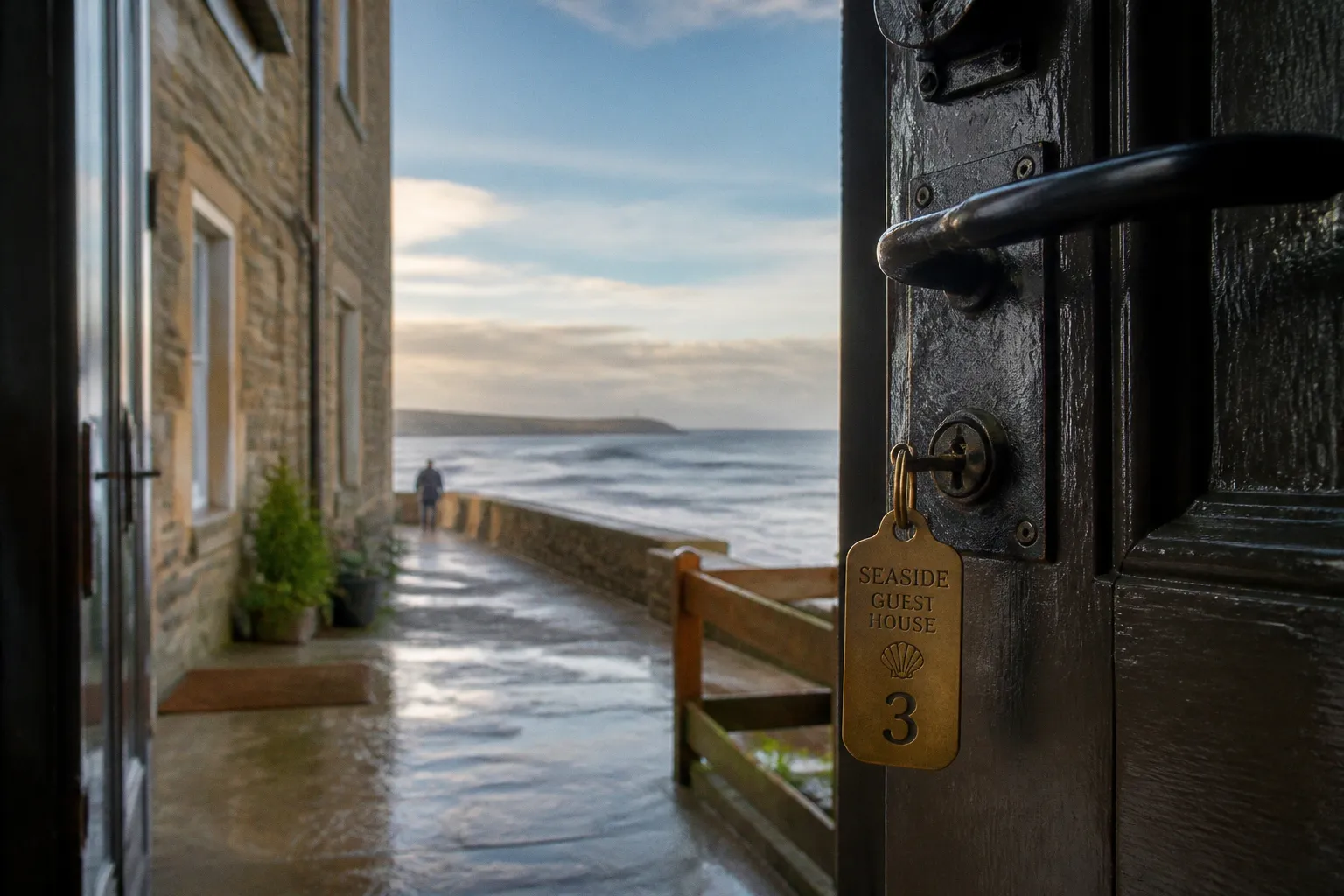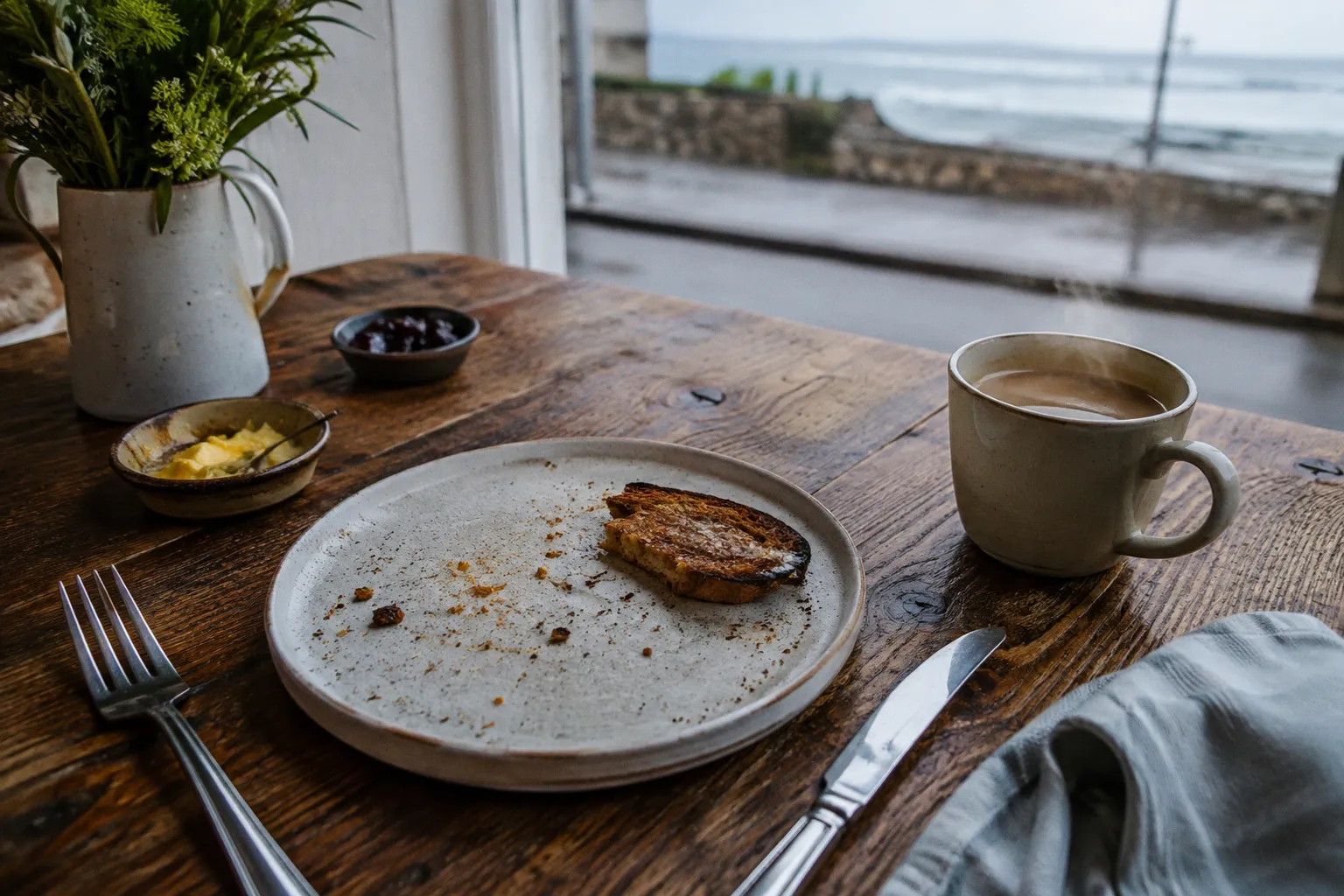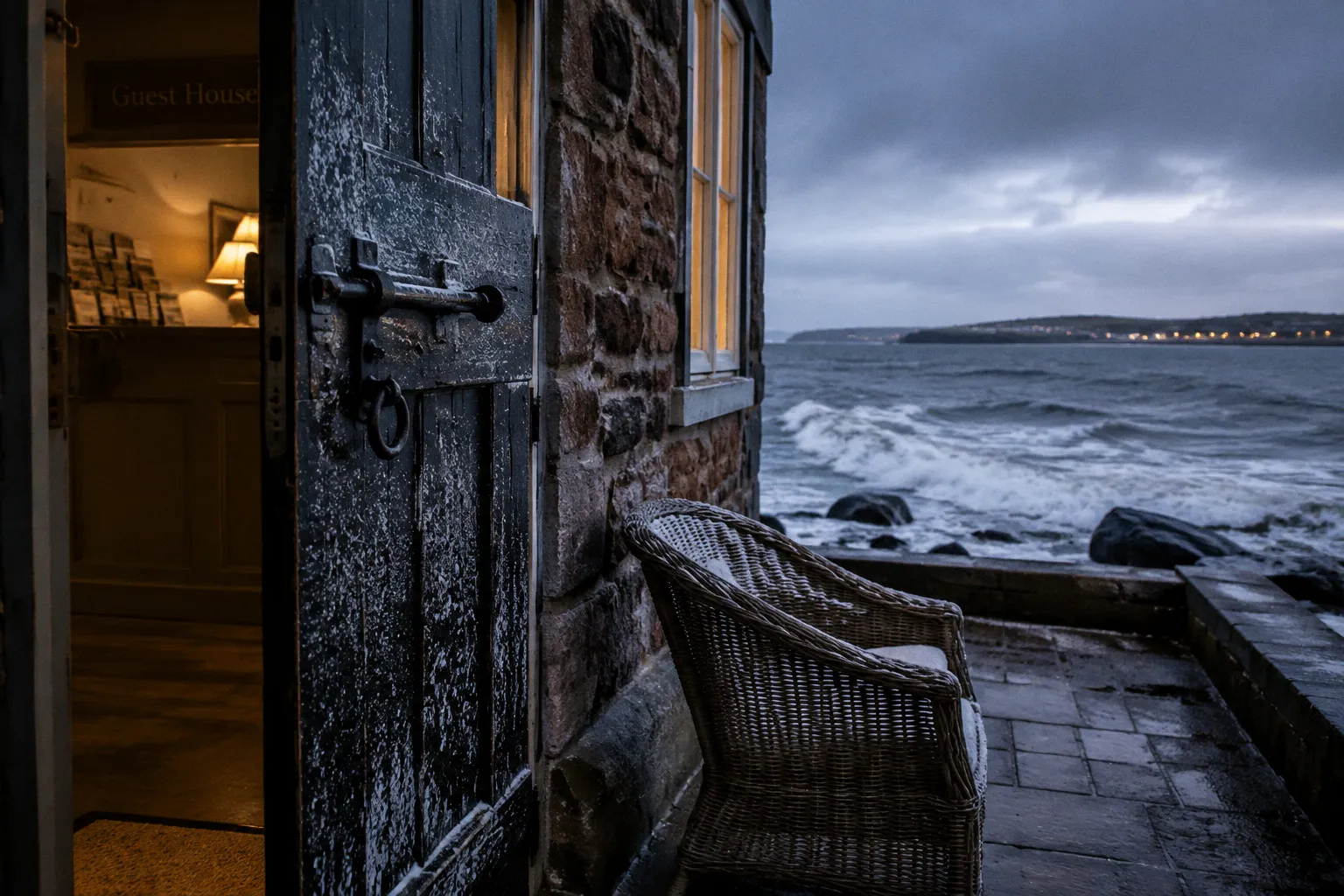
The arithmetic has not shifted — occupancy still drops, the radiators still work overtime — but the off-season guest's expectation has quietly reshaped the design brief. A winter stay is no longer a discounted summer. It is its own category of hospitality, and the operators who treat it that way are quietly outperforming the ones who do not.
The Economics of the Off-Season: Occupancy Realities
Across rural and coastal properties in the UK, January and February occupancy routinely settles somewhere between 40% and 55%. Compared to the 85% to 95% a well-run coastal B&B might record between June and September, that is a steep decline on paper — but the gap has narrowed in practice for a growing number of operators, and the reason is not a sudden influx of winter tourists. It is a structural shift in what those tourists book, and how they book it.
Short breaks have moved from a fringe option to a meaningful share of the off-season calendar. In regional coastal markets, short-stay bookings have represented roughly 32% of accommodation activity in recent seasons — a figure that compresses what was once a wide summer-to-winter spread into something more financially legible. A two-night February booking, priced correctly and packaged with intention, does not behave like a discounted week in August. It behaves like its own product. The demographic under that figure matters too: retired couples without school-holiday constraints, remote workers untethered from a Friday-to-Monday window, the walking-trade regulars who treat the East Lothian coast as a year-round destination rather than a summer one.
For an Edinburgh coastal B&B weighing the winter opening decision, the relevant baseline is not the peak-summer number but the realistic off-season ceiling. That ceiling is lower than the marketing material suggests, higher than the pessimist assumes, and almost entirely dependent on whether the operator has built a product worth booking in the dark months at all.
A winter stay is no longer a discounted summer. It is its own category of hospitality.
Fixed Costs vs. Operational Revenue: The Heating Threshold
Heating is the variable that decides the question for most properties before any revenue figure is consulted. A coastal guest house — exposed on three sides, often single-glazed in heritage wings, frequently under-insulated in converted Victorian and Georgian terraces — does not merely warm a building. It warms a building that is actively trying to lose heat to the North Sea.
That is not a metaphor. The fixed cost of winter operation begins with the standing charge alone, before a single guest steps through the door, plus the frost-protection baseline required to keep pipework intact. The honest version of this calculation deserves to be stated plainly: closing a coastal property in winter does not eliminate utility bills. A baseline of frost-protection heating, ventilation cycles to manage condensation, and standing charges continues regardless of whether the breakfast room is set for two or twenty.
The calculation, then, is not whether closing saves money. It is whether the marginal revenue from a winter-stay product exceeds the marginal cost of running the property at guest-comfort temperature rather than frost-protection temperature. For larger Georgian or New Town conversions with high thermal mass and high ceiling volumes, that gap can be uncomfortably narrow. For smaller, well-insulated properties with tight bedroom counts, it can actually widen into genuine margin — provided the product is designed for it.
This is where the conversation typically stalls. Operators default to one of two positions: either close everything and accept the fixed costs as the price of an intact April reopening, or open as usual and treat winter as a slower version of summer. Both miss the point. The actual decision sits in the design of what the winter stay is, and whether that product can command a price that justifies the temperature the building is being kept at.
Strategic Pivot: From Summer Long-Stays to Weekend Packages
The summer operating model for most coastal B&Bs is built around long stays: five to seven nights as the standard minimum, the family week as the typical booking unit, the breakfast routine calibrated for a full house. That model does not translate cleanly into January.
Operators who have made the off-season work have generally stopped trying to retrofit their summer product into winter conditions. The pivot is structural. Minimum-stay requirements relax from a week to two or three nights. Mid-week promotions — historically dismissed as the refuge of underperforming hotels — become the spine of the off-season calendar rather than a fallback. Pet-friendly packages, which have grown steadily in regional coastal markets, take on a more prominent role in the winter mix, when the storm-watching clientele and the off-season dog-owning segment converge into a single, capturable audience.
What is being sold is a different stay. The bedroom hardware may be identical, but the framing changes. Welcome amenities that worked in August — the cool stone countertop, the light linen throw, the bright buffet — give way to a winter-coded equivalent: warmer tonal palettes, heavier textiles, the bedside reading lamp repositioned for darker afternoons. Pricing moves accordingly: weekend and mid-week rates replace weekly tariffs, and the operator stops apologising for it. Direct-booking incentives — which carry higher margin than OTA-led winter reservations — finally get the prominence they have earned all year.
| Operational Element | Summer Operating Model | Winter Operating Model |
|---|---|---|
| Minimum stay | 5–7 nights | 2–3 nights |
| Primary booking unit | Family week | Couple's short break |
| Bedroom textiles | Light linens, cottons | Wool throws, brushed cotton |
| Welcome amenity focus | Cool refreshment, light breakfast | Hot thermos, fuller welcome tray |
| Lighting design | Maximises long daylight hours | Compensates for an early sunset |
| Pricing structure | Premium weekly rate | Mid-week promotions, package-led |
| Operational tempo | High throughput, full house | Lower volume, higher per-stay attention |
The table is not a transformation checklist so much as a translation exercise. The property stays the same. The product does not.
Winterisation Requirements for Temporary Closures
For operators who conclude that the arithmetic does not justify a winter opening — and there are properties for whom that calculation is entirely correct — the closure itself is not a passive state. It is an active maintenance programme with its own design considerations.
Frost protection remains non-negotiable. Pipework in unheated wings must be either lagged or kept above the threshold at which water expands. Heating systems require ventilation cycles to prevent the condensation that, over a four-month closure, will quietly saturate heritage plasterwork and damage the very textiles that distinguish the property. A guest house left to its own devices through a Scottish winter does not come back in April looking like the property that closed in November.
A guest house left to its own devices through a Scottish winter does not come back in April looking like the property that closed in November — it comes back looking like a property that has spent four months breathing damp.
The smarter closure operators treat the off-season as a renovation window. The priorities tend to fall in a recognisable order:
1. Lagging and frost-protection checks across all exposed pipework, including loft spaces and outbuilding annexes
2. Ventilation cycles every 48–72 hours to manage condensation, particularly in rooms facing the prevailing wind
3. Soft furnishing rotation: rotation out, professional cleaning, climate-controlled storage
4. Carpet lift and underfloor inspection — the work a busy summer never permits
5. Lighting fixture audit, particularly in heritage rooms where older fittings underdeliver on both output and warmth of tone
6. Plasterwork and timber inspection for the early signs of moisture migration around cornices and window reveals
By the time the April bookings reopen, the property is not merely restored. It is recalibrated — which is, in itself, a defensible answer to the coastal B&B winter opening decision.
Navigating Scottish Non-Domestic Rates and Market Trends
As of April 2023, the Scottish non-domestic rates valuation roll recorded 1,455 B&B and guesthouse premises. That number is more useful as context than as a target. It describes the size of the competitive field against which any independent coastal operator is making the off-season calculation — large enough that no single property's strategy moves the market, small enough that any operator's misstep is visible to the segment.
For the independent innkeeper weighing the trade, the relevant question is not market share but unit economics. How does the property's specific fixed-cost structure interact with its specific winter occupancy ceiling? How much of that 40% to 55% winter occupancy is actually capturable, given the local demand drivers — proximity to Edinburgh's winter events calendar, the East Lothian coastal path's off-season walking trade, the Fife ferry traffic, the weekend trade from Glasgow and the central belt, the Hogmanay and Burns Night surge that briefly lifts every Scottish property's January?
The honest answer is that no two properties will reach the same conclusion. A harbourfront property with year-round commercial footfall has a different calculation than a converted East Lothian farmhouse whose summer trade comes almost entirely from Edinburgh weekend visitors. A New Town conversion with high ceilings and high heating demand is a different unit-economics problem than a Victorian seafront terrace with tighter floor plates. The framework is shared. The decision is not.
Designing the Winter Stay: Where Aesthetic Meets Margin
There is a temptation, when the conversation turns to off-season trade, to focus entirely on the spreadsheet. That is a mistake. The properties that have made winter work have done so by treating the off-season product as a design project rather than a discounted version of the summer one.
The brief is specific. Lighting has to compensate for the four o'clock sunset that Edinburgh and the Lothians endure from November through February — warmer bedside temperatures, brighter breakfast-room illumination, the kind of layered lighting that hides the early dark rather than fighting it. The bedside lamp's colour temperature shifts from the cooler 4000K that suits a June morning to the amber 2700K that suits a January one. Textiles move from the cool cottons and linens that suit a July arrival to heavier wool throws, brushed cotton sheets, the tactile density that signals "this room was prepared for winter" rather than "this is the summer room with the radiators on." Welcome amenities shift accordingly: the thermos that would feel out of place in August becomes quietly essential in January, as does the slightly fuller welcome tray and the gesture — homemade tablet, a single malt from a nearby distillery, a hot breakfast option that does not pretend to be a summer buffet. Locally sourced porridge oats, a proper smoked haddock kedgeree on the Saturday menu, the marmalade made by the guest house rather than bought in — these are not luxuries. They are the spatial and sensory detail that converts a winter booking into a winter memory.
This is not about indulgence. It is about the design coherence that converts a winter booking from a transaction into an experience worth recommending. The margin difference between a winter guest who returns and one who does not is not the room rate. It is the felt sense that the property understood what they were coming for.
That is also where the closing argument settles. The coastal B&B winter opening decision is no longer a question about whether the doors stay open. It is a question about what those doors open onto. For the operators who answer that question with the same precision they bring to a summer refurbishment — the same attention to spatial harmony, the same curation of touchpoints, the same honesty about what the guest is actually paying for — the off-season is not a loss to be managed. It is a season to be designed for.
The Scottish coastal calendar has never rewarded operators who treat their properties as static. It rewards the ones who treat them as projects, season after season, with the kind of sustained attention that a heritage building demands and a paying guest can feel. Whether the breakfast room is set for two or twenty in February, that standard does not move.