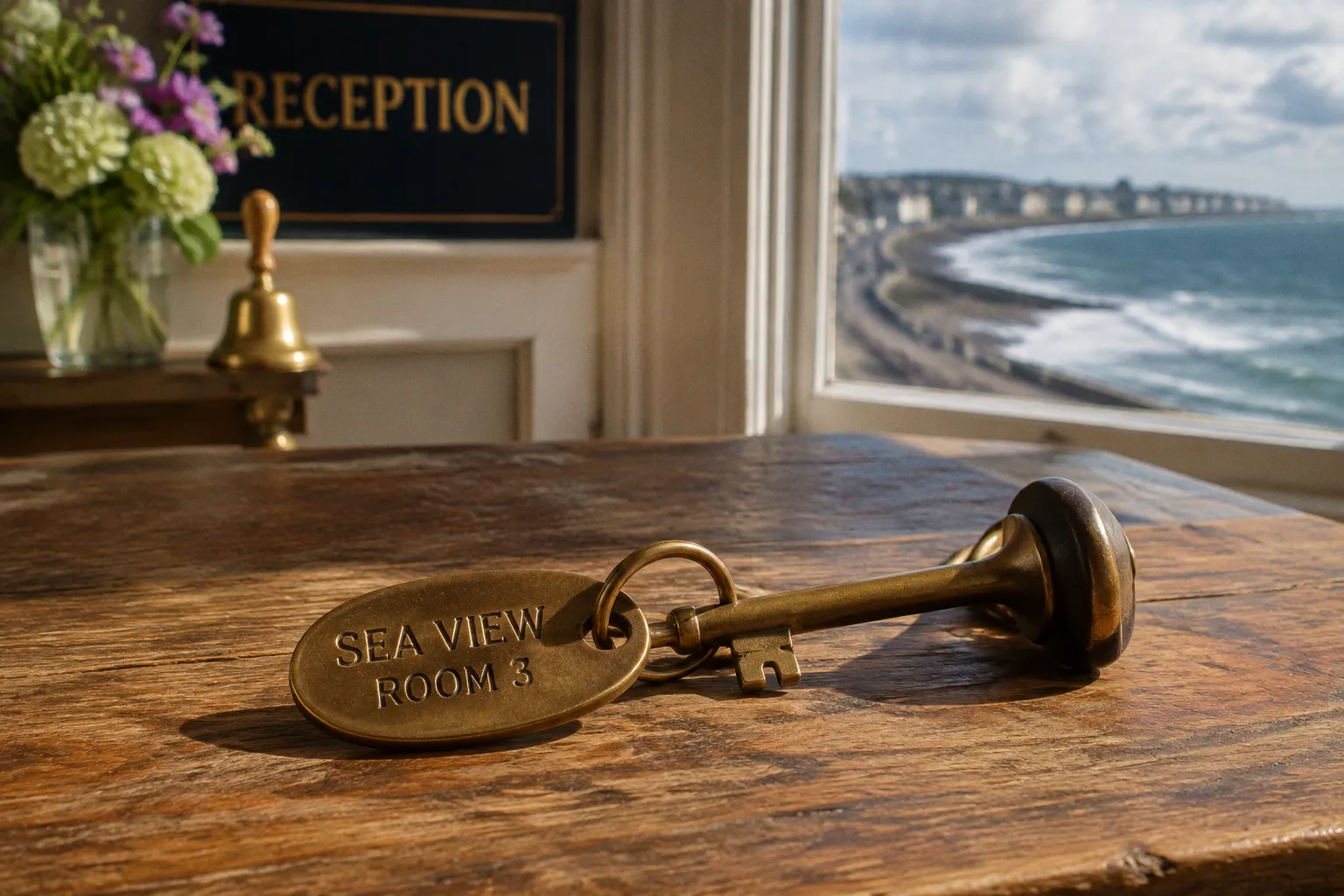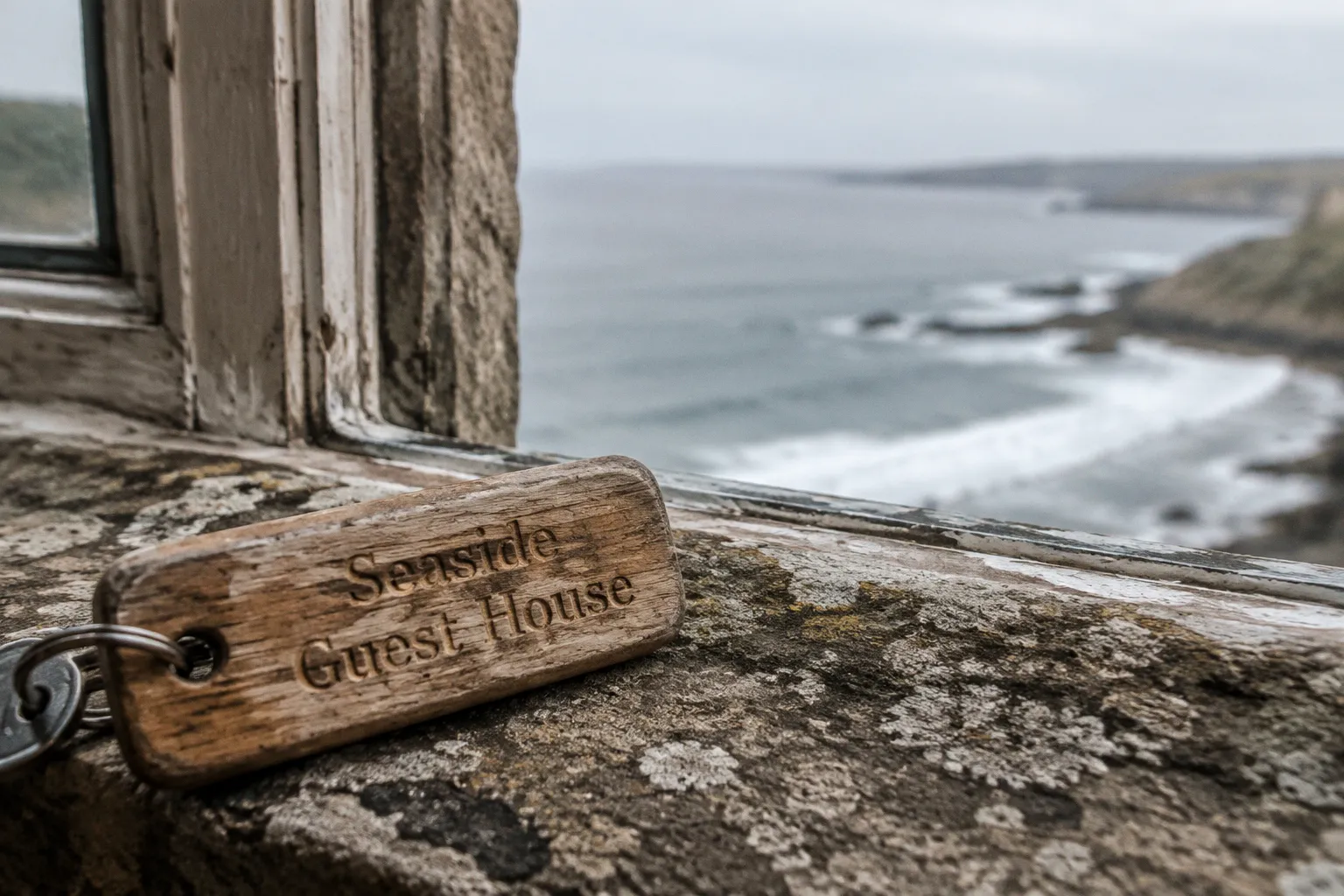
For an independent B&B in Edinburgh or along the Firth of Forth, the question is no longer whether guests appreciate lower-energy lighting or locally sourced breakfast produce. They do. The sharper question is whether an operator can substantiate those claims when a guest, corporate booker, booking platform or regulator asks what they actually mean.
That distinction matters because a coastal guest house can look admirably green while remaining operationally vague. Reclaimed timber, refillable bathroom products and a small card asking guests to reuse towels are visible gestures. They are not, on their own, a coherent environmental standard. Green Tourism and Green Key offer two more rigorous routes, but they do not carry quite the same emphasis, language or commercial character.
For a small Scottish B&B, the right scheme is not necessarily the one with the most recognisable name. It is the one that matches the property's operating discipline, design priorities, guest profile and appetite for formal assessment.
The regulatory shift: why self-declared green claims are becoming precarious
The most significant change in sustainable hospitality is not aesthetic. It is evidential.
Across the UK, environmental language is under greater scrutiny through guidance such as the Competition and Markets Authority's Green Claims Code. The principle is straightforward: a business should not imply that its operation, products or services are environmentally beneficial unless the claim is clear, accurate and capable of being supported.
For a small guest house, this affects the language used everywhere:
- on the booking website and room descriptions;
- in welcome folders and in-room notices;
- across online travel agency listings;
- in corporate accommodation proposals;
- on menus and procurement statements;
- in social media posts about sustainability.
A phrase such as "eco-friendly seaside accommodation" sounds harmless until it becomes unclear what aspect of the stay is meant to be environmentally preferable. Is the claim based on energy consumption, waste reduction, transport access, food sourcing, water management or a formal certification? If the answer is simply that the property has replaced plastic bottles and installed a few LED lamps, the wording may be more ambitious than the evidence.
This is particularly relevant to Edinburgh's independent accommodation market, where heritage architecture and thoughtful interiors are often central to the proposition. A Georgian townhouse with original cornicing, linen curtains and low-glare lamps may offer a more compelling guest experience than a standardised hotel. Yet the character of the building does not automatically make it sustainable. Older properties can be thermally inefficient, difficult to heat consistently and expensive to retrofit without disturbing their spatial harmony.
The operational stakes are not minor. The UK hospitality sector includes approximately 35,000 small B&Bs and guesthouses. Across the sector, annual energy spending exceeds £1.3 billion, with more than eight million tonnes of carbon emissions generated each year. For an individual property, energy may be distributed across bedrooms, kitchens, laundry, hot-water systems and common areas, making it one of the few sustainability issues that is simultaneously environmental, financial and directly connected to comfort.
An official certification cannot solve poor management. It can, however, impose a more legible structure on the work and provide an independent basis for the claims made to guests.
A green badge is useful only when it makes the invisible work of running a guest house easier to understand.
Green Tourism: the Scottish-born scheme with a practical independent-operator sensibility
Green Tourism is the more naturally rooted option for a Scottish B&B seeking a scheme that feels connected to the local hospitality landscape. Founded in Scotland, it now includes more than 2,000 member establishments and awards Bronze, Silver or Gold accreditation following expert assessments.
Its breadth is one of its strengths. The assessment framework considers areas including:
- energy efficiency and consumption;
- waste management;
- purchasing and procurement;
- biodiversity;
- wider environmental management.
That breadth suits an independent guest house because sustainability rarely sits in one department. A B&B may have efficient lighting but poor laundry controls, excellent local procurement but excessive food waste, or a beautifully planted garden with no meaningful approach to energy use. The value of a broad assessment is that it reveals the relationship between these decisions rather than treating them as isolated marketing flourishes.
For an Edinburgh operator, Green Tourism can also sit comfortably within a property-led narrative. A heritage guest house may be able to connect its environmental approach to the building's fabric, local suppliers, seasonal breakfast menu, walking access and reduced reliance on disposable amenities. The certification does not need to dominate the guest experience. It can support it quietly, provided the underlying systems are genuine.
A scheme designed for incremental improvement
Green Tourism is particularly persuasive for an operator that wants to show steady progress rather than present sustainability as a binary state. The Bronze, Silver and Gold structure creates a visible progression. A small property does not need to imply that it has perfected every aspect of environmental management before beginning the process.
That matters in older Scottish buildings. Retrofitting a listed or architecturally sensitive property is rarely an exercise in simply replacing everything at once. Draught reduction, heating controls, glazing decisions, insulation, hot-water management and lighting design may have to be handled incrementally. A scheme that acknowledges development over time can be more realistic than one that encourages a polished but incomplete claim.
Green Tourism also offers useful narrative texture. The scheme's Scottish origins can feel less abstract than a global sustainability label when the guest house is already presenting itself through local identity: Fife linen, East Lothian produce, a short supply chain, a garden managed for pollinators, or a breakfast menu shaped by the surrounding coast and farmland.
That does not make it less rigorous. The assessment still needs to be treated as a business process, not an opportunity to collect a logo.
Where the Scottish accent becomes a limitation
Green Tourism may be the more intuitive fit for a small Scottish operator, but its strongest value depends on how actively the property uses the accreditation. A badge placed in the footer of a website will not carry much weight if the guest cannot understand what has changed operationally.
The scheme should therefore be translated into tangible details. If the property has reduced laundry loads, guests should encounter bedding and towel policies that are clearly written and sensibly designed. If procurement has shifted towards local suppliers, the breakfast should communicate provenance without turning the dining room into a lecture. If biodiversity is part of the assessment, it should appear in the landscape and the interpretation of the property, not simply in a hidden document.
The aesthetic challenge is to make responsible hospitality feel considered rather than worthy. A refill station can be handsome. Reusable glass bottles can be better designed than disposable plastic. Low-energy lighting can improve the atmosphere when colour temperature and positioning are properly resolved. Sustainability becomes more credible when it also produces a better stay.
Green Key: an internationally legible credential
Green Key takes a different position. In Scotland, it is operated by Keep Scotland Beautiful under licence from the Foundation for Environmental Education. The standard aligns with Global Sustainable Tourism Council criteria, and dozens of Scottish hospitality properties hold the certification.
That international framework gives Green Key a particular advantage for properties with an outward-facing market. An Edinburgh guest house attracting overseas visitors, academic visitors, conference delegates or corporate bookers may benefit from a credential that is legible beyond Scotland. A traveller who does not know the local distinctions between Scottish environmental schemes may recognise the value of a structured, internationally aligned standard.
Green Key is also well suited to an operator whose sustainability proposition needs to travel across platforms. Corporate bookers and travel managers often prefer credentials that can be compared across destinations. This does not mean the label automatically wins a booking, but it may reduce the amount of explanation required when a company is assembling accommodation options against its own environmental policy.
Where global alignment becomes commercial leverage
Green Key is compelling when external recognition is central to the commercial strategy.
For example, it may suit:
1. A design-led Edinburgh guest house courting international visitors. The property can retain its local character while presenting its environmental credentials in a language understood by a broader market.
2. A small accommodation business pursuing corporate and institutional bookings. A recognised sustainability framework can sit more neatly within procurement conversations than a collection of self-written environmental promises.
3. A property planning to expand or operate across several locations. An internationally aligned standard may provide a more consistent reference point as the business grows.
4. An operator who wants sustainability to be treated as a formal management discipline. The global framework can bring a useful degree of structure to policies, documentation and improvement planning.
The trade-off is that international recognition can feel less locally expressive. Green Key may give a property stronger external legibility, but the certification itself will not tell guests what is distinctive about a particular building on Leith Walk, a guest house near Portobello or a coastal retreat overlooking the Firth of Forth. That translation remains the operator's responsibility.
The risk of sounding generic
A global standard is not a substitute for local storytelling. If Green Key is presented as a corporate compliance emblem with no connection to the property's materials, food, landscape or daily service, it can feel strangely detached from the experience.
The best implementation is less institutional. Explain the practical consequences of the standard through the things a guest touches and notices: a better-considered breakfast supply chain, more restrained housekeeping routines, reliable temperature control, thoughtfully chosen refillable amenities, and lighting that is efficient without flattening the character of a room.
The point is not to make the guest feel that their stay has been placed inside an environmental audit. The point is to make the stay feel carefully run.
Green Tourism versus Green Key: the distinction in practice
Both schemes can help an independent operator move away from vague environmental language. Neither should be treated as a mandatory condition of operating a Scottish B&B, and neither removes the need for accurate communication.
The differences become clearer when the decision is viewed through the property's commercial identity.
| Consideration | Green Tourism | Green Key |
|---|---|---|
| Origin and positioning | Founded in Scotland, with strong relevance to the domestic hospitality landscape | International scheme operated in Scotland by Keep Scotland Beautiful |
| Assessment character | Broad environmental review covering energy, waste, procurement, biodiversity and related practices | Internationally aligned standard connected to FEE and GSTC criteria |
| Recognition | Particularly natural for Scottish independent accommodation and locally rooted properties | More immediately legible to international and corporate audiences |
| Progress structure | Bronze, Silver and Gold accreditation create a visible progression | Better suited to operators seeking a formal, externally recognised standard |
| Best commercial fit | Heritage guest houses, coastal B&Bs and independent properties building a local sustainability narrative | Properties targeting global visitors, corporate bookers or procurement-led accommodation |
| Main communication task | Show what the Scottish accreditation means in the daily guest experience | Translate an internationally recognised standard into local, tangible hospitality |
| Cost question | Exact membership and assessment fees vary by room count and audit tier | Exact fees vary, so the commercial case should be assessed against visibility and booking value |
| Main risk | Treating the badge as the full story | Letting the international framework feel generic or disconnected from place |
The comparison is not a matter of choosing the scheme with the most impressive vocabulary. It is about choosing the credential that will be maintained after the launch announcement has disappeared from social media.
Guest expectations have moved beyond the recycled-towel card
The case for formal certification is strengthened by the changing expectations of travellers. The 2024 Sustainable Travel research from Booking.com reported that a substantial majority of global travellers intended to travel more sustainably in the following twelve months, and a clear majority said they felt better about staying in a property that held sustainability certification.
Those figures do not mean every guest will choose a certified B&B over a non-certified one. Price, location, reviews, room size and cancellation terms remain decisive. Nor does a certification make an expensive or uncomfortable stay acceptable. A guest who wakes cold, cannot control the shower temperature or finds the breakfast compromised will not be persuaded by the green credentials on the website.
This is where design and sustainability intersect in a useful way.
Lighting is both an environmental decision and a hospitality decision
Lighting is often discussed as an energy-saving measure, but in a guest house it is also part of the room's emotional temperature. Poorly selected LEDs can create a hard, blue cast across heritage tones and make a carefully furnished room look clinical. Well-specified lighting can reduce energy use while improving the experience.
Replacing traditional lighting with LEDs has the potential to reduce lighting costs by up to 70%, depending on the existing system, operating hours and installation choices. The financial benefit is evident, but the design brief must go further than wattage. A room needs layered light:
- soft ambient illumination for arrival and evening relaxation;
- brighter, accurate light around mirrors and wardrobes;
- directional reading light that does not disturb a second guest;
- discreet illumination along circulation routes and stairways.
In a small B&B, this is not an extravagant detail. It is one of the few upgrades that can improve atmosphere, reduce energy demand and make a room feel more expensive at the same time.
Textiles reveal whether sustainability is actually integrated
Textiles are another tactile measure of credibility. Guests notice the weight of a towel, the hand of the bedding and whether curtains manage morning brightness effectively. They may not know the exact fibre composition, but they can sense when a room has been furnished through a coherent curation rather than assembled from interchangeable supplies.
A sustainable textile policy should not mean simply choosing the cheapest fabric labelled natural. Durability, laundering performance, local sourcing, supply-chain transparency and end-of-life considerations all matter. A towel that needs replacing every eighteen months is not a sustainable towel, however responsibly its cotton was grown. A duvet filled with recycled material still represents environmental effort only if it retains its loft and warmth over years of regular use.
For a guest house, the conversation quickly becomes one about purchasing discipline. Buy fewer items, choose them more carefully, expect them to last longer and care for them properly. That approach often reduces cost over time, even when individual pieces cost more at the outset.
Breakfast is where the supply chain becomes visible
For a Scottish B&B, breakfast is the most public expression of procurement. It is also the part of the operation most often described in sustainability language, which makes it a useful place to test whether that language is honest.
A genuine local-sourcing policy involves questions that are easy to ask and difficult to answer well. Where is the milk bottled? Where are the eggs laid? Which bakery produced the bread? Who grew the fruit? Are the preserves made in commercial kitchens or in a small batch nearby? Is the smoked salmon from a known Scottish fishery? Is the oat porridge rolled in Scotland, or repackaged from imported bulk?
Answering these questions with confidence — and rotating the answers honestly across a menu that changes with the season — is what makes the word "local" mean anything on a guest house website.
A formal certification can help structure this work. It cannot replace it.
A guest does not need to be persuaded to enjoy good breakfast produce. They need to be persuaded that the operator has thought about what good means.
Operational impact: balancing audit costs against market visibility
The honest objection to any certification scheme is that it costs money, time and administrative attention, all of which are scarce in a small B&B. Membership fees, assessment visits, follow-up audits, document preparation and staff training can absorb hours that would otherwise go into the rooms, the kitchen or the front-of-house experience.
That objection is not a reason to dismiss certification. It is a reason to treat it as a commercial decision rather than a moral one.
What certification actually costs in operator time
The audit process itself is rarely the heaviest element. The heavier work tends to happen before the assessment, when the operator is gathering evidence on energy consumption, waste streams, water usage, supplier documentation, housekeeping protocols and staff training records. In a small business where the owner is also the manager, the breakfast cook and the night-time duty person, that preparation can feel intrusive.
The payback is partly structural. A well-prepared certification file becomes the foundation of the property's environmental narrative, and that narrative can be repurposed across the website, the welcome folder, the OTA listings and the corporate proposal. The work is duplicated less once it has been done properly once.
What certification returns in visibility
The market visibility generated by certification is uneven. Green Tourism is more readily recognised within the UK domestic tourism market, particularly among Scottish destinations, visitor economy organisations and quality schemes that work alongside it. Green Key is more readily recognised by international visitors, corporate procurement teams and academic or institutional bookers.
Neither visibility is automatic. A B&B will not attract international corporate clients simply by displaying a Green Key plaque. It will, however, find that conversations about sustainability with such clients become shorter and more credible.
A practical way to decide
For a Scottish B&B weighing the two schemes, the most useful exercise is often a quiet evening with the booking data, the supplier list and a copy of each scheme's criteria. The questions worth asking are straightforward:
- Which scheme's criteria align most clearly with what the property already does well?
- Which scheme's assessment process is least likely to duplicate existing record-keeping?
- Which scheme's recognition matters most for the guest segments the operator is actually trying to attract?
- What does the cost represent as a share of annual turnover, and how does it compare with the value of one additional booking a week for a season?
- Can the property genuinely maintain the standard after the launch announcement has faded?
If those questions have a clear answer, the choice tends to follow.
Choosing the scheme, then living with it
The most useful thing a small Scottish B&B can do with a sustainability credential is treat it as a working document rather than a marketing trophy. Both Green Tourism and Green Key can support a credible environmental position, and both can be undermined by a property that has collected a logo and moved on.
The deeper task is to make the certification consistent with the experience the property actually offers. A guest house that prides itself on restored sash windows, considered lighting and breakfast drawn from the surrounding coastline does not need an environmental label to justify its approach. It needs an environmental label to make that approach legible to the guests, the platforms and the procurement teams that increasingly expect to see it written down.
The right scheme is the one that helps a property say, clearly and accurately, what it already does — and then quietly asks it to do a little more.