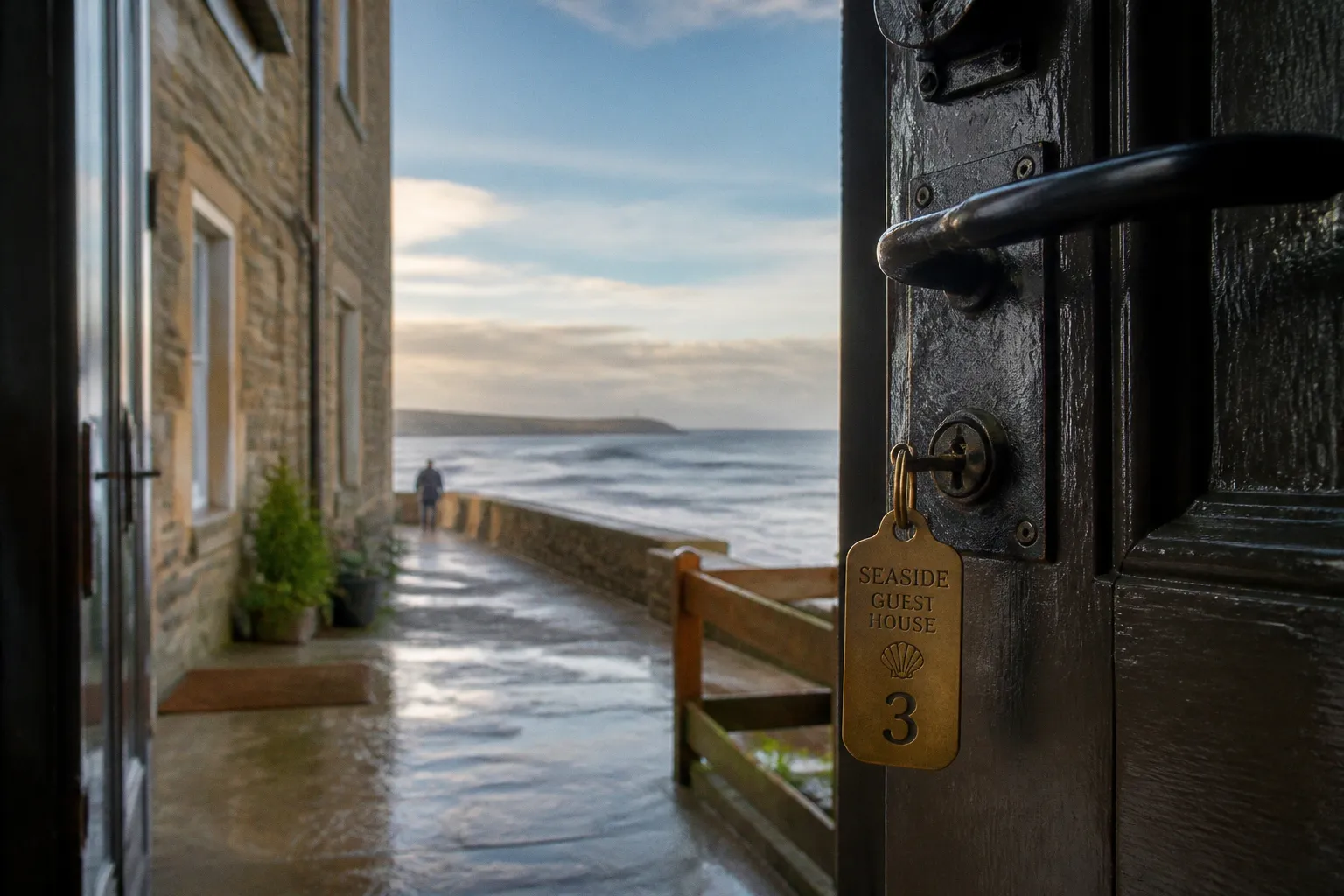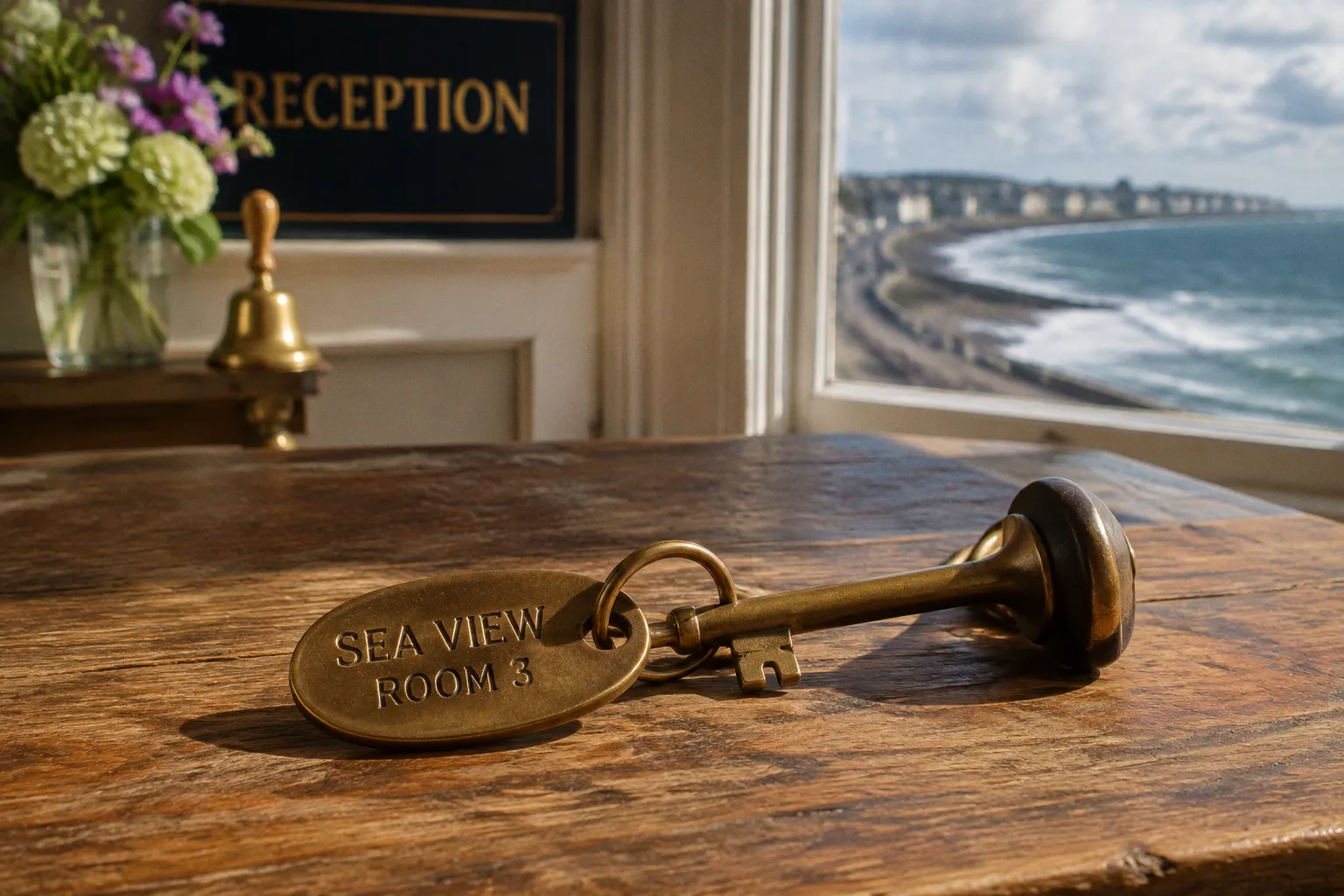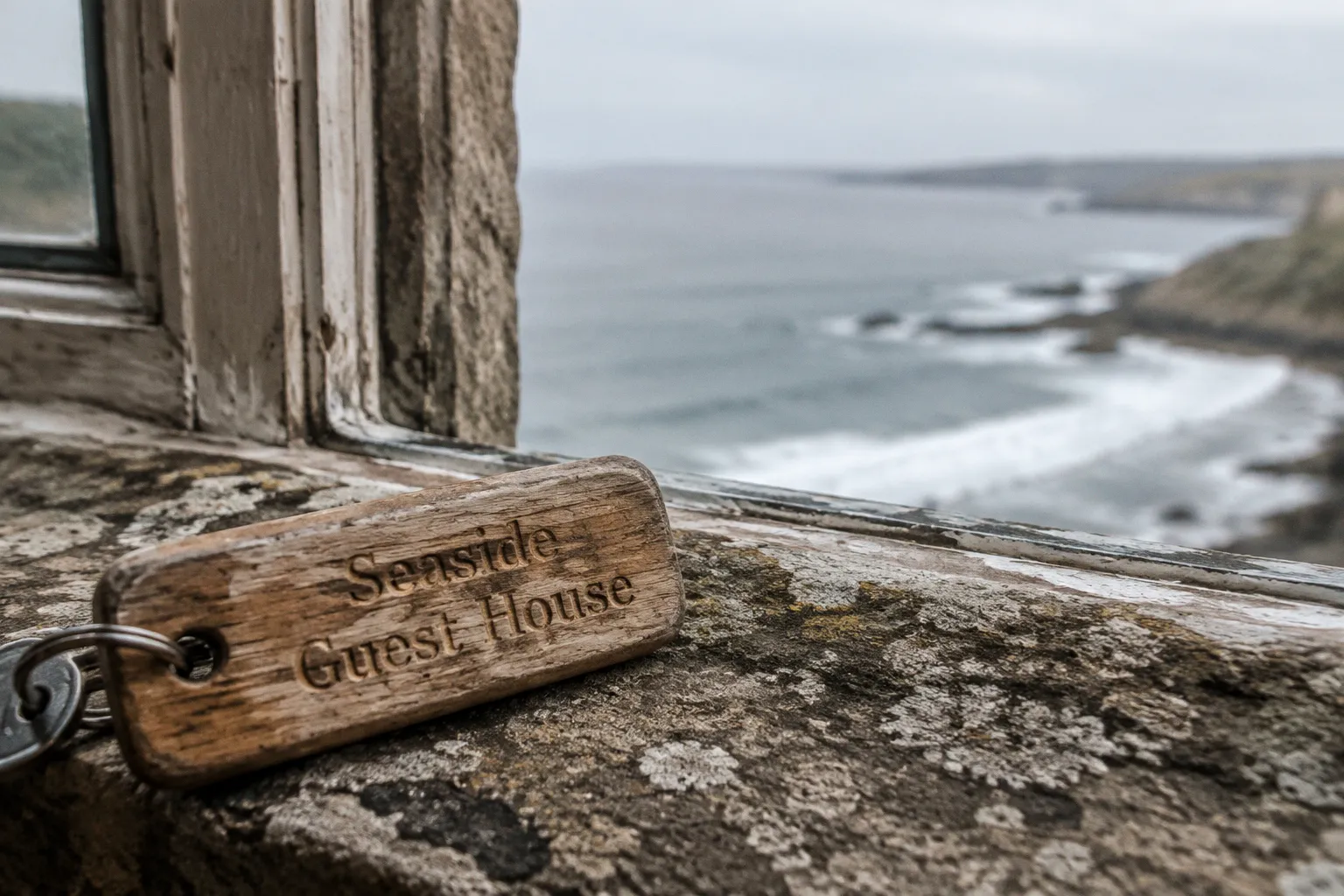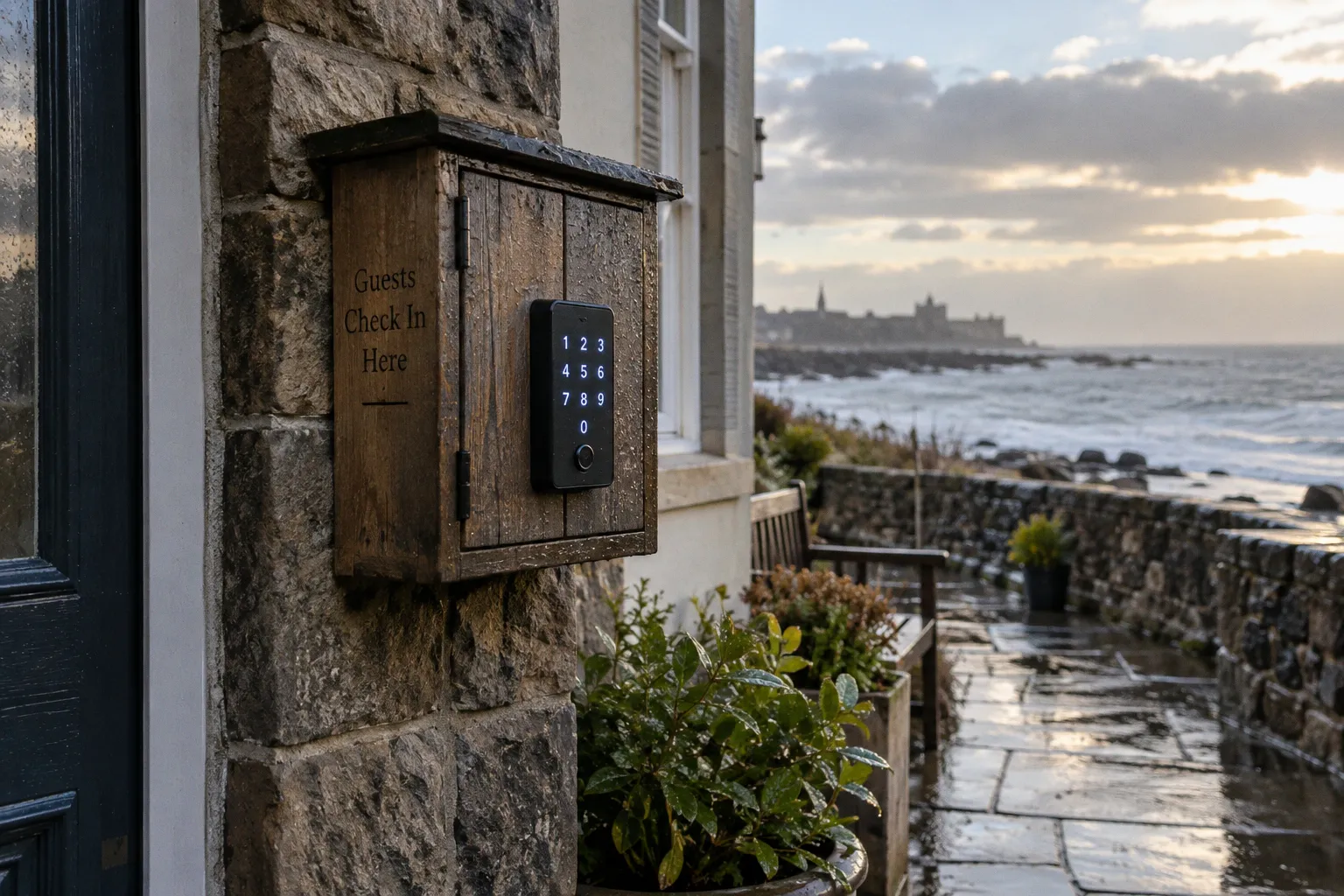
Across New Town crescents, Leith townhouse conversions, and the converted fishermen's cottages strung along East Lothian's shoreline, hosts are renegotiating what welcome actually means when the keys live on a server instead of a hook behind reception. Digital check-in promises a frictionless threshold, but for a four-room heritage property the calculus is not the same as for a 300-room city chain.
The shift is no longer experimental. Industry data points to a sustained behavioural change in how guests approach the act of arriving, and small operators are watching the technology mature with close attention.
The operational shift: moving beyond the front desk
Hospitality has spent the last decade quietly transferring front-desk rituals to smartphones, and the pandemic compressed what might have been a gradual migration into something more decisive. Industry reporting from PMS providers points to a roughly 280% increase in contactless check-in adoption among hotel clients in the years following 2020. The headline number is dramatic, but it is worth noting that it reflects chain and group hotel behaviour rather than the independent coastal segment. Across hotel categories more broadly, average online check-in adoption sits somewhere in the mid-thirties percentage range, with select properties climbing considerably higher; for a four-room guest house in Gullane or a terrace conversion in Portobello the real question is whether the same logic scales down without hollowing out the experience.
It does, mostly. The friction points in a traditional arrival are administrative: capturing passport or driving-licence details, recording the duration of stay, taking a payment imprint, signing the data-protection notice. None of this requires eye contact. None of it is the part of arrival that a guest remembers. Moving it to a phone screen before the train from King's Cross or the airport bus from Turnhouse does not, in itself, diminish the welcome. It simply relocates the tediousness.
The arrival ritual has always been a choreography — keys, corridor, kettle. Digital systems rewrite the libretto without removing the performance.
For hosts operating on a single front-of-house shift, often themselves, the arithmetic is straightforward. A digital pre-arrival removes the fifteen-minute window during which a guest stands in a hallway with wet coat while the host fumbles with a registration card. Multiply that across a busy August weekend and the saved hours begin to look like a second bathroom renovation. The operational case for digital check-in at small coastal properties is not theoretical; it is a staffing decision dressed in software.
Mechanics of pre-arrival: streamlining registration and ID verification
The mechanics of digital pre-arrival are now standardised enough that guests no longer find them novel. Roughly 24 to 48 hours before the booked arrival, a guest receives an invitation — typically by email, occasionally by SMS — linking to a web portal or a branded app. There, in a sequence designed to take under five minutes, they enter their details, upload a photograph of their identification document, confirm the length of stay, accept the privacy notice, and authorise the deposit or card hold. The whole exchange is, by contemporary consumer design, almost boringly competent.
For a coastal guest house with mixed clientele — weekenders from Glasgow, visitors on the North Berwick rail line, contractors on extended lets — this single touchpoint resolves several long-standing irritations. The most useful is identity capture: a passport photo uploaded at 9pm in a hotel bar is sharper than the same document photographed under reception halogen a day later. For hosts operating under Scotland's guest registration requirements, this is not a small convenience; it is a genuine compliance improvement, with fewer rejected scans and fewer awkward conversations about expired identification.
The secondary benefit is the quiet correction of administrative errors. Typos in surnames, transposed dates of birth, missing postcodes — every one of these arrives at the property corrected before the guest has left home. The traditional arrival desk absorbs these errors silently, spending ten minutes untangling a booking reference. Digital pre-arrival surfaces them in advance, where they are easy to fix and where the guest is still paying attention. For hosts who run automated guest registration as part of their booking workflow, the result is fewer printed corrections and a smoother first morning.
Keyless entry and the hardware investment for seaside properties
Keyless entry is where the design vocabulary meets the specification document, and where coastal hosts should pay closest attention. A modern keyless system generates temporary digital keys, PIN codes, or QR credentials that remain valid strictly for the duration of the stay and expire automatically at check-out. The technology is mature; the selection is broad; the differences matter.
| Parameter | Smart lock (Bluetooth / Wi-Fi) | PIN keypad | QR or mobile credential |
|---|---|---|---|
| Hardware cost per door | Moderate to high | Low to moderate | Low, often software-led |
| Salt-air durability | Variable — specify marine-grade | Generally robust | Depends on reader housing |
| Heritage building impact | Requires door modification | Surface-mounted, reversible | Minimal — small reader only |
| Guest familiarity | High (consumer products) | High | Mixed, rising |
| Connectivity dependency | High | None | Low to moderate |
The hardware conversation is rarely the one hosts want to have, but it is the one that determines whether digital check-in feels considered or improvised. Bluetooth and Wi-Fi smart locks offer the slickest experience — a guest's phone becomes the key — but they demand reliable connectivity in the building, which is not a given in Victorian New Town basements or in coastal cottages with thick stone walls. PIN keypads are the most robust and reversible option for heritage properties: surface-mounted, no door modification, easily replaced if damaged. QR and mobile credential systems are the lightest touch, but their guest adoption is more uneven and they still require a reader at the door.
Coastal operators face an additional constraint that inland properties do not: salt. Standard smart lock specifications rarely account for the slow corrosion of a seaside installation, and operators along East Lothian, Fife, and the Berwickshire coast would do well to specify marine-grade or stainless-steel hardware where the lock sits in an exposed external door. The price premium is modest relative to the cost of a premature replacement, and it preserves the design intention of the entry sequence — the moment of arrival, after all, is part of the property's visual language.
Hardware decisions are the ones that look invisible in a brochure and dominate a maintenance ledger.
Preserving the human element in a contactless hospitality model
Here is where the design lens sharpens. A contactless arrival is operationally elegant and aesthetically clean, but it removes the only sustained face-to-face moment between host and guest. For a property whose entire value proposition rests on curated recommendations — the better breakfast cafe in Stockbridge, the timing of the tide at Yellowcraig, the walk along the Fife coast path that avoids the midge line in July — that loss is not cosmetic.
The design-conscious operator has always understood that arrival is more than a transaction. It is the moment a guest learns what kind of place they have chosen: the offer of tea, the pointing out of the blackout curtain's mechanism, the reassurance about the heating's thermostat, the conversation about what the weather will actually do tomorrow, which the BBC forecast has, charitably, only gestured at. None of this scales to a phone screen. A digital welcome can convey the wifi password and the door code; it cannot convey the personality of the host, nor substitute for the soft intelligence that a frequent visitor picks up over time and a first-timer notices within minutes.
The honest trade-off is this. For business travellers, late arrivals, repeat guests, and anyone whose primary interest is a clean bed and an early start, fully contactless is a clear win. For the leisure guest who has chosen an independent over a chain precisely because they want the human texture, the absence registers. They will not write a negative review; they will simply not return, and they will not be able to articulate why. The price-to-value calculation that sustains an independent coastal guest house depends on those returners, and the contactless model, taken to its logical end, quietly removes the reason they came back.
Finding the hybrid equilibrium for independent Scottish hosts
The model that most coastal guest houses are converging on is neither digital maximalism nor sentimental traditionalism. It is a hybrid, and it works because it respects both the operational reality and the experiential promise.
In practice, this looks like a pre-arrival digital sequence covering registration, ID upload, and payment authorisation, sent between 24 and 48 hours before arrival. On the day itself, guests receive their key — either as a PIN code generated for the duration of stay, or a physical key available from a discreet lockbox, depending on the building and the guest profile. They arrive, they enter, they make themselves tea. The host, who has read the registration details and noted any preferences in passing, drops by within a window of the guest's arrival to introduce themselves, offer a recommendation or two, and confirm breakfast time. Some properties add a brief welcome note left in the room; the more design-confident operators treat this as a deliberate tactile moment, the paper equivalent of a handwritten card.
This is not an elaborate choreography. It is closer to the choreography the best small operators have always practised, with the administrative friction removed. The pre-arrival digital layer takes care of the form-filling; the on-site moment takes care of the welcome. Neither is compromised by the other, and the host gets back the fifteen minutes per arrival that used to disappear into a clipboard.
For hosts weighing a first move into digital check-in, the barrier to entry is lower than it has ever been. Several guest guide and check-in platforms — including those offering trial periods such as a 14-day evaluation window from providers in the digital guest guide space — allow operators to test the experience before committing to hardware or contracts. The sensible approach is to pilot on a single room or a single weekend, watch how guests interact with the system, and let the data rather than the brochure inform the rollout. The property's existing guest demographic will tell you, quickly, what balance is right.
The deeper question is whether the property's identity can survive the shift. For a guest house whose design language is built on tactile welcome — the considered key fob, the handwritten note, the offered biscuit, the bespoke welcome card — digital check-in is not an aesthetic betrayal if it is treated as a service layer rather than a statement. The phone screen handles the form. The room, the linens, the morning light through the sash window — those still do the talking. The host's five minutes at the door still does the welcome.
A coastal guest house sells an arrival. Digital check-in is the threshold, not the welcome.
The threshold, properly designed, can disappear. The welcome, properly preserved, is what the guest remembers long after the door code has been forgotten.