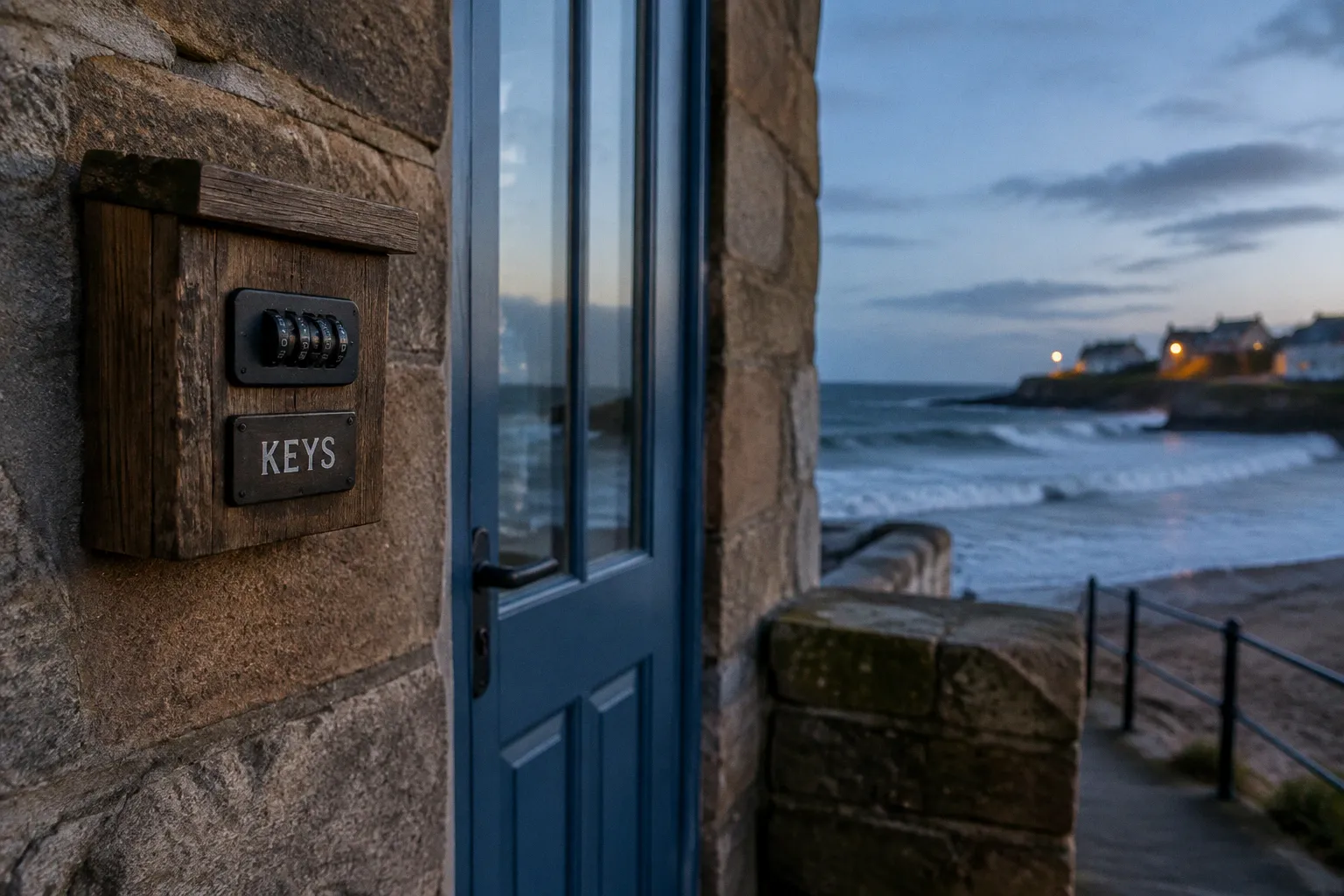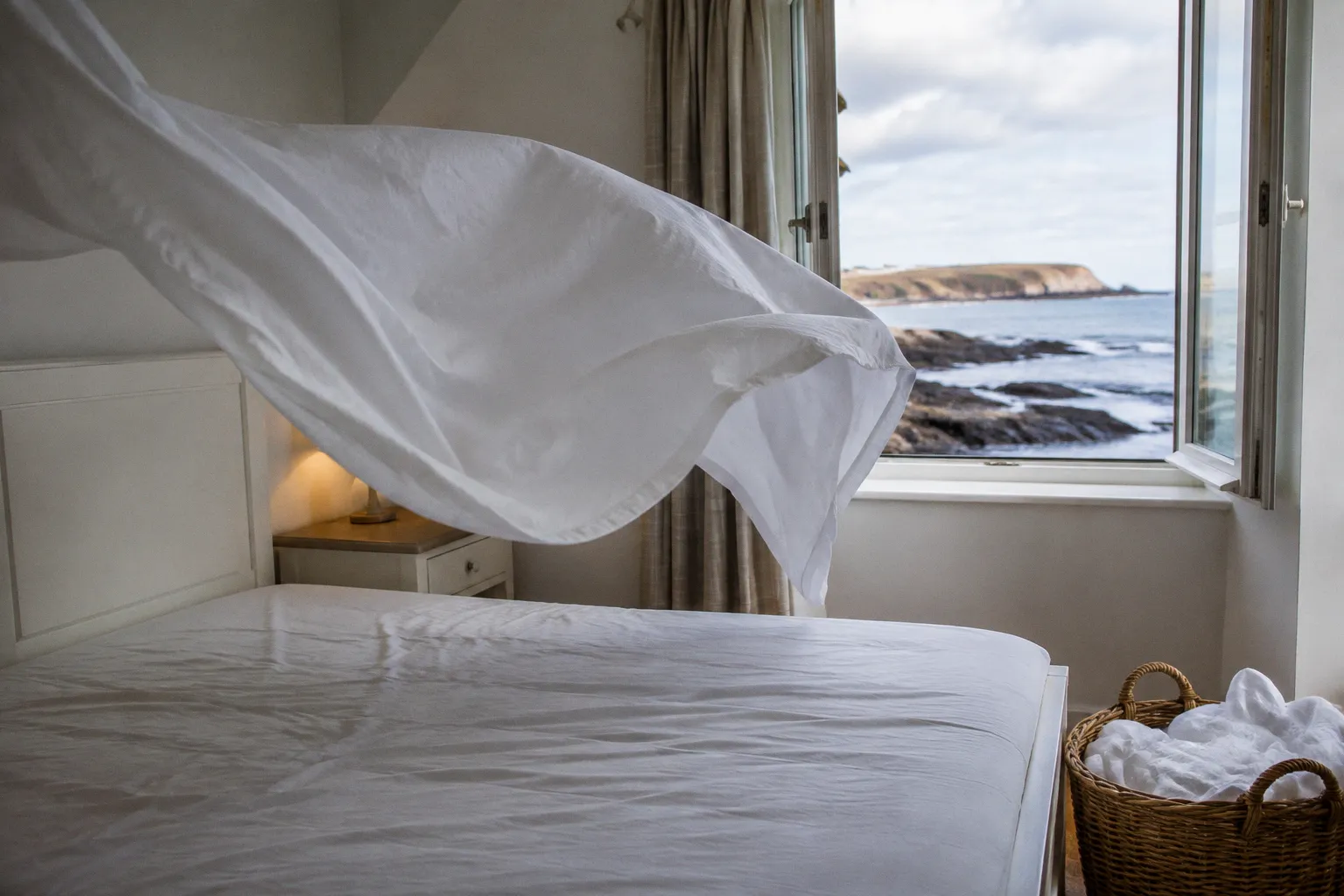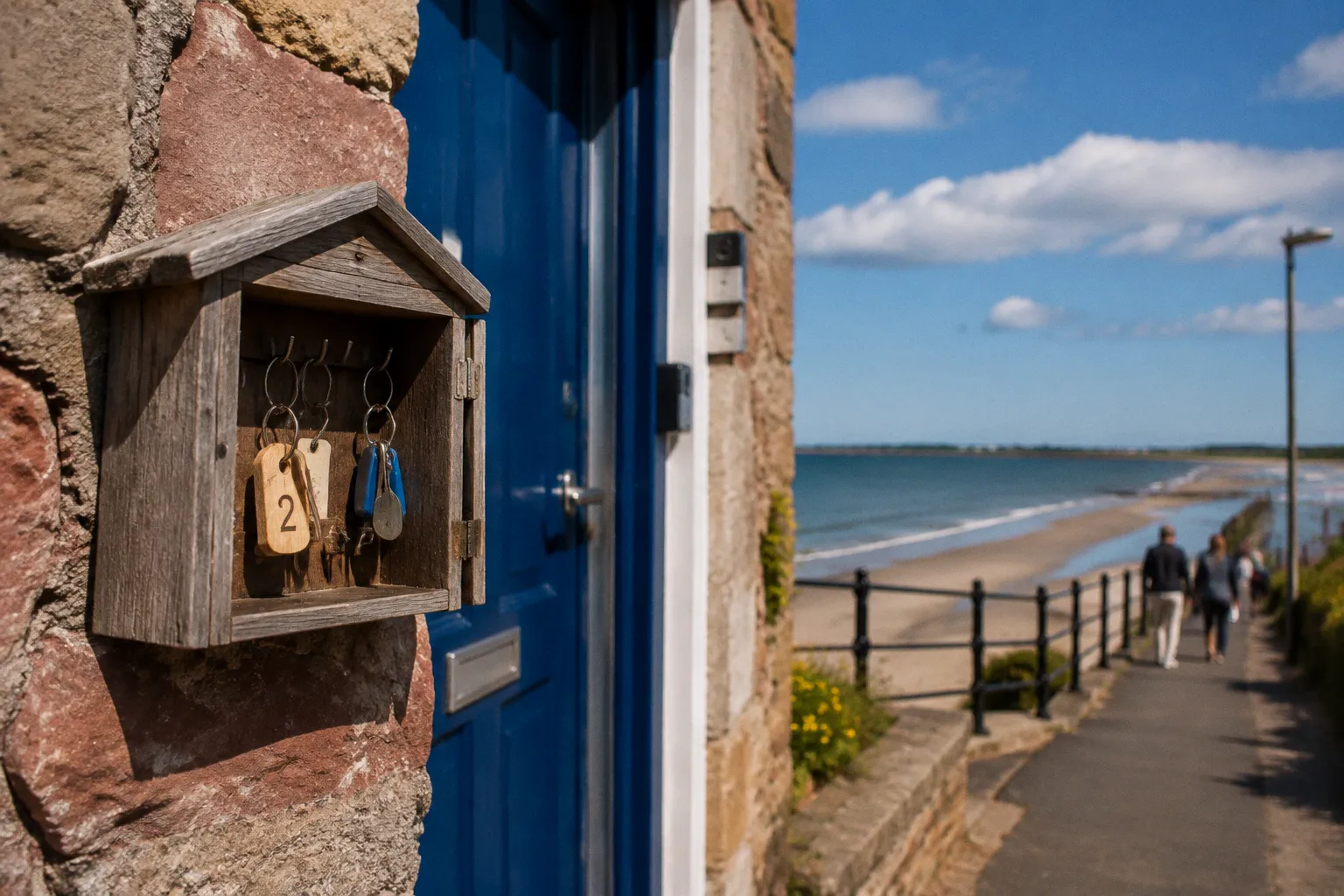
It is finding a property that works once you arrive with luggage, wet coats, groceries, children, a dog, or a family member who cannot manage steep stairs.
Portobello and Joppa offer something unusual: the coast without giving up the city. Many self-catering flats sit roughly 4.5 to 6.8 kilometres east of central Edinburgh, with regular bus connections and the promenade close enough for an early walk before breakfast. Some properties are around 40 metres from the shoreline; others are several streets inland and only borrow the word “coastal” from the wider neighbourhood. That distinction matters.
I assess seaside rentals as a paying guest would experience them: from the entrance and stairwell to the mattress, water pressure, kitchen inventory and route to the beach. A good Edinburgh coastal self-catering property does not need designer furniture. It needs sensible spatial flow, reliable heating, a usable kitchen and a clear answer to the practical questions that photographs tend to avoid.
Why Portobello and Joppa work for a coastal Edinburgh stay
Portobello is the better-known beach neighbourhood, with a broad promenade, open sand and an easy connection into the centre. Joppa is quieter in feel and more residential, although the boundary between the two is not always meaningful when you are walking along the shore. Both give you access to the Firth of Forth while keeping Edinburgh’s museums, restaurants and historic streets within a manageable bus journey.
That balance changes the character of a visit. You can spend the morning in the Old Town, return to the coast for a swim or a walk, and cook dinner rather than search for a restaurant after a long day. For families, the beach becomes part of the accommodation rather than a single excursion. For couples, it offers a slower base than the city centre. For longer stays, the self-catering format can be more comfortable and less expensive than eating out for every meal, although the quality of the kitchen determines whether that promise is real.
When I assess a coastal rental, I separate the location into three layers:
- The actual beach distance: measured from the building rather than from the neighbourhood name.
- The route: whether you reach the promenade by a level pavement, a road crossing, a narrow lane or a flight of steps.
- The return journey: whether you can carry shopping, beach equipment or a sleeping child back to the property without an unnecessary climb.
A listing that says “near the beach” may be perfectly honest and still unsuitable for your trip. The beach may be close as the crow flies but separated from the flat by a busy road, a steep approach or a building entrance with no lift. If accessibility, limited mobility or heavy luggage is part of your planning, ask for the route in physical terms: how many steps from pavement to front door, whether there is a lift, and whether the entrance threshold is level.
A coastal address is only useful if you can reach the coast comfortably, and still have enough energy left to enjoy it.
The difference between Portobello and Joppa
Portobello usually offers more visible holiday infrastructure: cafés, shops, the promenade and a stronger sense of being in a beach district. That convenience can also mean more foot traffic, street noise and parking pressure during busy periods. Joppa tends to feel more settled and less overtly visitor-focused. Some travellers will prefer that; others may find the walk to cafés or evening food longer than expected.
Neither neighbourhood should be treated as a single accommodation type. Within a short distance you may find:
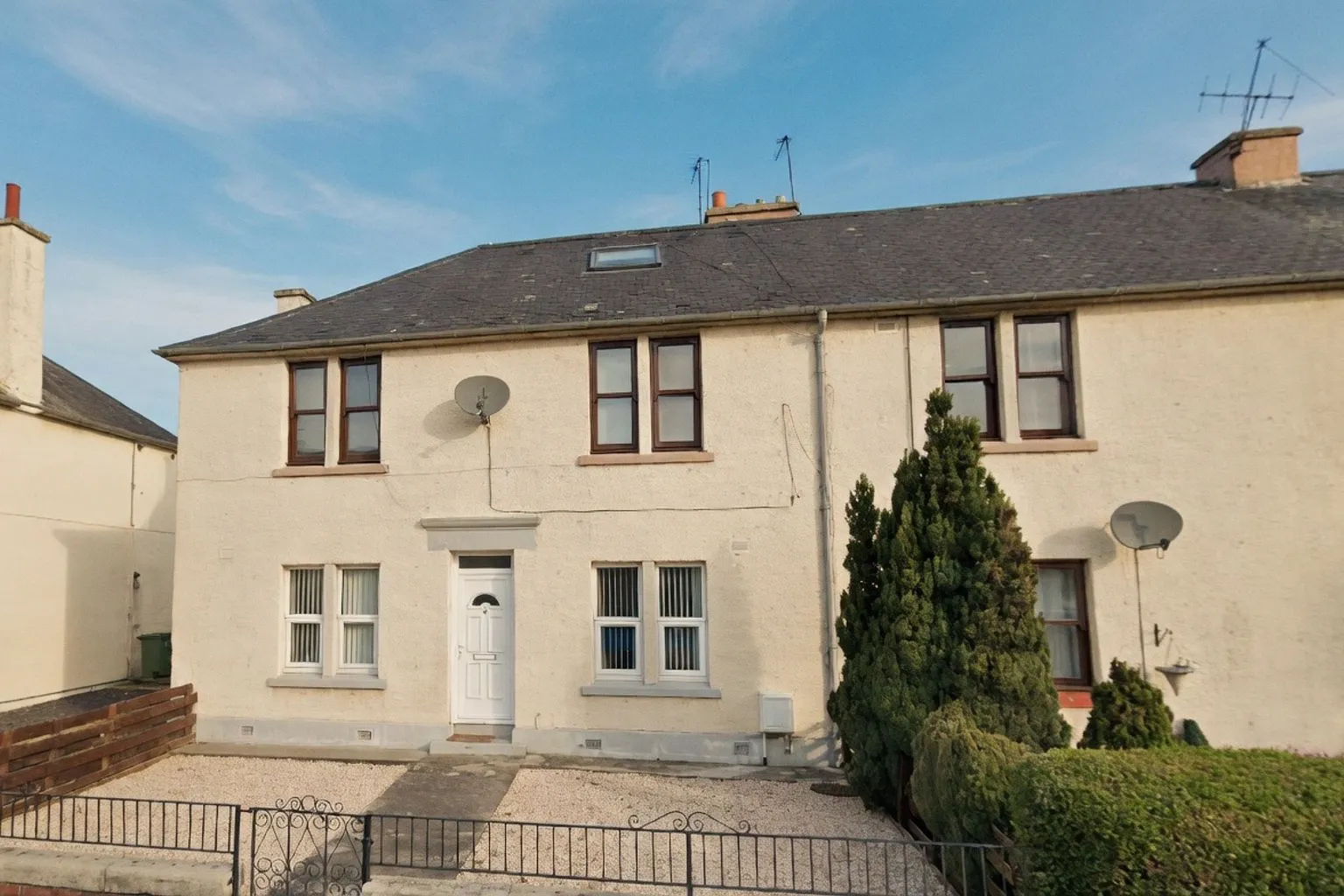
- Traditional tenement flats with high ceilings, shared staircases and no lift.
- Modernised apartments where the interior is accessible but the communal entrance is not.
- Larger coastal houses suited to families or groups.
- Small self-contained flats with excellent beach access but very limited storage.
- Properties advertised as waterfront or beachfront that face the sea obliquely rather than directly.
The building itself tells you nearly as much as the address. A first-floor tenement may have better views and more generous rooms than a ground-floor conversion, but it can become awkward when you are carrying a pram, a suitcase or damp outdoor equipment. Conversely, a ground-floor flat may be easier to enter but suffer from reduced privacy or colder floors. These are not automatic faults. They are trade-offs that should be visible before you pay.
How to read a seaside rental listing properly
Photographs are useful for identifying the general condition of a property, but they rarely explain how the space behaves. In a coastal rental, I look for the unglamorous details because those are the details you will use every day.
Start with the route from the street. Is the entrance clearly pictured? Does the front door open directly into the flat, or into a shared stairwell? If the property is in a tenement, are you expected to climb several flights with luggage? Is there somewhere to leave muddy shoes without blocking the hallway?
Then move through the rooms in the order you will actually use them.
Entrance and storage
A narrow entrance is not a problem for a weekend with one small bag. It becomes a problem when four people arrive with coats, boots and beach towels. Look for hooks at adult and child height, a proper place for shoes and enough clearance to open the front door without moving a chair or suitcase.
Coastal weather is changeable. Even in summer, you may return with wet jackets and sandy footwear. A property with no drying space forces everything into the bathroom or over the backs of dining chairs. That is manageable for one night and irritating for a week.
Living room
The living room should have enough seating for the advertised number of guests without relying on dining chairs. I pay attention to whether the sofa is genuinely comfortable, whether there is a table for drinks and whether the television or seating arrangement dominates the room.
Sea views can be valuable, but a partial view through a side window is not the same as a room oriented towards the water. More importantly, a view does not compensate for poor heating, weak lighting or furniture that makes the room difficult to move through. In a self-catering property, you may spend more time here than in a hotel lobby, so the room needs to work after the novelty of the shoreline has worn off.
Kitchen
The kitchen is where many attractive holiday flats reveal their limitations. A modern finish tells you little about whether the property is properly equipped.
For a practical self-catering stay, I want to see:
- Enough pans for the advertised occupancy, including at least one large saucepan.
- A sharp kitchen knife, chopping board and usable utensils.
- Adequate fridge space, rather than a compact compartment designed for drinks.
- A kettle that boils quickly and a toaster that works evenly.
- Oven instructions that are legible and not hidden in an unrelated drawer.
- Basic cleaning supplies, washing-up liquid and enough dishwasher tablets for the length of the stay.
- Clear cupboard space for food, rather than every shelf being filled with owner supplies.
The inventory should match the property’s promise. A flat aimed at families needs more than two wine glasses and one frying pan. A larger house should not assume that guests will share a single mug or prepare every meal with a microwave.
Kitchen placement matters as well. An open-plan room can make a small flat feel larger, but it also means the sound of the extractor fan, dishwasher and refrigerator enters the living space. If someone is sleeping on a sofa bed, late-night cooking can become an issue. A separate kitchen offers better containment but may have less natural light and limited room to stand.
Bedrooms and beds
The mattress is the piece of furniture most likely to determine whether you enjoy the second day of a coastal break. I look for information about bed size, not just the number of sleeping places. A double bed and two singles tell you more than a vague claim that the flat sleeps four.
Mattress firmness is personal, but a listing should make the arrangement clear. Sofa beds need particular scrutiny: where they open, whether the room still has a usable walkway, and whether bedding is stored somewhere accessible. If the sofa bed is in the main living room, you should know whether guests must cross that sleeping area to reach the bathroom or kitchen.
Storage is another practical test. A wardrobe with hangers is more useful than a decorative rail, especially for guests arriving with waterproof layers. Bedside lighting should be reachable from the bed. Curtains or blinds should block early morning light when the property faces the sea, because summer daylight arrives early and the reflective water can make a room brighter than expected.
Bathroom
A good bathroom is not merely clean in photographs. It should have stable water pressure, consistent hot water and enough space to dry towels without turning the floor into a hazard.
I pay attention to shower access, particularly in older buildings where a raised tray or narrow enclosure may be difficult to use. If the property claims accessibility, ask for specifics rather than relying on the label. Accessibility can mean a level entrance but a bathroom with a step; it can mean a walk-in shower but a staircase to reach it. The whole route matters.
Ventilation is equally important in a seaside property. A bathroom that cannot clear steam will remain damp, especially when several guests return from the beach and shower in quick succession. A heated towel rail, proper extractor and somewhere to hang swimwear make a modest bathroom much more functional.
Outdoor space and the beach route
A balcony, courtyard or shared garden may appear prominently in the listing, but check whether it is private, furnished and genuinely usable. A sea-facing balcony that is exposed to strong wind may be better for the view than for sitting outside. A shared courtyard may be pleasant but unsuitable for storing boards, bikes or sandy equipment.
The route to the beach should be described with the same care as the interior. You need to know whether you cross a main road, descend steps or pass through a narrow access point. For a dog-friendly stay, ask where the nearest practical route for a morning walk begins and whether the property has a washable entrance area. “Dog-friendly” should not mean that a wet dog has to pass through a carpeted living room to reach the door.
The legal framework behind Edinburgh coastal short lets
The property you book may feel like a private flat, but its operation sits within Scotland’s short-term let system. The City of Edinburgh Council area became Scotland’s first designated Short-Term Let Control Area on 5 September 2022. That designation affects how certain properties can be used for short-term accommodation and means that planning permission and licensing cannot be treated as optional administrative details.
Across Scotland, short-term let operators must hold a licence that corresponds to the way the property is being used. The four categories are:
| Licence category | What it generally covers | Why it matters to a guest |
|---|---|---|
| Home sharing | The host lets out part of the home while living there | The property may feel more personal, but private and guest areas should be clear |
| Home letting | The host lets out all or part of the home while temporarily away | The layout may be residential rather than designed solely for visitors |
| Secondary letting | A property is let for short-term stays but is not the host’s main home | Commonly relevant to dedicated holiday flats and coastal rentals |
| Home sharing and home letting | The host uses both arrangements | The operating pattern may vary between bookings |
The category does not tell you whether a property is comfortable, well managed or suitable for your needs. It does establish that the operator is working within the licensing structure rather than treating a regular residential flat as an informal holiday rental.
Operating an unlicensed short-term let in Scotland is a criminal offence. The maximum fine can be £2,500, and a person can also face a one-year ban from applying for a licence. As a guest, you are not expected to perform a legal investigation, but a legitimate listing should not become evasive when asked for its licence information.
The practical point is simple: do not assume that every flat near Portobello beach can automatically be used as a holiday let. Edinburgh’s planning position, the property’s use, the building context and the relevant licence all matter. A polished interior is not evidence of compliance.
Safety standards are part of the stay, not paperwork in the background
Short-term let licensing in Scotland comes with mandatory safety conditions. These include repairing standards, fire safety, gas and electrical safety checks, Legionella risk assessments and valid public liability insurance.
That list may sound administrative, but each item has a physical consequence for the guest.
Repairing standards affect whether windows close properly, heating works and the building is maintained to a reasonable standard. Fire safety affects alarms, escape routes and the way furniture is arranged. Gas and electrical checks relate to the appliances you use directly, from the boiler to the cooker and sockets beside the bed. Legionella risk assessment concerns water systems, particularly in properties that may sit empty between bookings. Public liability insurance protects the operation when something goes wrong; it does not replace sensible guest behaviour, but it is part of a properly run let.
When I arrive at a self-catering property, I want to see practical evidence of preparation rather than a folder of impressive claims. The following details matter:
1. Fire alarms and escape information are visible. You should not have to search behind furniture or decode a handwritten note.
2. The boiler and heating controls are understandable. A cold coastal flat is uncomfortable; a hot flat with no obvious way to reduce the temperature is just as poorly managed.
3. Electrical sockets are sensibly placed. Loose extensions across walkways are a trip risk, particularly around sofa beds and luggage.
4. The entrance and stairs are adequately lit. This is especially important in shared tenement areas where the internal approach may be darker than the flat itself.
5. The hot water system can cope with the occupancy. A property advertised for several guests should not provide one short shower before the water turns cold.
6. Wet-weather equipment has somewhere to go. A drying rail, hooks and washable flooring reduce both damp and slip risks.
I am wary of listings that use safety language as decoration while leaving the practical arrangements unclear. A fire extinguisher in a photograph does not tell you whether the escape route is blocked by a locked gate. An accessibility statement does not tell you whether the lift reaches the correct floor. The useful information is always specific.
How the city-centre distance changes the logistics
A coastal flat in Portobello or Joppa gives you a different rhythm from a central Edinburgh hotel. The distance to the centre is close enough for regular trips, but not so close that you can treat transport as an afterthought. Properties in these beach neighbourhoods are approximately 4.5 to 6.8 kilometres from central Edinburgh, and frequent bus services connect the promenade with the city.
That makes the location workable for most visitors, but your daily pattern matters. If you plan to spend every evening in the Old Town, check the return journey rather than only the outbound route. If you are travelling with young children, the appeal of cooking by the coast may disappear if every grocery trip requires a bus. If you are attending an event in the centre, allow for the fact that a coastal address is not a central address simply because the map shows a short straight line.
Arrival with luggage
Ask how close the bus stop is to the property and whether the final section involves steps or a steep pavement. A ten-minute walk with a day bag is different from a ten-minute walk with two cases. Shared staircases can be narrow, and some older buildings have turning points that make large luggage awkward.
If you are driving, confirm parking arrangements in writing. A property may have nearby street parking without having a reserved space. During busy beach periods, availability can change. Do not assume that a large vehicle will fit comfortably on a narrow coastal street.
Shopping and cooking
Self-catering depends on supply, not just a kitchen. Identify the nearest supermarket or convenience shop before arrival, particularly if you reach the property late. Check whether the fridge has enough space for a full shop and whether there is a freezer compartment. In smaller flats, storage can be the limiting factor rather than cooking equipment.
I also look for a proper dining surface. Eating at a coffee table for one night is harmless. For a longer stay, a table that accommodates the advertised number of guests changes the whole experience, especially when the weather keeps you indoors.
Beach equipment and laundry
Salt, sand and wet clothing are part of a seaside stay. A washing machine is useful, but it does not solve every problem if there is nowhere to dry clothes. Ask whether a drying rack is provided and whether the property has ventilation suitable for drying towels.
Storage for beach equipment should not be assumed. Surfboards, folding chairs, pushchairs and bicycles may not be permitted in communal hallways or may have nowhere secure inside the property. If you are bringing specialist equipment, confirm the arrangement before booking.
Dogs and outdoor access
A dog-friendly property should explain its rules clearly: permitted rooms, cleaning expectations, outdoor access and any additional charge. The route to the beach is just as important as permission to bring the dog. A flat several floors up in a building without a lift may be perfectly manageable for one dog and owner, but not for an older animal or someone with limited mobility.
Look for hard flooring near the entrance, a place to wipe paws and enough space to store leads and towels. These are small things, but they separate a genuinely workable dog-friendly rental from one that simply accepts pets in principle.
Portobello, Joppa and the wider coastal search
If the most convenient property is unavailable, broaden the search carefully. East Lothian coastal holiday homes may offer more space and easier parking, but they can be less practical for visitors who want frequent access to central Edinburgh. A cottage further along the coast may provide a garden, better storage and a quieter setting while requiring a car for nearly everything.
The same applies to Firth of Forth self-catering rentals. A waterfront position can mean harbour views, estuary views or open sea views, and the difference affects both the atmosphere and the walking route. Read the map at pedestrian level. A property may be near the water but separated from it by a railway line, road network or private access.
For a short city break, Portobello or Joppa often provide the best compromise between beach and transport. For a longer stay, the right choice depends on what you will carry, cook, wash and navigate every day.
The questions I would ask before booking
A well-run host should be able to answer practical questions without sending you back to the photographs. I would ask:
- Which floor is the property on, and is there a lift from street level?
- How many steps are there from the pavement to the entrance and from the entrance to the flat?
- Is the advertised beach distance measured by walking route or straight line?
- Is the sea view direct, partial or visible only from one room?
- What is the exact sleeping arrangement, including bed sizes and sofa beds?
- Is there enough seating and dining space for the full occupancy?
- How is wet clothing dried?
- Is parking private, permit-based or simply street parking?
- Where can bicycles, pushchairs, boards or beach equipment be stored?
- What is the heating system, and can guests control it?
- Is the shower step-free, and are there grab rails or other adaptations?
- Does the property hold the relevant Scottish short-term let licence?
The answers tell you more than the word “luxury”, which I would happily remove from most accommodation listings. A property does not need marble surfaces or oversized televisions. It needs to be honest about its stairs, storage, heating, beds and distance to the sand.
A better way to choose your Edinburgh coastal base
The strongest Edinburgh coastal self-catering stays make the city and the shoreline feel connected without pretending they are the same place. You wake near the water, cook with groceries from the neighbourhood, and take a bus into the centre when you want galleries, architecture or dinner. The arrangement is flexible, but only when the property is designed and maintained for real use.
My preference is for listings that show the entrance, name the floor, describe the bed arrangement, explain parking and give a measured account of beach access. I trust a property more when it admits that the tenement has stairs, the kitchen is compact or the sea view is from the front bedroom rather than the sitting room. Those details let you decide whether the trade-off suits your trip.
Portobello and Joppa are compelling precisely because they are working seaside neighbourhoods rather than sealed resort compounds. You get the promenade, changing weather, local streets and the practical texture of Edinburgh at the coast. Choose the accommodation with the same realism. Check the route, test the promises, and think through the ordinary moments: carrying bags upstairs, drying towels, making breakfast, finding the bus home.
The best rental is not the one with the most flattering photographs. It is the one that still feels straightforward when the wind is up, your shoes are wet and everyone needs breakfast.