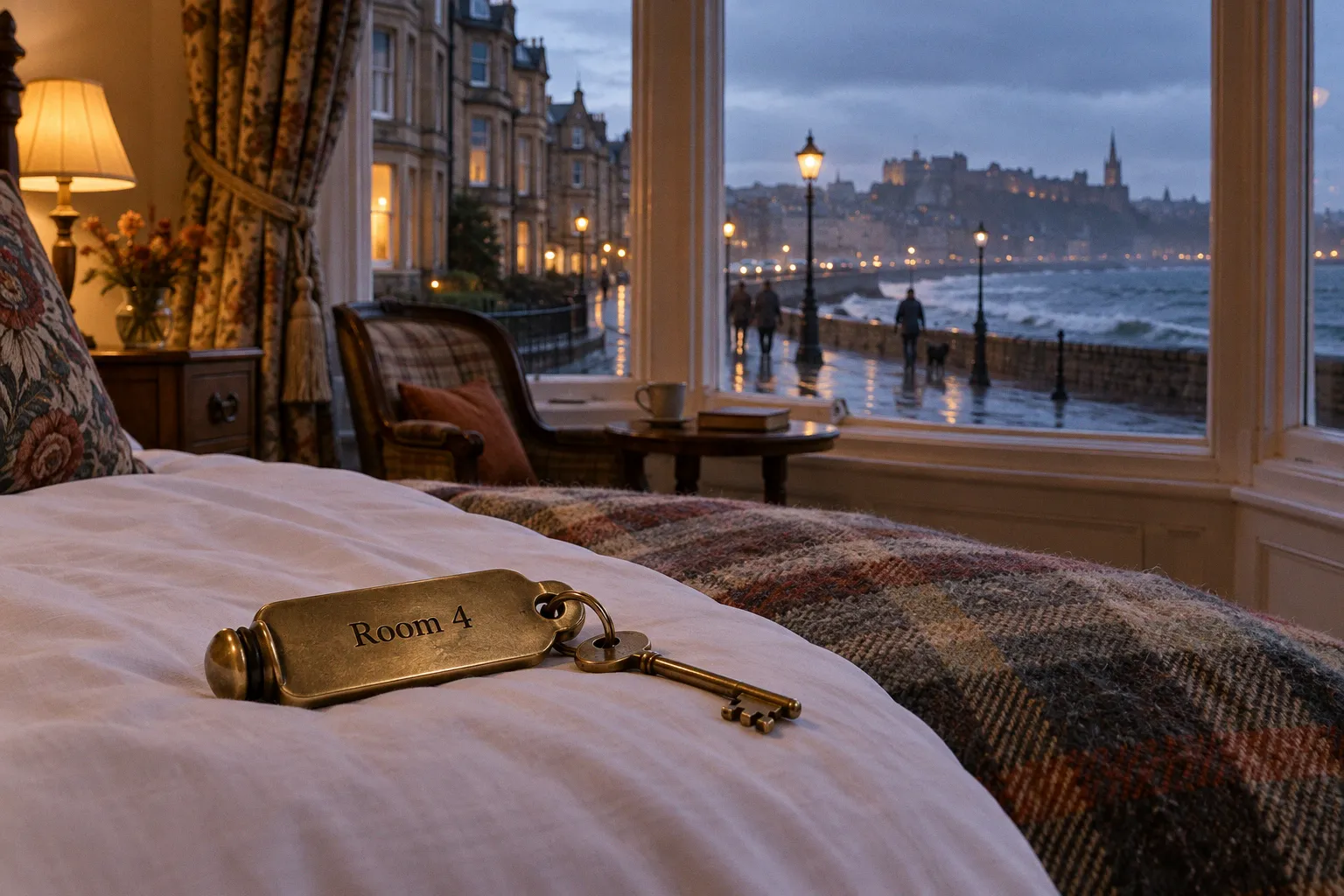
You booked a Leith guest house, the invoice showed the visitor levy line, and you wondered what it actually funded. The City of Edinburgh Council Leader's September report now answers that in plain terms: the proceeds are already being channelled into local services, street renewals, and major waterfront cultural investments. For anyone staying along the Firth of Forth, that is not policy paperwork. It is the pavement you walk from the tram stop and the lighting you pass under at midnight.
The September tally, in plain language
The Council Leader's September report breaks the levy into three visible buckets. Local services take the first share — the broadest and least visible of the three. Street renewals are the line most worth tracking if you travel with a heavy case, because the gap between a good pavement and a poor one appears within the first fifty metres from any transport stop in the New Town. The third bucket is the one that matters for our patch: major waterfront cultural investments. That is Leith, Newhaven and Portobello stitched into one strip, and the guest houses, coastal inns and self-catering flats that fill this site's listings live along that edge.
Why the percentage rule is spreading
On a parallel track, the UK Government confirmed plans granting regional mayors across England new powers to introduce overnight visitor levies — charged as a percentage of the cost of accommodation, not as a flat per-person fee. The framing from Westminster is protection for budget holidays, and on this point the framing is accurate. Edinburgh already operates on the percentage model; what the announcement really does is ratify the same logic for England's tourism hotspots. For a guest booking a modest room along the East Lothian coast for a weekend, that is good news. Flat levies land hardest on the cheapest rooms. Percentages do the opposite, which is why this design choice deserves a quiet word of approval.
How to read this when you book
None of this changes the invoice on your next stay. The levy is already on the bill, and the September report simply accounts for where the receipts are going. What to watch now is delivery. If the waterfront investments arrive as proper paving, real lighting, public realm you can actually sit on, then every guest house in Leith and Portobello becomes a slightly easier place to reach. If they arrive as another glossy render, the levy becomes a quiet grievance. Book with that question open. What has the council actually built along the shore since September, and is it visible from the front step of where you're staying?