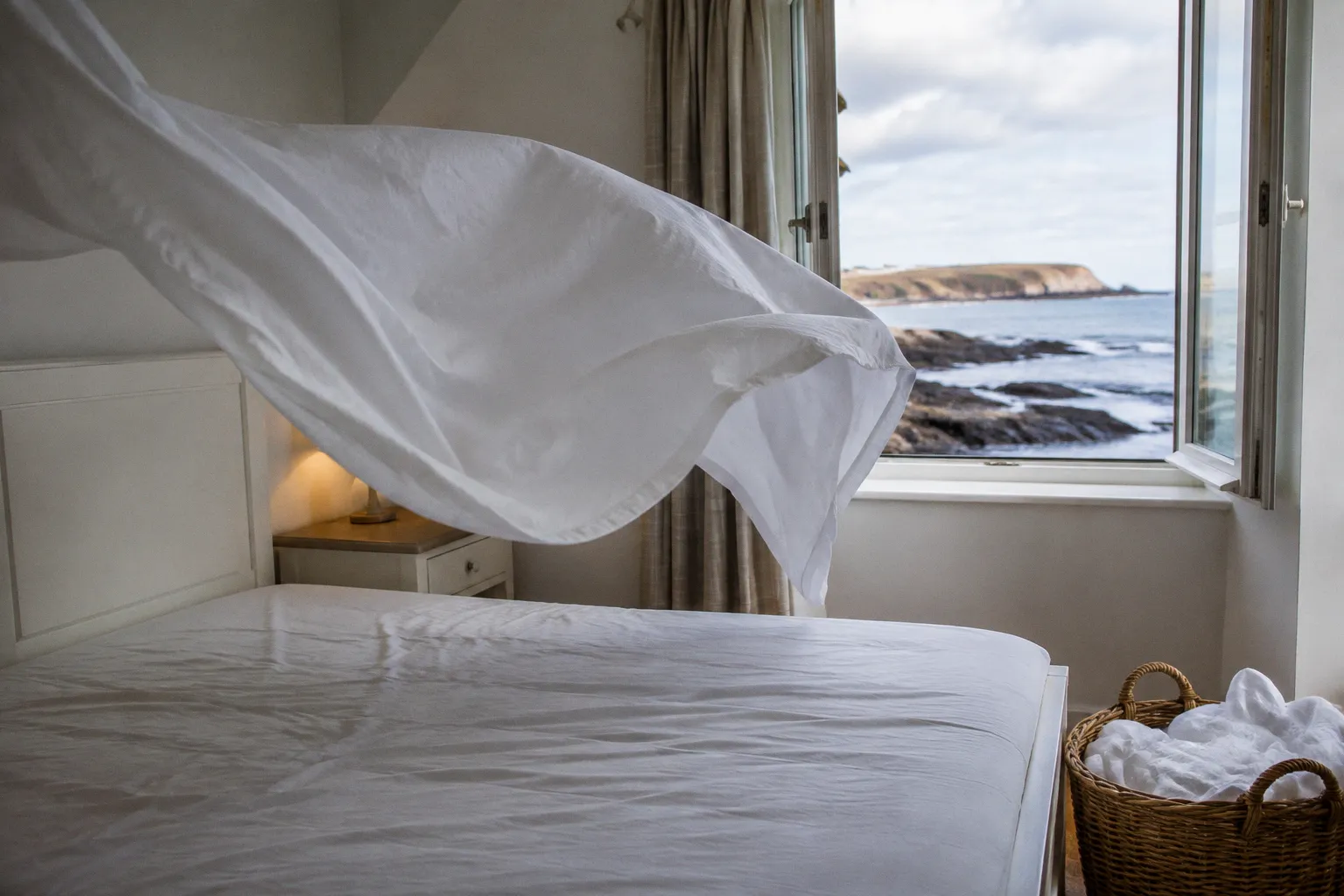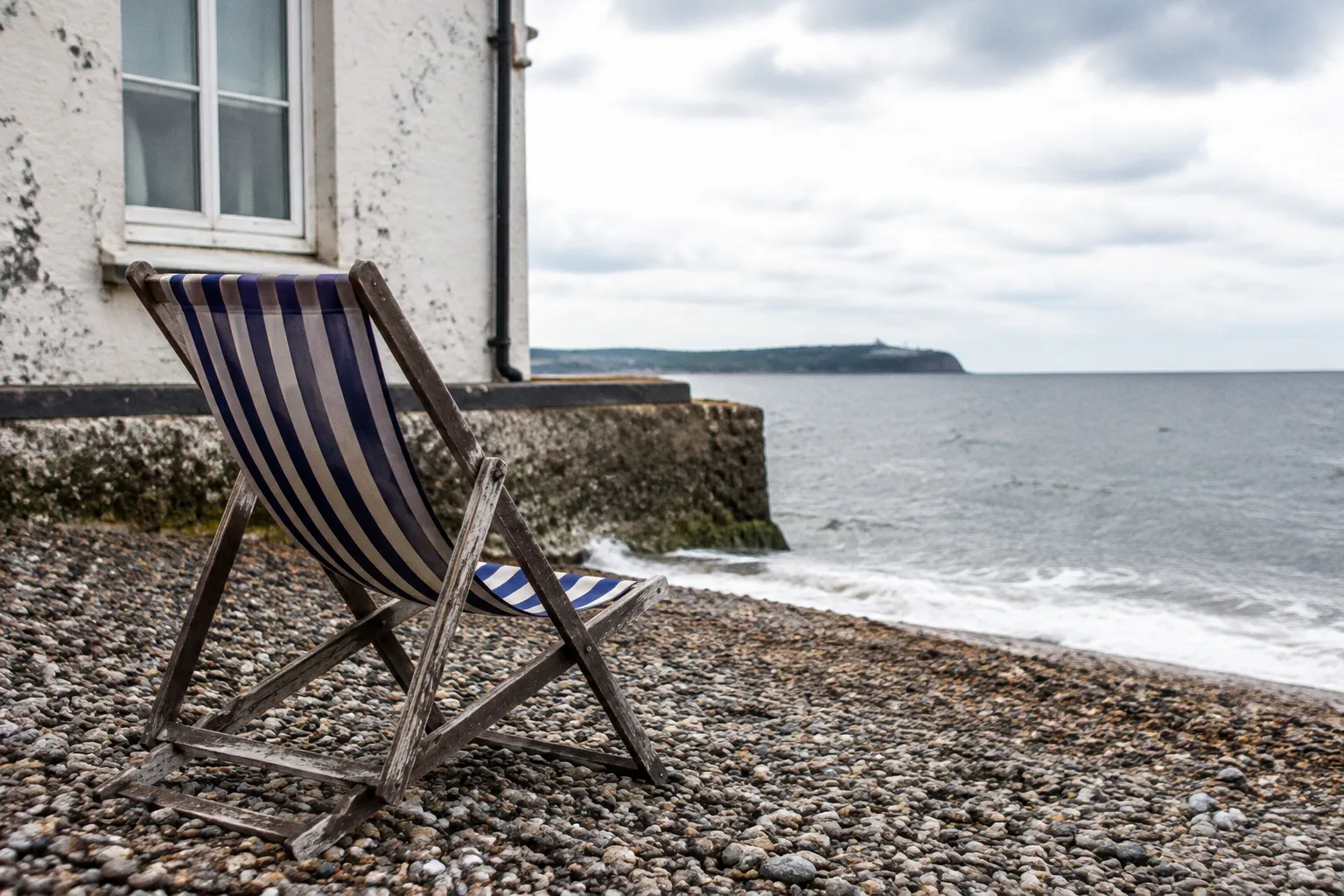
Spend a week in a Joppa beachfront apartment and the sea does exactly what it is supposed to do: it fills the frame of the window, changes the morning light to pewter and gold, and performs the sort of quiet existential service that holiday marketing copy was invented to describe.
But between you and that morning theatre sits a regulatory landscape that Edinburgh has spent the last several years tightening, along with a price differential that deserves more scrutiny than a swipe-and-book gesture allows. A sea view may be beautiful, but beauty is not a cost category. The booking total is shaped by scarcity, planning restrictions, licensing, local taxation and — in the best properties — the architecture that turns a view into an inhabitable experience.
The question, then, is not whether a Joppa sea view is beautiful. It is. The question is what that beauty actually costs: not just on the booking confirmation, but in the layered economics of a coastal let operating inside Scotland’s most aggressively regulated short-term-let market.
The Economics of the Firth of Forth View: Pricing the Premium
Consider what the numbers actually tell us. A premium Joppa beachfront apartment — genuinely beachfront, with the Forth audible through the glass and salt settling on the balcony rail overnight — commands nightly rates that typically range from around £175 to upwards of £380, depending on season and platform. That is not loose change, particularly when the booking is for a week and the property is being used by a family or group rather than one or two occasional visitors.
Inland, the same approximate floor area in Portobello proper — perhaps a short walk from the sand but without direct waterfront positioning — tends to cost noticeably less. The difference varies with the condition of the flat, the number of bedrooms, the booking dates and the platform’s fees, but the pattern is consistent enough: direct frontage attracts a premium, while being merely near the beach is treated as a different product.
The question guests rarely ask is what constitutes that premium. Is it the view itself? Partly. Is it scarcity? Absolutely.
Joppa occupies a thin ribbon of coastline at Portobello’s eastern end, wedged between the shore and the railway line, with limited buildable frontage and a relatively small stock of properties that can offer an uninterrupted relationship with the water. Beachfront accommodation here exists in dozens rather than in the hundreds of comparable city-centre units. Supply constraint does what supply constraint always does to pricing: it makes the arithmetic permissive.
The sea-view premium in Joppa isn’t a luxury add-on; it’s a scarcity tax dressed in coastal light.
There is also a difference between a nominal sea view and a useful one. A glimpse of blue between neighbouring buildings is not equivalent to a living room oriented towards the Forth, nor is a window looking diagonally across a road equivalent to a balcony that allows guests to sit outside with the tide in front of them. Listings often place these experiences under the same broad heading, but the market does not value them equally.
A practical assessment of a Joppa beachfront holiday let therefore needs to look beyond the phrase “sea view” and ask what the guest can actually do with it:
- Is the water visible from the main living space, or only from one bedroom?
- Does the view remain open when seated, rather than appearing only from a standing position?
- Is there outdoor space, and is it large enough to use rather than merely photograph?
- Does the apartment face the water directly or at an angle?
- Are railings, parked cars, neighbouring buildings or public walkways likely to dominate the foreground?
- Is the balcony sheltered enough to be useful outside the warmest part of the year?
The answers are not cosmetic. They determine whether the coastal setting is a background image or the organising principle of the stay.
There is a structural element guests do not see from the booking page, too: the regulatory overhead baked into the nightly rate. Since 1 January 2025, short-term-let operators in Scotland must hold a valid STL licence. Unlicensed operation can attract significant penalties, including fines of up to £2,500. In Edinburgh, licensing is only the entry requirement. For many whole-dwelling secondary lets, the more consequential hurdle is planning permission.
That cost is not necessarily itemised on an invoice, but it is part of the market. An operator who has spent time and money navigating licensing, safety requirements, inspections and planning is carrying a different operating burden from someone who has simply furnished a spare room and placed it online. Some of that burden will be reflected in the rate. Some will appear as better maintenance, clearer guest information and more reliable management. The relationship is not automatic, but the economics of compliance are real.
Navigating the Regulatory Tide: STL Licensing and Planning Hurdles
This is where the Joppa beachfront-let market becomes genuinely interesting — and, depending on your perspective, either reassuring or alarming.
The entire City of Edinburgh Council area was designated as a short-term-let control area on 5 September 2022. In practical terms, a property operating as a whole-dwelling secondary holiday let — meaning it is not the host’s principal home — generally requires planning permission for the relevant change of use. That is not an administrative detail to be waved through with the licence application. It can determine whether the property is legally able to operate as advertised at all.
Freedom of Information data from November 2024 showed that Edinburgh Council refused 566 of 632 planning-permission applications for short-term lets. That is a refusal rate of roughly 90 per cent.
The important distinction is that the figure concerns applications, not hosts. It does not demonstrate that nine out of ten individual hosts were denied, nor does it measure the success or failure of every operator in the city. A single applicant may have submitted more than one application, and the data relates to the applications covered by that reporting rather than to the entire population of holiday-let hosts.
Still, the implication for the market is substantial. The planning environment is restrictive, and a property that has secured the relevant permissions and licensing has cleared a barrier that many proposed operations did not.
For guests, this translates into something specific: a legitimate self-catering flat listed on a reputable platform should be assessed not only on its photographs and reviews, but on whether the operator provides the required licensing information. A property displaying an Edinburgh STL licence reference — for example, a registration such as EH-69738-R — is presenting evidence that it has entered the formal regulatory system. That does not guarantee a perfect stay, a quiet neighbour or a well-designed apartment. It does, however, distinguish an authorised operation from an unverified listing.
The distinction matters especially in a coastal market, where demand can encourage optimistic descriptions. “Beachfront” can mean directly facing the shore, standing across a road from the beach, or being within a few minutes’ walk of it. A licence does not settle that marketing question, but it helps establish that the accommodation itself is operating within the relevant framework.
There is also a less visible consequence of regulation: restricted supply can strengthen the position of established properties. If new whole-dwelling short-term lets face a high planning hurdle, existing compliant accommodation becomes harder to replace. That can support higher rates, particularly for properties with features that cannot be replicated elsewhere — direct waterfront access, an unusually broad balcony, a strong orientation towards the Forth or a layout designed around the sea-facing elevation.
For guests, compliance is therefore not simply a bureaucratic virtue. It is part of the value proposition. You are not paying only for the address; you are paying for accommodation that has made it through a system designed to limit casual conversion of residential property into holiday stock.
The sensible reading is not that every licensed apartment is superior, or that every unlicensed-looking listing is necessarily poor. It is that a legal operating status reduces one category of uncertainty. For a holiday rental, that is worth something.
The Hidden Costs of Coastal Stays: Visitor Levies and Operational Fees
There is a further layer to the cost structure that Edinburgh’s coastal lets carry, and it is one guests encounter directly on their bills.
Starting on 24 July 2026, the City of Edinburgh introduced a 5% Visitor Levy on paid overnight stays, applying for up to the first five consecutive nights. The charge is collected by the accommodation provider, so it appears in the booking cost or invoice rather than arriving as a separate tax form for the guest to complete.
For a week in a Joppa beachfront apartment priced at £280 per night, the accommodation charge for the first five nights is £1,400. Five per cent of that amount is £70. The levy therefore adds £70 across the first five nights, not £56. The distinction is simple, but it matters when the underlying nightly rate is already carrying a substantial beachfront premium.
The levy applies across Edinburgh accommodation types — hotels, bed-and-breakfasts and self-catering lets alike — so it does not discriminate against coastal properties. Its relevance to Joppa is comparative. When a guest weighs a Joppa sea-view flat against an East Lothian cottage outside the Edinburgh council boundary, the final totals may not be separated only by the headline nightly rate. The municipal charge, cleaning fee, platform service fee and any optional extras all affect the actual cost of the stay.
The broad comparison looks like this:
| Cost component | Joppa beachfront let | Inland Portobello flat | East Lothian cottage |
|---|---|---|---|
| Typical nightly rate | £175–£380 | £110–£220 | £120–£260 |
| 5% Visitor Levy per night, first five nights | £8.75–£19.00 | £5.50–£11.00 | £0 outside Edinburgh |
| Direct sea view | Expected at the beachfront tier | Rare or partial | Variable; estuary views possible |
| Access to cafés and shops | More limited immediately around the property | Stronger local convenience | Dependent on village or rural location |
| City-centre access by bus | Around 20–25 minutes | Around 20–25 minutes | Often around 45–70 minutes |
| Licensing context | Edinburgh STL control area | Edinburgh STL control area | East Lothian rules vary by area |
The table tells its own story. The beachfront premium is not purely aesthetic. It is a composite of view, scarcity, regulatory investment and municipal taxation. Whether that composite is worthwhile depends on how much the direct relationship with the water matters to the guest.
Operational fees complicate the picture further. A coastal apartment may have higher cleaning requirements because of sand, salt and wet-weather use. Balconies and exterior glazing need more attention than a standard inland flat. A property exposed to wind and sea air may require more frequent maintenance of railings, doors, outdoor furniture and seals. Those costs are not reasons to reject a property, but they help explain why two apartments with similar floor areas can operate at different price points.
Then there is the practical cost of location. Joppa’s appeal partly comes from being close to Edinburgh without feeling like the centre of Edinburgh. That can mean fewer immediate choices for groceries, late-night meals and cafés compared with central Portobello. Guests may spend less on the accommodation itself by choosing a cheaper property, only to give some of that difference back through taxis, additional bus journeys or more frequent trips for supplies.
The correct comparison is therefore not a headline nightly rate against another headline nightly rate. It is the total cost of the experience: accommodation, levy, fees, transport, food logistics and the value assigned to the view.
Joppa vs. Portobello: Balancing Proximity and Seaside Seclusion
This is where the architecture of personal preference matters, and where the discerning guest should think beyond the listing photographs.
Joppa and Portobello are technically contiguous. Walk east along the promenade and you pass from one into the other without encountering a meaningful boundary. But the experiential difference between them is genuine.
Portobello proper has the high street, the Victorian baths, the cafés, the weekend crowds and the familiar rituals of an urban seaside neighbourhood. It performs being a seaside town, and it does so with considerable charm. The beach is part of a wider social setting rather than the sole feature of the address. Accommodation reflects that arrangement: converted flats, upper-floor homes, apartments above or near commercial premises and purpose-built holiday lets that prioritise convenience as much as outlook.
Joppa, by contrast, is quieter and less commercially self-contained. It does not have Portobello’s retail spine or its density of cafés. What it offers is a headland position at the beach’s eastern limit, where the Forth opens out and views towards Fife acquire genuine spaciousness. The setting feels less like a beach district with homes attached and more like a residential edge directed towards the water.
That distinction affects the rhythm of a stay. In Portobello, the beach can be one activity among several. Guests can walk for coffee, combine a swim with shopping, or move between the shore and the high street without planning around transport. In Joppa, the water is more likely to become the organising feature of the day. The pleasure is less about having many nearby options and more about having one unusually strong one immediately in front of you.
The residential architecture also shifts subtly. Joppa contains properties whose proportions and orientation reflect their relationship with the coast: deeper windows, wider balconies and internal arrangements that make the water-facing side of the building matter. The best examples do not simply point a sofa towards the sea. They organise movement, light and outdoor access around it.
For a guest choosing between the two, the calculus is straightforward but not simple:
1. Choose Joppa if the primary sensory experience you are paying for is the water itself — its sound, its changing light and the tidal rhythm visible from the living room. You accept less immediate access to cafés and shops in exchange for a more singular coastal experience.
2. Choose Portobello if you want the beach as a backdrop to an urban-seaside holiday — morning coffee on the high street, an easy walk to local amenities and the social texture of a neighbourhood that happens to have a beach attached.
3. Choose an inland property in either area if the sea is important but not central. You may retain access to the promenade while avoiding the full direct-waterfront premium. For many guests, the short walk is a reasonable exchange for a larger interior, an extra bedroom or a lower total cost.
4. Choose neither if what you want is genuine isolation. Both are Edinburgh suburbs. You will hear traffic, encounter other people and remain within the city’s transport and residential systems. This is not a remote croft on the Ardnamurchan peninsula, and it should not be marketed as one.
The Portobello-versus-Joppa decision is therefore less about which place is objectively better. It is about whether the holiday is built around access or outlook. Portobello offers more of the former. Joppa makes a stronger case for the latter.
Architectural Assets: Why Balconies Like the Ark at Anchor Command Market Rates
The twelve-metre balcony at the Ark at Anchor illustrates something essential about how coastal-let pricing works.
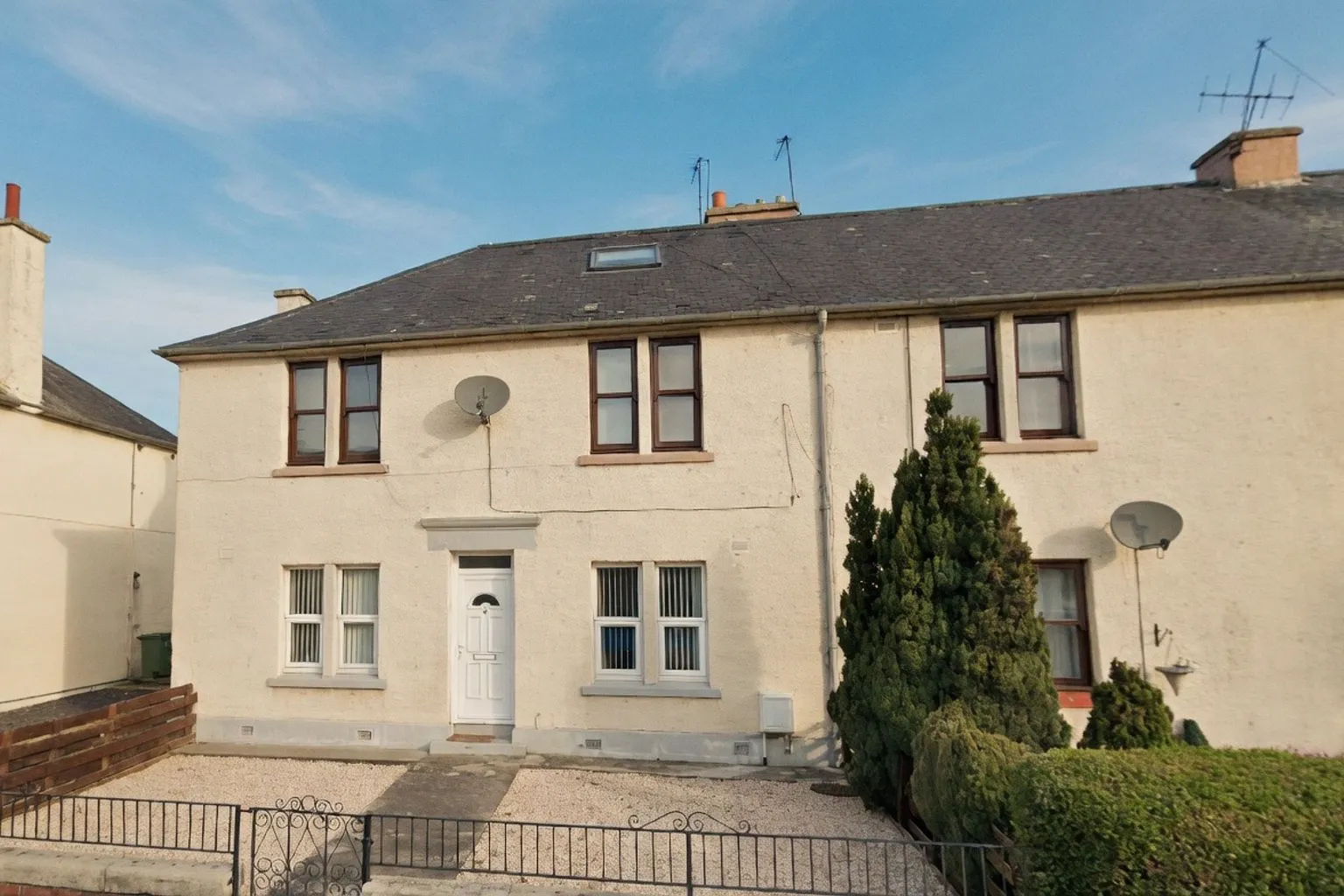
The apartment at 1 Eastfield, Joppa, features a sea-facing balcony extending over the Firth of Forth. It holds STL licence EH-69738-R and operates in the upper tier of Joppa’s beachfront-let market, with indicative nightly rates ranging from around £175 to £380 or more depending on season and booking platform.
The property’s physical relationship with the water is not metaphorical. The balcony makes the Forth an immediate part of the apartment rather than a distant image beyond a road, seawall or neighbouring roofline. That distinction is difficult to express in a room count, but it is precisely the sort of distinction that drives premium pricing.
This is where design-conscious guests should pay attention. The premium attached to a property like the Ark at Anchor is not merely about the view as a visual amenity. It is about spatial hierarchy.
A substantial balcony changes the relationship between interior and exterior space. It makes the living room feel larger without adding internal floor area. It gives guests a place to read the weather rather than merely observe it through glass. It allows the coastal light to enter the experience as something dynamic: the pewter-grey of a Forth morning, the harder brightness of a clear afternoon, the warmer tones that arrive later in the day.
The practical benefits are equally important. A balcony can provide a second place to sit, a transition between the apartment and the shoreline, and a way to make the sea view part of ordinary moments rather than a feature admired only on arrival. Breakfast outside, a late drink in the windbreak or simply opening the doors to hear the water can make the property feel meaningfully different from an inland flat with a framed glimpse of the same horizon.
That is why beachfront properties with genuine architectural assets — not merely windows facing the water, but spatial gestures that engage with the coastline — command rates that can appear disproportionate on paper. They are selling an experience that cannot be reproduced at a lower price point. A well-appointed flat fifty metres inland, even with partial sea views, occupies a fundamentally different sensory category.
In coastal lets, the architecture isn’t decoration — it’s the product. The balcony is the experience, and the experience is the price.
There is a danger for guests in conflating proximity with quality. Not every Joppa beachfront property delivers on the promise of its postcode. Some may be poorly oriented, with limited daylight or a view filtered through railings and parked cars. Others may possess an impressive exterior but an awkward interior layout, making the sea visible only from a narrow corner of the accommodation.
The best coastal lets are shaped by an understanding of the site. Their value lies in the combination of:
- Orientation, so the main living spaces make proper use of the water-facing side.
- Proportion, so the balcony or terrace is usable rather than merely present.
- Weather protection, because an exposed balcony must be designed for wind as well as for photographs.
- Glazing and sightlines, so the view works from ordinary seated positions.
- Acoustic separation, since the sound of the sea is an asset only if it is not overwhelmed by traffic or poorly insulated neighbouring spaces.
- Maintenance, particularly around salt exposure, exterior fittings and outdoor furniture.
- Interior planning, so the coastal setting remains part of the stay even when guests are eating, working or relaxing indoors.
These are not abstract architectural concerns. They affect how often guests use the property’s defining feature. A balcony that is too exposed, too narrow or badly furnished may add value to the listing but very little to the actual holiday.
The same applies to the phrase “waterfront”. A property can be close enough to the shoreline to qualify in a broad marketing sense while still offering little privacy, no direct access and a compromised outlook. The premium is justified when the relationship with the water is both visible and usable.
What You’re Actually Paying For
Strip away the marketing language and the booking-platform photography — the oversaturated sunsets, the carefully placed throws and the inevitable glass of wine facing the horizon — and the Joppa beachfront-let proposition reduces to a few tangible elements.
You are paying for spatial scarcity. Direct waterfront property is limited, and the supply is further shaped by planning controls. You are paying for a regulatory compliance overhead that has helped thin the market of casual operators. You are paying the 5% Visitor Levy on the first five consecutive nights of an Edinburgh stay, where applicable. And you are paying for the architectural privilege of a property that makes the Firth of Forth not merely visible but experientially present.
The financial test is easiest to understand through a worked example. At £280 per night for seven nights, the accommodation total before other charges is £1,960. The Edinburgh Visitor Levy at 5% applies to the first five nights, adding £70. That brings the accommodation and levy subtotal to £2,030 before cleaning charges, platform fees or optional extras. The levy is not the main reason the stay is expensive, but it is part of the final number and should not disappear into vague language about local taxes.
The value test is more personal. A guest who plans to spend most of the day sightseeing in central Edinburgh may derive little benefit from paying for an expansive balcony that sits empty until bedtime. A family using the apartment as a base for beach walks, meals and slower mornings may experience the same feature as the central reason for booking. A couple visiting in unsettled weather may value the ability to remain connected to the coast without having to leave the living room.
Is the premium worth it? For the right guest — the one who understands that a sea view is not wallpaper but a spatial condition, who values tidal light over immediate proximity to Princes Street, and who can distinguish between a balcony that is a design gesture and one that is a concrete afterthought — the premium is not just defensible. It is the entire point.
For everyone else, Portobello’s inland flats offer Edinburgh’s coastal character at a price that may make more sense. They provide access to the beach, stronger everyday convenience and a broader choice of accommodation without requiring the guest to pay for a waterfront experience they may barely use.
Both are honest propositions. The issue is not whether Joppa is expensive in the abstract. It is whether the apartment gives you enough of the Forth — enough light, air, space and usable connection to the shoreline — to make the additional cost feel like a feature rather than a surcharge.