It is usually the address, the room description, the building layout, or the gap between a property’s marketing language and its operating reality.
That gap explains many of the recurring Edinburgh beach guest house booking mistakes. Portobello and Joppa offer genuine proximity to the Firth of Forth, with central Edinburgh typically 20 to 25 minutes away by bus. But the coastal accommodation market is not a uniform strip of identical rooms. It is a mix of Victorian conversions, small guest houses, licensed short-term lets and properties operating under overlapping listing names.
For owners, the lesson is about conversion and compliance. For guests, it is simpler: a coastal postcode is not the same thing as a guaranteed sea view.
The address trap on Portobello promenade
The first operational problem is basic but consequential: several accommodation listings can be associated with the same address line.
Portobello’s promenade contains buildings divided into separate rooms, flats or guest-house operations. In some cases, different listing names have appeared under the same address, including properties associated with 33 Straiton Place. That creates a failure point before a guest has even considered the room itself.
A traveller may compare two listings, assume they represent separate buildings and book on the basis of different photographs or amenities. On arrival, the practical distinction may be a different entrance, a different floor or a different operator within the same structure. If the booking confirmation is vague, the guest is left trying to establish which bell, door or reception arrangement applies.
This is not merely a customer-service inconvenience. Address ambiguity affects:
- arrival instructions and key collection;
- luggage handling, particularly in buildings without lifts;
- parking expectations;
- the location shown on mapping services;
- emergency contact arrangements;
- the guest’s ability to identify the correct operator;
- confidence that the photographs relate to the room being sold.
For a guest, one of the most useful parts of the booking process is also one of the least glamorous: reconcile the address across the booking platform, the property’s own information and the confirmation email. If the listing name changes between pages, or if two operators appear to use the same building address, ask for the precise entrance and room location before payment where possible.
A serious operator should make this information explicit rather than treating it as an arrival-day detail. The listing should distinguish the building, entrance, floor and unit. It should state whether check-in is staffed, self-service or managed from another nearby property. A guest house that leaves these points unclear is adding avoidable friction to the booking.
On the Portobello seafront, the first booking error is often not choosing the wrong room. It is failing to establish which property the address actually describes.
Why address overlap matters more at the coast
In a conventional city-centre hotel, a shared postcode may be inconvenient but manageable. A coastal guest house is being chosen for a specific physical relationship with the beach. A difference of one entrance or one side of a building can change the experience.
The guest may be expecting:
- direct access to the promenade;
- a short walk to Portobello Beach;
- an upper-floor room with a view across the Firth of Forth;
- a quiet rear-facing room;
- a private entrance rather than a shared stair;
- a particular breakfast or reception arrangement.
Those are separate product attributes. They should not be compressed into one generic promise of seaside accommodation.
Why “sea view” rarely means a panoramic sea view
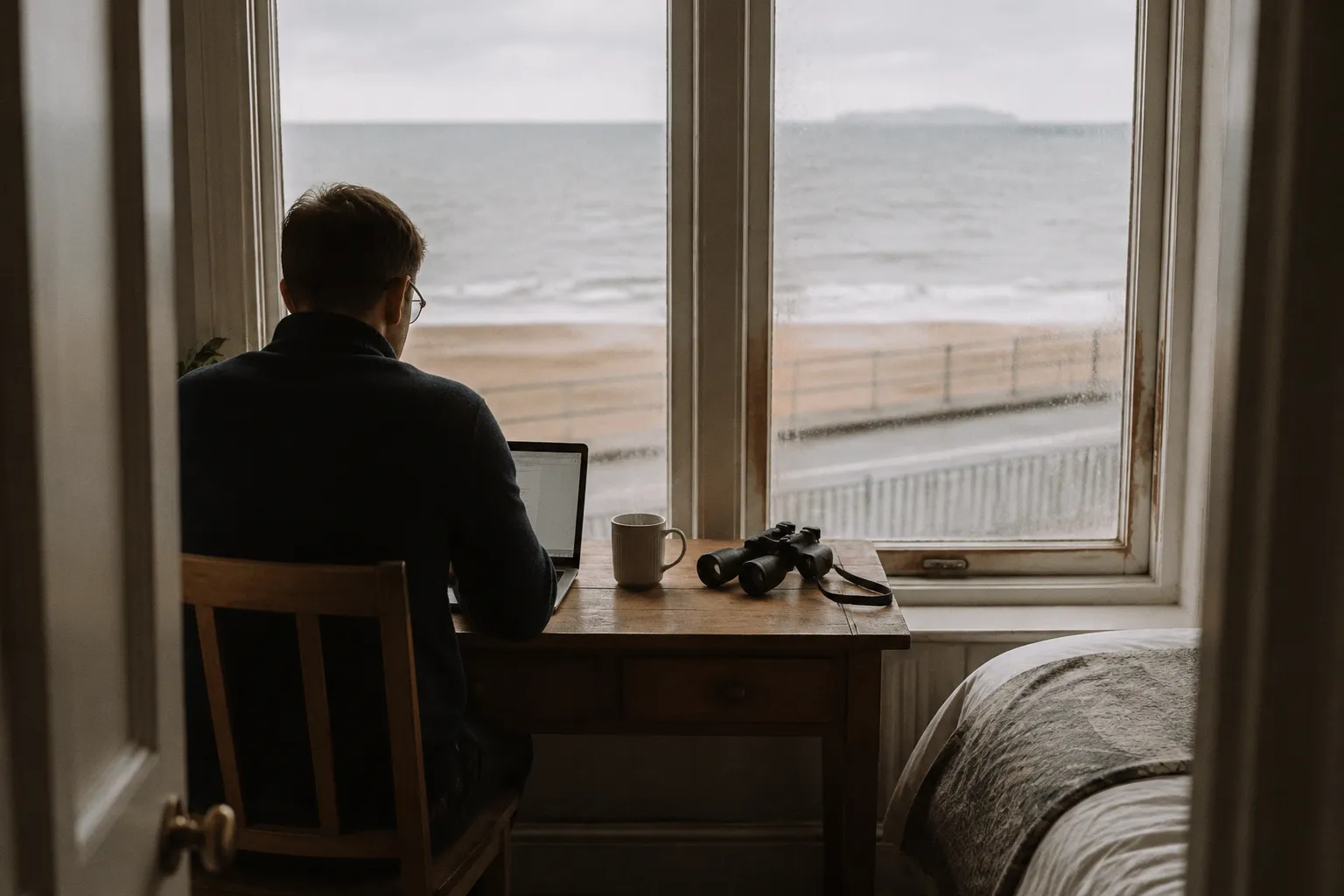
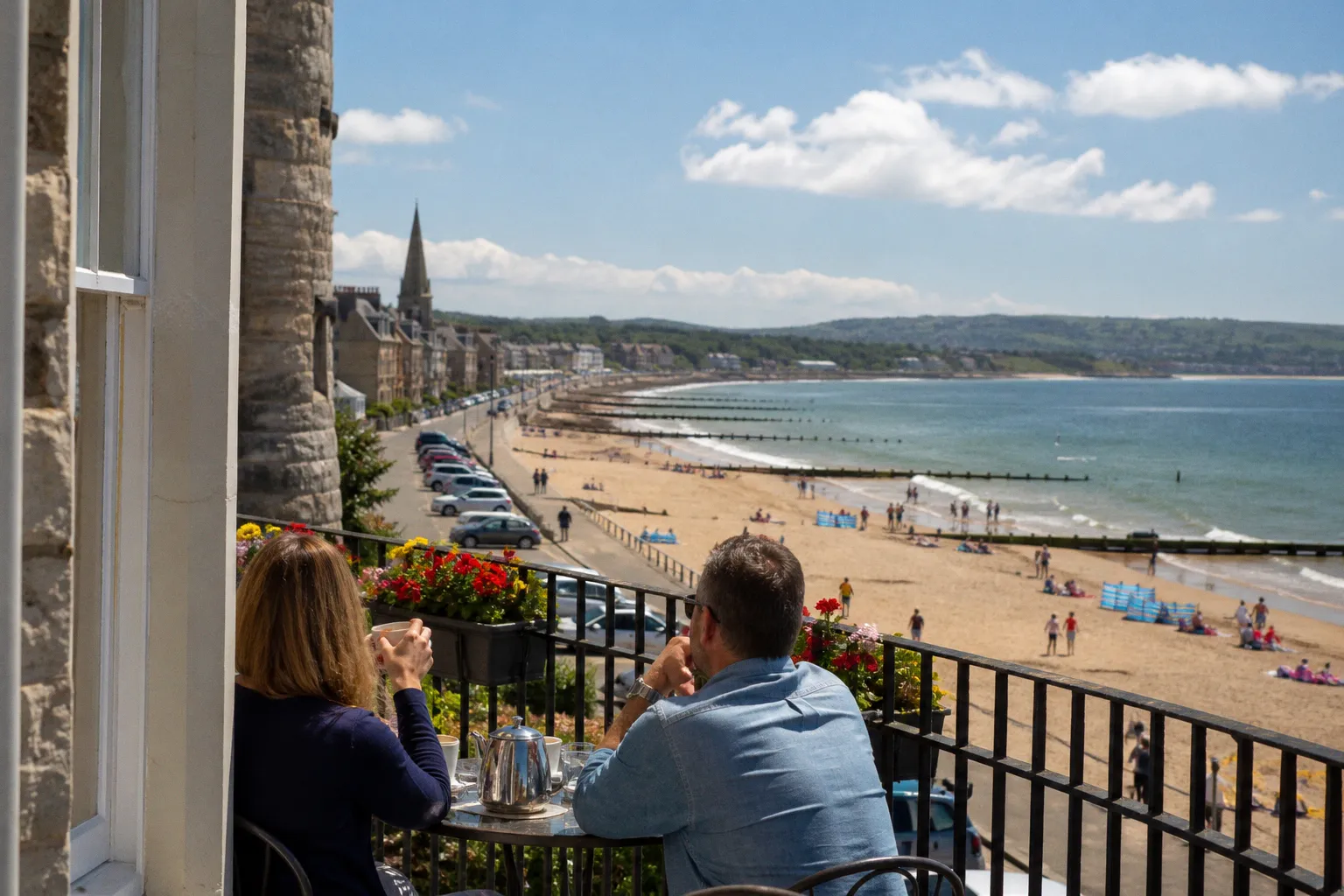
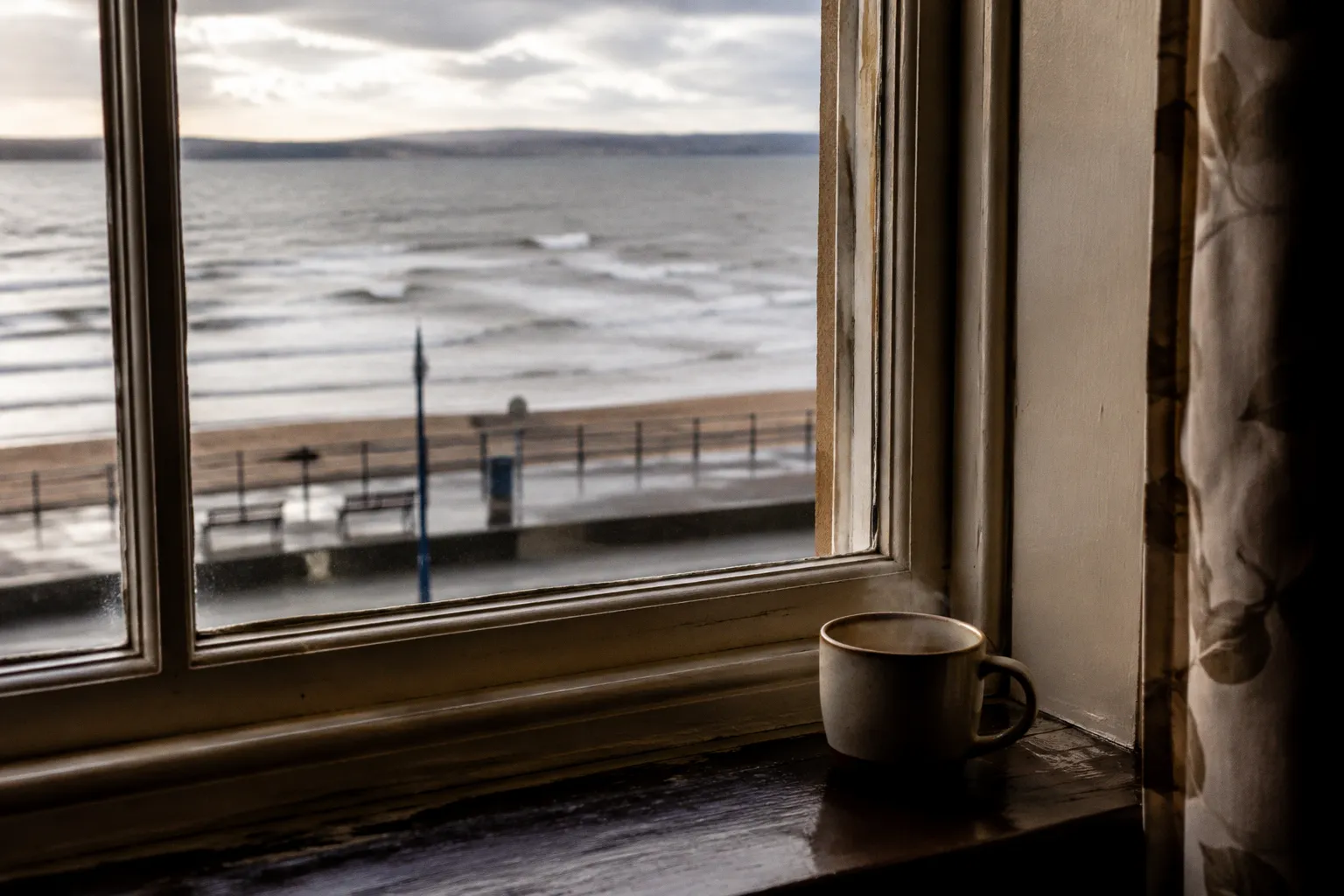
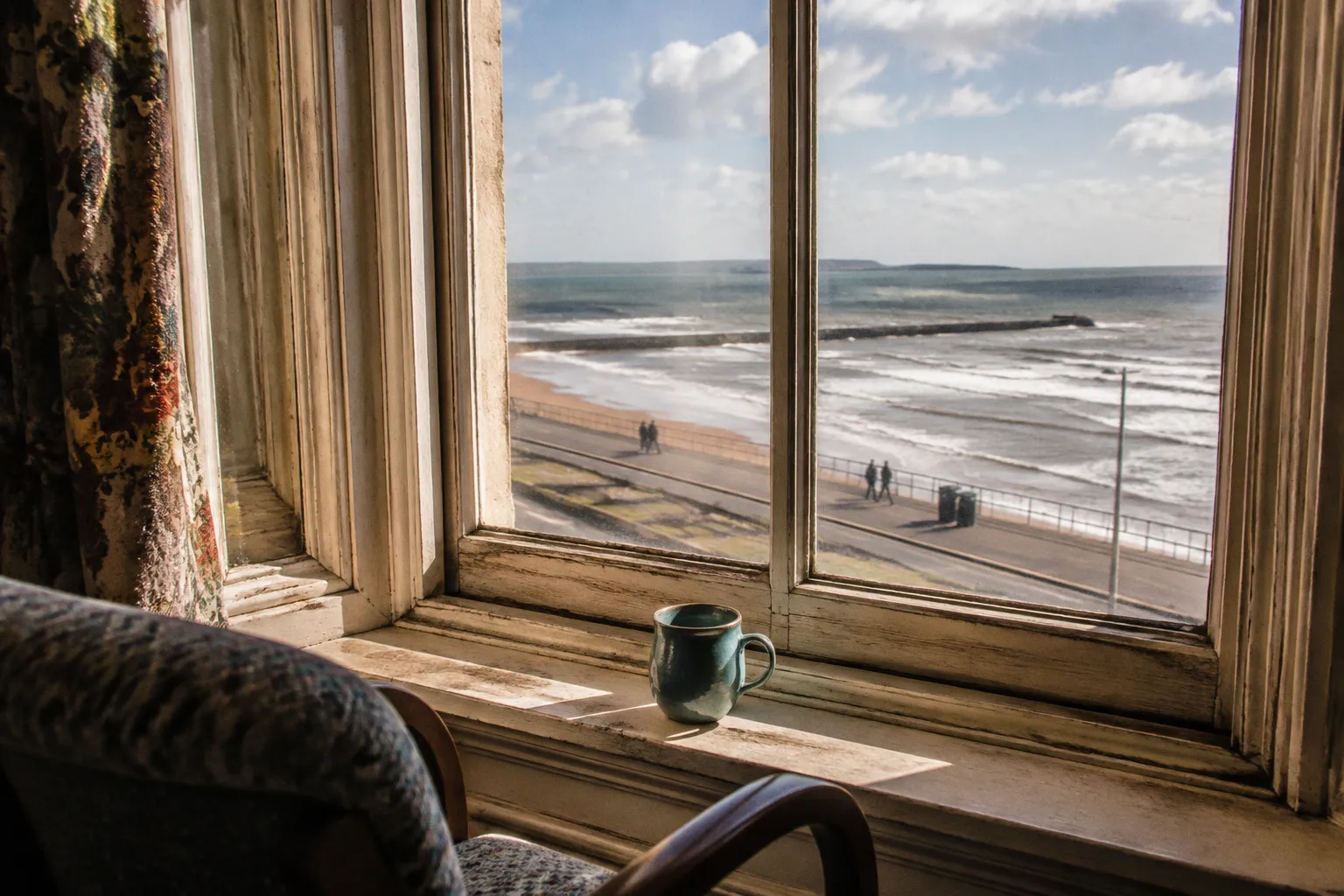
Victorian buildings create much of the visual identity of Portobello’s guest-house market, but they also produce inconsistent room layouts. Bay windows, tall ceilings and upper-floor positions can provide useful sightlines towards the water. They can also create narrow access routes, unusual room proportions, sound transfer and views interrupted by neighbouring buildings, trees or the angle of the street.
A listing that says “sea view” may therefore describe several different realities:
1. Direct view: the water is visible from the main room window without needing to move to a side angle.
2. Partial view: a section of the Firth of Forth can be seen, but the outlook is limited by buildings, rooflines or the window position.
3. Oblique view: the room faces along the coast or towards the promenade, with the water visible only from part of the window.
4. Shared or external outlook: the view is available from a bay window, landing or communal area rather than the principal sleeping area.
5. Location-based wording: the property is close to the sea, but the booked room does not have a water view.
These distinctions matter because room-level allocation is often the decisive issue. A building can have a genuine coastal outlook while several rooms face the rear, a courtyard or a neighbouring property. It is not safe to infer that every room in a Portobello or Joppa guest house looks over the Firth of Forth.
The wording in the listing should be read at room level, not property level. “Sea-view accommodation” may describe the category, but the specific room title and room photographs are more relevant. Even then, photographs can be taken from a favourable angle or show a different room from the one available on the selected dates.
A practical message to the operator should ask three direct questions:
- Is the booked room itself facing the sea?
- Is the water visible from the bed or only from a side window?
- Is the view direct, partial or obstructed?
That is more useful than asking whether the property is “near the beach”. Proximity and outlook are different products.
Victorian character has an operating cost
Historic buildings are not a problem in themselves. They are a variable that needs to be described accurately.
A Victorian guest house may have:
- narrow staircases;
- no lift;
- high or uneven thresholds;
- bathrooms fitted into irregularly shaped spaces;
- rooms that differ substantially in size;
- windows with limited opening;
- weaker acoustic separation than a modern hotel;
- plumbing or heating arrangements shaped by the original structure.
The same bay window that improves the prospect across the promenade may also make a room more exposed to street noise. A rear room may offer less daylight or no sea view but provide a quieter sleeping environment. A top-floor room may have the best outlook and the least convenient access for a guest carrying heavy luggage.
This is where many Portobello guest house booking mistakes come from: the guest evaluates only the headline benefit and not the trade-off attached to it.
For owners, the solution is not to remove all nuance from the listing. It is to make the differences between rooms legible. A room description should identify the floor, access conditions, bathroom arrangement and outlook without relying on decorative language. A photograph of the staircase can prevent a complaint more effectively than another wide-angle image of the beach.
Coastal proximity versus central Edinburgh access
Portobello and Joppa are close enough to Edinburgh’s centre to support a combined beach-and-city itinerary. The typical bus journey to central landmarks such as Edinburgh Waverley is around 20 to 25 minutes, while Portobello Beach is approximately 5 to 7 kilometres from central points including Waverley Station and Edinburgh Castle.
That makes a seaside stay commercially attractive. It offers a different base without isolating visitors from the city’s main demand drivers. But “20 to 25 minutes” is a transport estimate, not a door-to-door guarantee.
The actual journey includes:
- walking from the room to the bus stop;
- waiting time;
- traffic conditions;
- the distance from the city stop to the final destination;
- late-evening service frequency;
- luggage and weather conditions;
- event-related congestion.
A property owner should present the city connection as a practical benefit, not as evidence that the accommodation is effectively in the city centre. A guest booking for a festival, concert or early train should assess the full journey rather than relying on a rounded travel time.
The same applies in reverse. A visitor who chooses a Portobello guest house primarily for the beach may not need a room with the strongest city connection. A visitor who plans to spend most of the day in central Edinburgh may value reliable bus access, clear arrival instructions and a quiet room more than a nominally better view.
The accommodation choice should match the trip’s operating pattern.
| Booking priority | Room or property feature that matters most | Common error |
|---|---|---|
| Beach access | Confirmed walking route to the promenade and beach | Assuming every nearby address has the same entrance |
| Firth of Forth outlook | Room-specific view description | Treating a property-level sea-view label as a guarantee |
| Daily city visits | Bus stop location and realistic journey time | Confusing travel time with total door-to-door time |
| Quiet sleep | Rear-facing or acoustically separated room | Selecting an exposed front room for the view alone |
| Easy arrival | Exact entrance, floor and check-in procedure | Waiting until arrival to resolve address confusion |
| Luggage accessibility | Stair, lift and room-floor information | Booking a Victorian upper-floor room without asking |
The coast sells the location. The room, access route and transport pattern determine whether the location works.
The regulatory squeeze on coastal accommodation
Edinburgh’s short-term let licensing rules and policy changes have materially reduced the volume of available B&Bs and self-catering accommodation in coastal areas such as Portobello and Joppa. By 2026, the effect of regulation is part of the booking environment, not an abstract issue for property owners.
The immediate consequence for guests is a smaller and less stable supply of accommodation. A listing found through a search engine may no longer be operating, may have changed its business model or may be represented inconsistently across platforms. Availability can appear more fragmented, while address overlap becomes more difficult to interpret.
For owners and managers, licensing is a commercial constraint with operational consequences:
- the property must operate within the relevant licence conditions;
- listing information must remain aligned with the licensed operation;
- changes in room use or management arrangements can affect the accuracy of online descriptions;
- platform availability should be synchronised with actual inventory;
- contact details and arrival procedures need to remain current;
- a property cannot rely on old listing momentum if its operating status has changed.
Guests should not assume that every online B&B listing in Portobello is currently open or accepting reservations. This is especially important when a property appears under several names or when one platform shows dates that another does not.
The most reliable signal is consistency. The property name, address, contact details, room description and booking confirmation should point to the same operating entity. If they do not, the guest should treat that as a booking risk rather than a minor presentation flaw.
Regulation also changes the owner’s incentives. With fewer available units, a property may have stronger occupancy potential during peak periods. That does not remove the need for accurate room allocation. A high occupancy rate built on unclear descriptions produces more disputes, refunds and poor review outcomes. Yield management is useful only when the underlying product is correctly defined.
A better method for booking a Firth of Forth room
The booking process does not need to become an investigation. It does need to move beyond the headline photograph.
A disciplined approach has five stages.
1. Establish the exact property
Check the full address, not just the neighbourhood name. If several listing names appear at the same address, identify the operator and the entrance. Ask whether check-in takes place at the address shown in the booking confirmation.
This is particularly relevant on the promenade, where multiple accommodation businesses or units can share an address line.
2. Separate proximity from the view
A property can be 50 yards from Portobello Beach and still have rooms facing away from the water. Treat beach distance and sea view as two independent claims.
Look for room-specific wording. If the listing only says that the guest house is near the sea, do not convert that into an assumption about the window outlook.
3. Match the room to the trip
A front-facing bay window may be the right choice for a guest who prioritises the Firth of Forth. It may be the wrong choice for someone sensitive to street noise. A rear room may be operationally better for sleep, while an upper-floor room may provide the strongest outlook at the cost of stair access.
The room is not simply a container for the bed. It controls the main trade-off within the property.
4. Test the transport claim against the itinerary
If the trip depends on Edinburgh Waverley, a festival venue or an early departure, check the bus route and the walking distance separately. A 20 to 25-minute bus journey from Portobello or Joppa to central Edinburgh is a useful baseline, but it does not cover waiting, transfers or the final walk.
For a short break centred on the beach, this may not matter. For a schedule built around city appointments, it can determine whether a coastal stay remains efficient.
5. Save the operational details
Keep the confirmation showing the property name, address, room type and arrival instructions. If the view or floor matters, retain the room description used at the point of booking.
This is not excessive administration. It is a straightforward way to prevent the most common mismatch: a guest remembers the broad promise, while the operator relies on a narrower description that was never read closely.
What owners should change in their listings
The same evidence that helps a guest avoid a poor booking also shows where coastal operators lose revenue.
A property does not need to promise more than it can deliver. It needs to define the product precisely. That means replacing generalised claims with room-level information.
A strong listing should distinguish:
- beach distance from sea visibility;
- front-facing rooms from rear-facing rooms;
- direct views from partial views;
- the room with the best outlook from the room type being sold;
- private facilities from shared facilities;
- staffed reception from remote or self-check-in;
- ground-floor access from upper-floor accommodation;
- the named operator from other businesses at the same address.
This improves more than guest confidence. It supports pricing discipline. A direct, unobstructed outlook can be positioned differently from a partial side view, but only if the distinction is visible to the buyer. If every room is described with the same sea-facing language, the operator loses the ability to manage yield by room attribute.
The booking engine should also prevent inventory confusion. If one platform sells a “sea view double” and another sells a generic “double room” for the same physical space, the descriptions need to be reconciled. Otherwise, the operator is effectively selling multiple interpretations of one room.
In a regulated market with reduced coastal supply, clarity is a competitive advantage. Not because it sounds polished, but because it reduces the number of reservations that fail at arrival.
The real lesson from a seaside booking
A Portobello or Joppa stay can work extremely well. The beach is close, central Edinburgh remains accessible by bus, and the Firth of Forth provides a location that differs materially from a standard city-centre hotel. The commercial case is clear.
The operational case is narrower. Guests need to verify the address, the room-level outlook, the building access and the transport pattern. Owners need to stop treating those details as secondary information. They are the product.
The safest booking is not necessarily the one with the most prominent coastal photograph. It is the one where the property, entrance, room, view and arrival process all describe the same stay. That is the practical standard for Edinburgh coastal B&B stay lessons: reduce ambiguity before arrival, and the seaside location can do the rest.