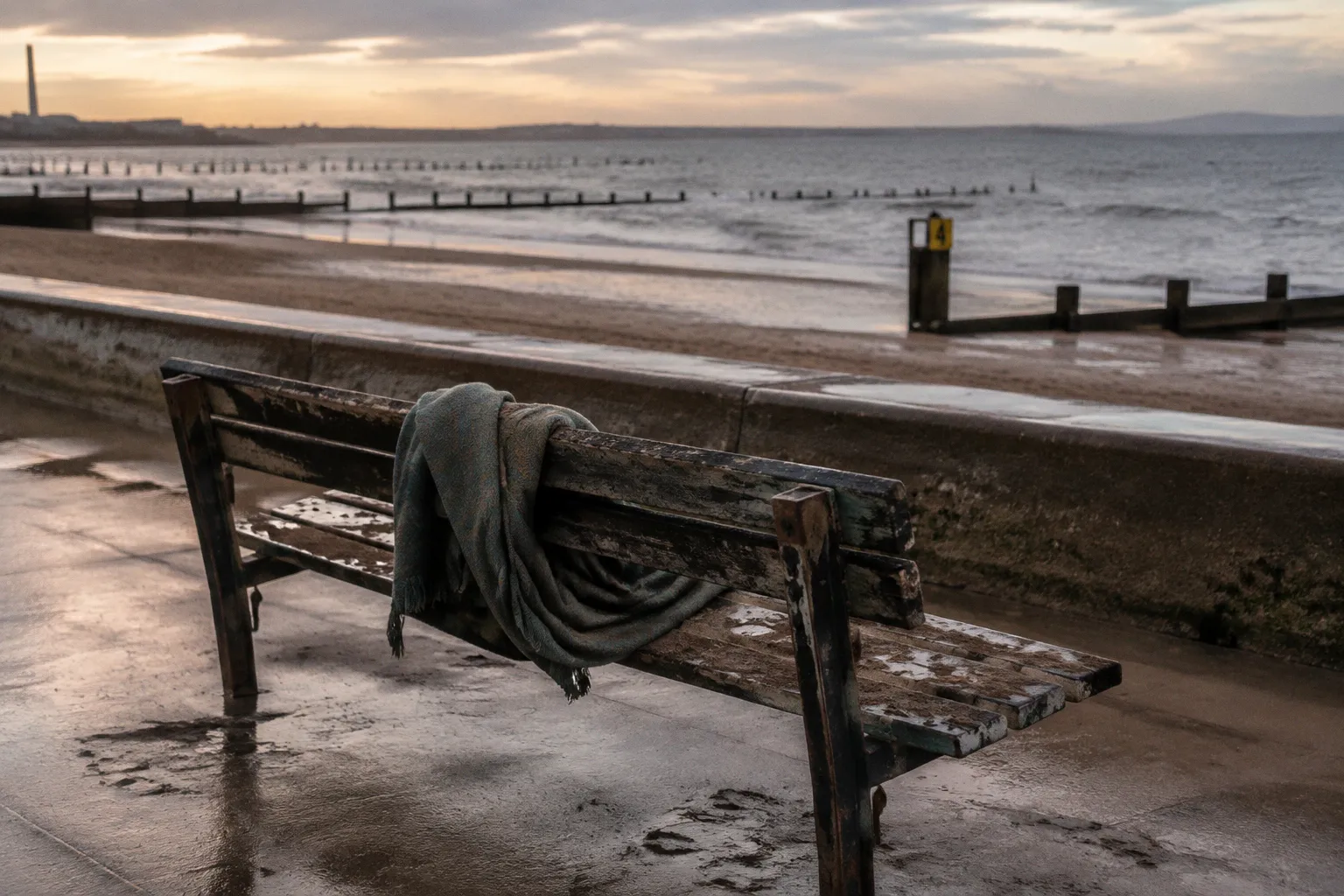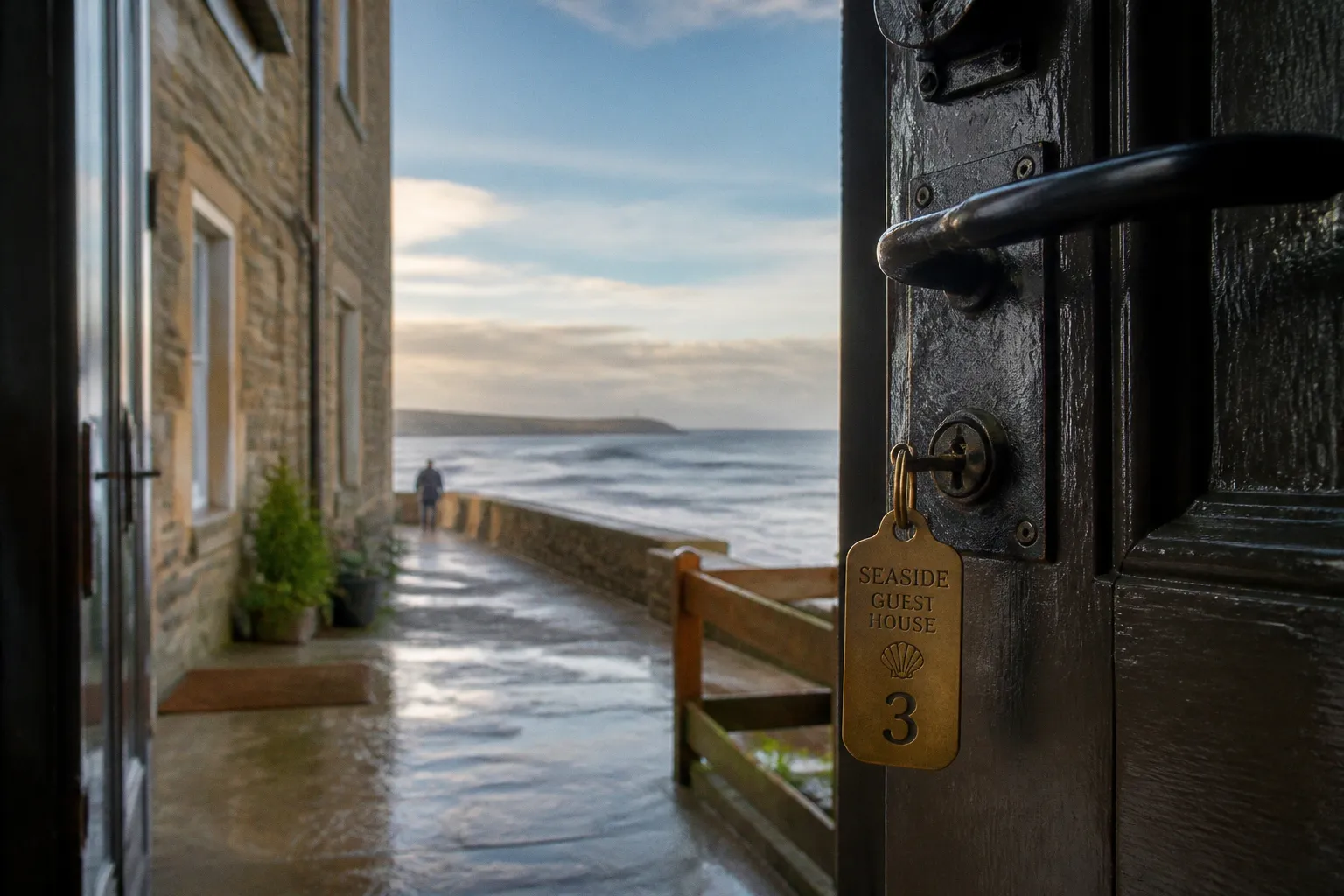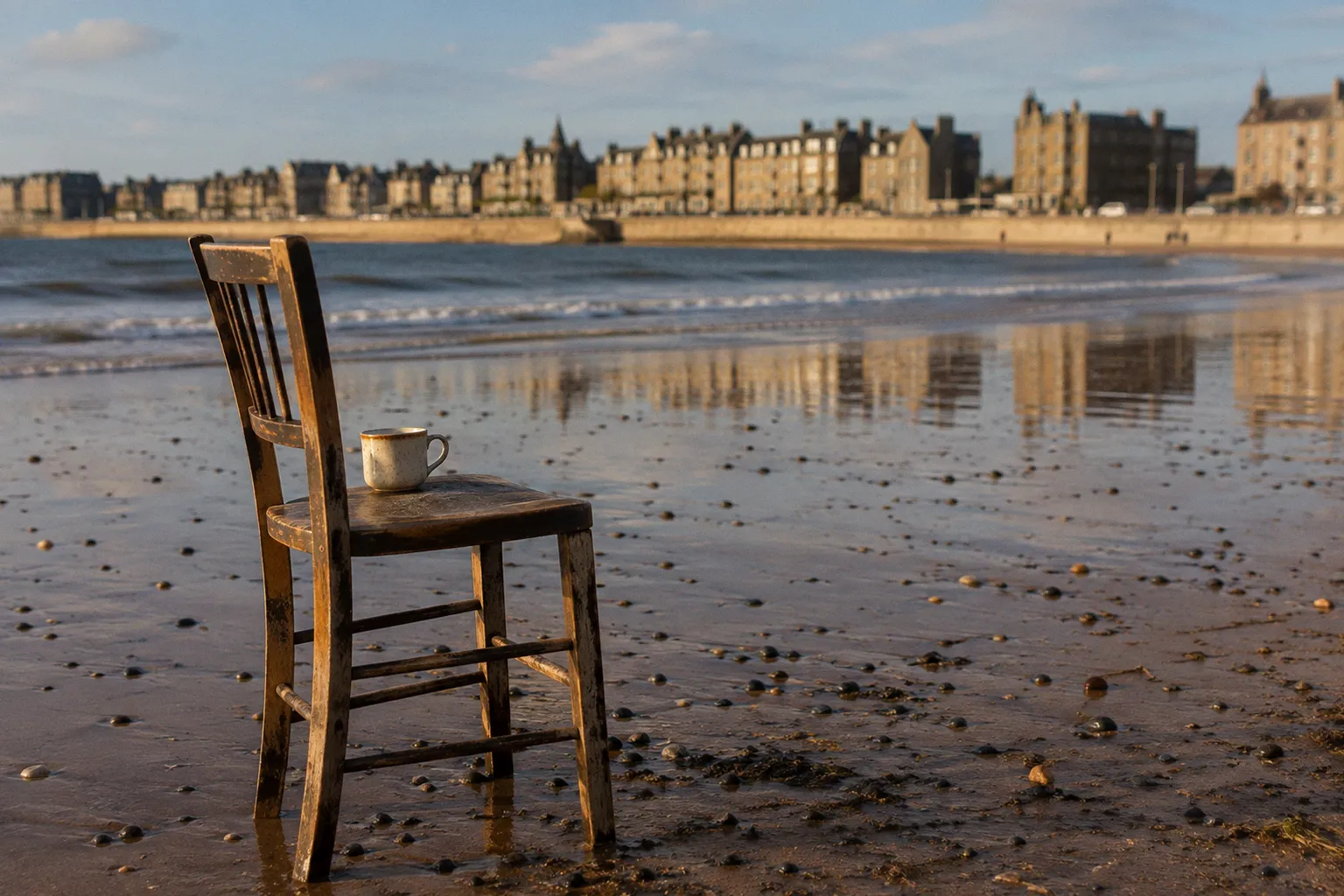
The shoreline is close enough for a short bus ride from Princes Street and sufficiently removed from the capital’s central streets to retain its own rhythm: morning coffee taken with a view of the water, bakery queues moving towards the sand, swimmers emerging from the firth, and a late-afternoon walk that ends with something sweet rather than a formal meal.
This is the foundation of portobello promenade cafe culture in Edinburgh. It is not simply a concentration of places to eat beside a beach. The promenade has inherited the habits of a Victorian resort, absorbed the working character of an old coastal suburb, and adapted to a newer kind of urban leisure in which coffee, sea swimming, cycling, takeaway food and local walking routes all occupy the same stretch of waterfront.
The result is a food scene that feels unusually connected to its setting. The cafes are not decorative additions to the coast. They are part of how Portobello is used.
A Victorian promenade with a contemporary daily life
Portobello’s seaside identity was built long before its current cafe culture appeared. The area began as an industrial village, associated in the eighteenth century with brickworks and potteries, before developing into a Victorian seaside resort. The promenade was laid out in the 1870s, giving the shoreline a formal public edge and establishing the geography that still governs the visitor experience today.
That history matters because Portobello was never only a beach. It was a place designed for movement along the water: promenading, meeting, watching the tide, taking the air and eating nearby. The built environment still carries traces of that arrangement. The coast is experienced frontally, through the long line of the promenade, while the streets behind it lead towards local businesses, older houses and the everyday life of the neighbourhood.
The architecture is neither a preserved resort tableau nor a theatrical recreation of the nineteenth century. Portobello’s vernacular buildings, terraces and side-street wynds sit alongside newer commercial uses, and the transition from residential street to promenade is often more important than any single landmark. The visitor encounters a living district rather than a museum of seaside architecture.
That is why the strongest cafes here work with the grain of the place. They offer shelter without sealing the coast away, food that suits a walk rather than demanding a ceremony, and interiors that can accommodate both a local morning routine and a visitor arriving from central Edinburgh. The promenade gives them a shared setting, but each business contributes a slightly different interpretation of what seaside dining can mean.
Portobello’s cafe culture works because the promenade is not a backdrop to local life; it is one of the ways local life is organised.
The historic open-air pool, which opened in 1936, belongs to this wider story of public recreation, although it should not be confused with an operating attraction today. Its existence reflects the long relationship between Portobello and forms of communal coastal leisure. Contemporary swimming, walking and outdoor gathering continue that relationship in different forms, without requiring the shoreline to imitate its past.
The anatomy of Portobello’s food scene
The promenade’s food culture is strongest when it accommodates several appetites at once. A visitor might arrive for a carefully made coffee, continue with a pastry, return later for pizza, and finish with ice cream on the sand. Someone living nearby may use the same places in a more habitual sequence, with the waterfront functioning as an extension of the neighbourhood rather than a destination reserved for weekends.
There is a useful distinction between the businesses that face the beach directly and those found just behind or near the promenade. Together they form a broader coastal food scene, and the boundary between them is less important than the walking route that joins them.
Some of the established names illustrate the range:
| Part of the coastal visit | Local example | What it adds to the promenade experience |
|---|---|---|
| Coffee and breakfast | The Beach House Cafe | A direct relationship with the beachfront and the morning promenade |
| Bread and pastries | Twelve Triangles | The craft-bakery element of Portobello’s modern food identity |
| Coffee and casual eating | Miro’s on the Prom | A stop shaped by the movement of people along the seafront |
| Coffee on the route | Printworks Coffee | A more everyday, repeat-visit rhythm rather than a single destination meal |
| Pizza and informal dining | Civerinos Slice | Food suited to groups, takeaway eating and a relaxed beachside day |
| Dessert | Oscar’s Gelato | A classic seaside pleasure with more than 30 flavours to choose from |
The point is not that every business offers the same kind of experience. It is that the promenade can support different time scales. Some visits last ten minutes; others stretch across an entire afternoon. A bakery serves the beginning of a walk, while gelato marks its end. Pizza can turn a beach visit into an evening out, and coffee can remain the central reason to come even when the weather is too unsettled for a long stay on the sand.
This is where Portobello seaside dining heritage meets contemporary urban food culture. The seaside tradition supplies the appetite for informal pleasure: something warm, portable, sweet or generously portioned. The newer cafe economy brings a more exacting interest in baking, coffee and provenance without erasing the older habits of strolling and sharing food outdoors.
The best reading of the scene is therefore not nostalgic. Portobello is not valuable because it has resisted change. It is valuable because change has accumulated visibly, and because the coast remains legible through those changes.
Why the promenade supports variety
A long waterfront creates a different commercial environment from a compact restaurant quarter. Businesses are distributed along a route rather than gathered around a single square. That encourages movement and comparison, but it also means that the visit is shaped by the character of the promenade itself.
The coast provides several natural intervals:
- A short walk from a bus stop to the seafront can become a coffee run.
- A longer stroll towards Joppa gives takeaway food a practical purpose.
- The beach makes informal eating feel appropriate, particularly when a meal can be carried outside.
- The changing light over the firth gives repeat visits a different atmosphere without requiring a new attraction.
- Nearby residential streets create regular local custom beyond the main visitor season.
The result is a form of waterfront dining that does not depend entirely on a single peak period. Portobello can be busy in summer, but its food culture is not built only around warm-weather tourism. Coffee, bakery food, pizza and ice cream each occupy a different place in the annual rhythm, while sea swimming and walking continue through the colder months.
From coffee stop to coastal ritual
The modern promenade is used by people whose reasons for coming to the water are not primarily culinary. That is crucial to understanding the joppa beach food scene in Edinburgh. Eating and drinking are woven into other activities: a cycle along the Innocent Railway Path, a walk beside the firth, a swim, a meeting with friends, or a slow route between Portobello and Joppa.
Wild swimming has become one of the most visible expressions of this contemporary coastal culture. It is not presented here as a risk-free novelty or a reason to romanticise cold water. The firth has tides, currents, exposed conditions and seasonal weather that deserve respect. But the presence of swimmers has changed the social use of the waterfront. A cafe visit may follow an outdoor activity, and the warmth of coffee or food becomes part of the practical sequence rather than an ornamental reward.
Portable outdoor saunas, including Soul Water Sauna, extend that pattern. Sauna culture places recovery, conversation and heat alongside the traditional pleasures of the seafront. It also demonstrates how Portobello’s shoreline is being used as a shared public environment rather than a strip reserved for one narrow definition of leisure.
For a visitor staying in a beach guest house or seaside accommodation, this creates a particularly coherent day. The coast can be approached on foot, by bicycle or by bus, with food stops arranged around the tide, daylight and personal energy rather than around a fixed tour itinerary. A morning swim, bakery breakfast and later walk may be more representative of Portobello than a sequence of formal attractions.
There is also a social distinction worth noticing. Coastal recreation here is visible and communal, but not necessarily organised around spectacle. People meet by the water because the waterfront is available to them. The cafe is part of that public exchange: a warm interior where a swimmer can sit near someone who has arrived only for lunch, and where both are using the same edge of the city in different ways.
Why the 25-minute journey matters
Portobello is approximately three miles from Edinburgh city centre. From Princes Street, Lothian Bus routes 26, 15 and 49 can reach the area in around 25 minutes, while the Innocent Railway Path offers a cycle connection. These are not minor conveniences. They help explain why the promenade can serve both as a local neighbourhood and as an accessible coastal outing for people living elsewhere in the city.
A seaside district that is too difficult to reach becomes dependent on overnight visitors or private cars. Portobello has a different advantage: it can be folded into an ordinary Edinburgh day. Someone may come after work, before meeting friends, or for a walk that was decided only shortly before departure. That ease of access gives cafes a wider and more varied customer base than a remote coastal retreat would normally enjoy.
It also changes the meaning of authenticity. Portobello does not need to perform remoteness. Its appeal lies in the fact that the sea is present within the city’s ordinary transport network. The journey is long enough to create a shift in atmosphere but short enough to remain habitual.
For visitors, the transport connection makes it possible to avoid treating the promenade as a single-purpose excursion. A morning in the Old Town can be followed by lunch beside the firth. A stay in central Edinburgh can include a sunset walk along the beach without turning the day into a logistical exercise. Conversely, guests staying near Joppa or Portobello can use the bus network to move into the city and return to the shoreline without losing the continuity of their coastal base.
That relationship between access and atmosphere is one of the quiet strengths of the area. The promenade feels separate without being isolated.
Portobello and Joppa: one shoreline, different emphases
The terms Portobello Promenade and Joppa beach food scene in Edinburgh often describe overlapping experiences, but the distinction remains useful. Portobello carries the stronger association with the historic resort and its long promenade, while Joppa forms part of the eastern continuation of the shoreline and the route towards a quieter, more residential coastal character.
For someone walking rather than simply arriving at a named destination, the difference is gradual. The sea remains the constant reference point, while the density of cafes, the shape of the buildings and the pace of the street edge begin to alter. A visitor can move from a busier stretch of promenade to a more subdued section without crossing a dramatic boundary.
This is where coastal heritage is best understood through movement. The promenade’s meaning is not contained in one facade or one business. It is assembled from the succession of practical details:
- the line of terraces behind the seafront;
- the open horizon of the Firth of Forth;
- the sound of buses and bicycles sharing the route;
- bakery paper folded around something still warm;
- swimmers checking the water before entering;
- children choosing from a broad gelato menu;
- residents walking beyond the busiest cafe frontage.
The food scene gives these details places to gather. Without the cafes, the promenade would still be a valuable public route, but it would have less capacity for lingering. Without the promenade, the businesses would lose the geographical structure that makes their combination distinctive.
The future of the Kings Place to Joppa corridor
The City of Edinburgh Council is developing the Portobello Promenade project, funded through the Visitor Levy’s City Transformation Fund, to enhance public spaces and facilities from Kings Place to Joppa. The significance of this lies not only in physical improvements. Any change to the promenade will affect the balance between visitors, residents, outdoor recreation, local businesses and the shoreline itself.
A successful waterfront project must work at ground level. It must make the route more usable without turning it into a generic leisure frontage; support access without allowing the coast to become over-programmed; and recognise that people who use the promenade for a daily walk have different needs from those arriving for a day at the beach.
The cafe culture will inevitably be part of that conversation. Better public facilities can make it easier for people to stay longer, while changes to circulation, seating or access may alter where visitors pause and how businesses receive them. The most valuable improvements will be those that strengthen the promenade as public space first, allowing hospitality to benefit from a healthier coastal environment rather than asking commercial activity to carry the entire identity of the shore.
That distinction matters for community impact. Portobello is popular, but popularity is not the same as unlimited capacity. The beach, pavements, roads and businesses all experience the pressure of busy periods. A thoughtful approach to the Kings Place–Joppa corridor should preserve the ordinary uses that give the area its character: walking to the water, meeting neighbours, swimming with care, buying food locally and sitting outdoors without needing to consume constantly.
The future of Portobello’s waterfront should be measured by how well it serves a Tuesday morning, not only by how attractive it looks on a summer weekend.
For visitors, the practical implication is simple. Come for the food, but read the food as part of a wider coastal system. Walk rather than compressing the visit into a single cafe frontage. Use public transport or the cycle route where possible. Treat the beach and the promenade as shared spaces. If you swim, understand the conditions rather than treating cold water as a social-media prop. If you stay locally, return to the same businesses more than once; repeat custom is what turns a visitor economy into a neighbourhood economy.
A food culture shaped by the firth
Portobello’s cafe culture is vibrant because it has several layers operating at once. The Victorian promenade supplies the physical frame. Edinburgh’s proximity supplies a steady flow of visitors. Local residents provide continuity beyond the tourist season. Bakeries, coffee shops, pizzerias and gelato counters create different reasons to stop. Wild swimming, sauna sessions, cycling and walking connect those stops to the wider shoreline.
None of this requires the coast to be idealised. The haar can change the view without warning. A neap tide leaves the beach with a different texture from the one a visitor may have expected. Wind can shorten a walk, and the firth is not a decorative blue surface but a tidal, working body of water. Portobello is compelling precisely because its pleasures remain practical and grounded: warmth after exposure, food after exercise, conversation beside the water, and the steady relief of an open horizon close to home.
That is the deeper story behind portobello promenade cafe culture in Edinburgh. It is not a trend imposed on an old resort, nor a nostalgic survival preserved for visitors. It is a living coastal habit, continually adjusted by residents, businesses and the public spaces they share.
The promenade has carried people towards the firth for generations. Today, the cafes give them more reasons to stay.