Portobello Beach Sauna: A Swimmer’s Winter Ritual
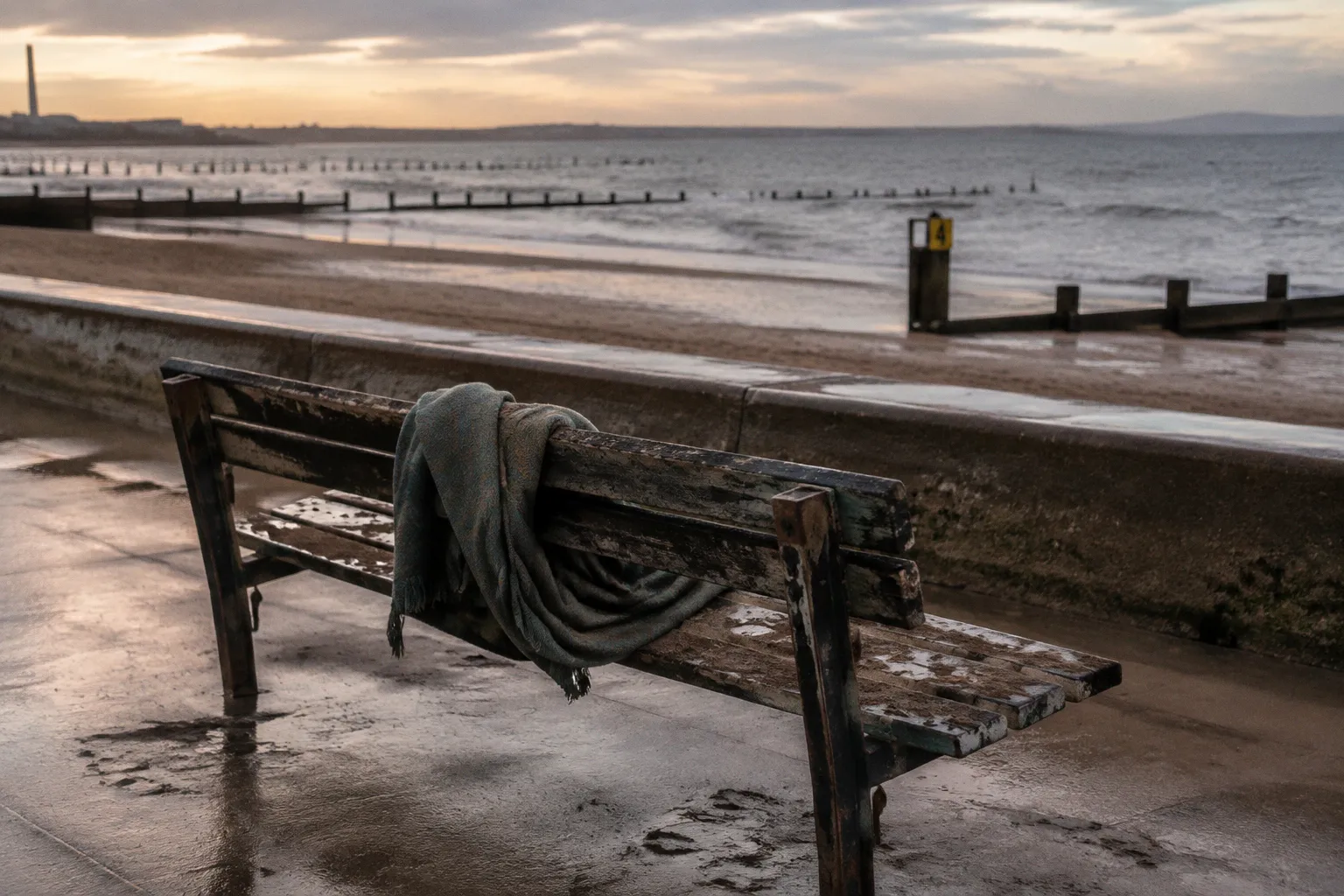
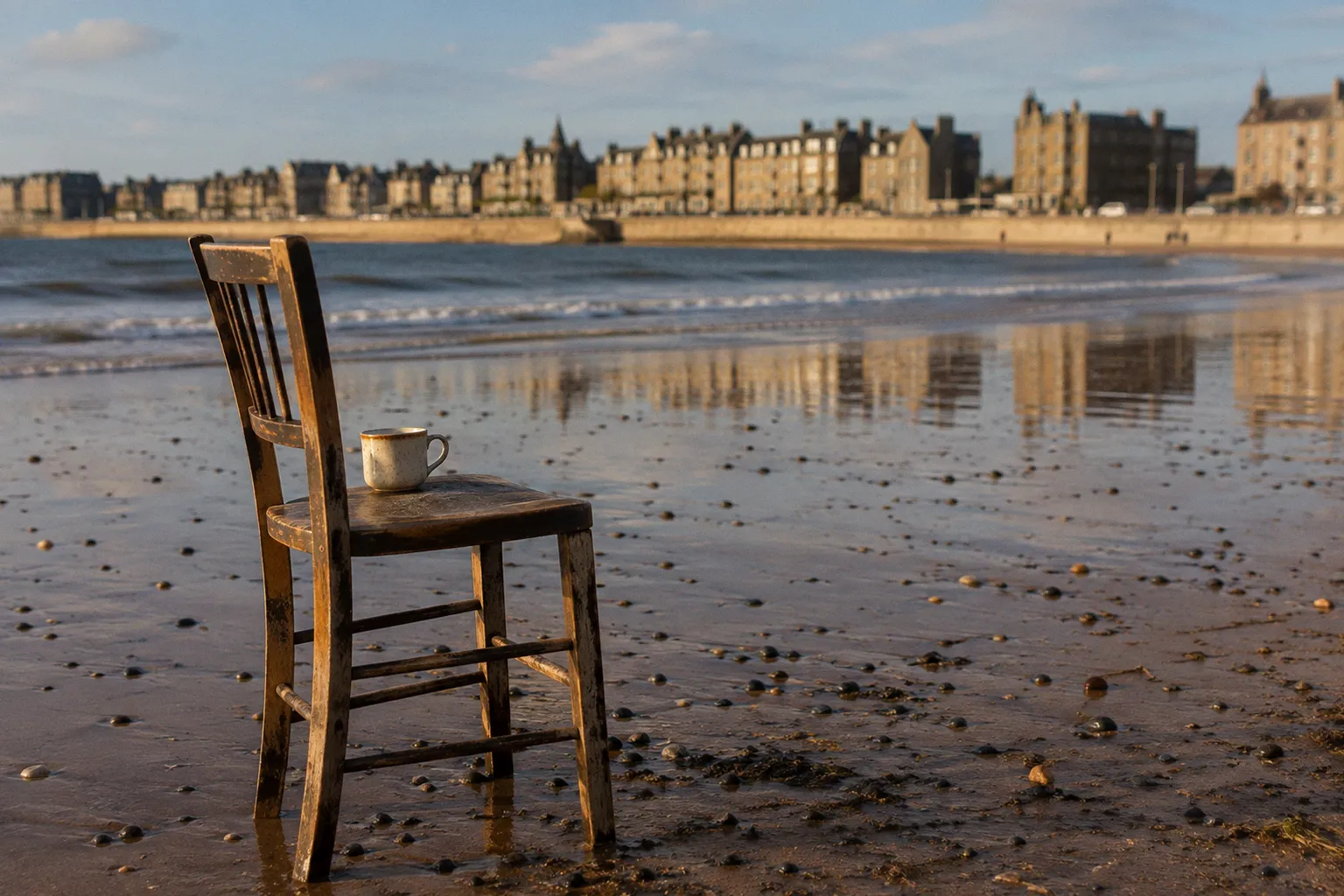
The beach is urban, but the water keeps its own timetable: flood and ebb, spring and neap tide, wind crossing from the north shore, haar gathering when the temperature difference is right.
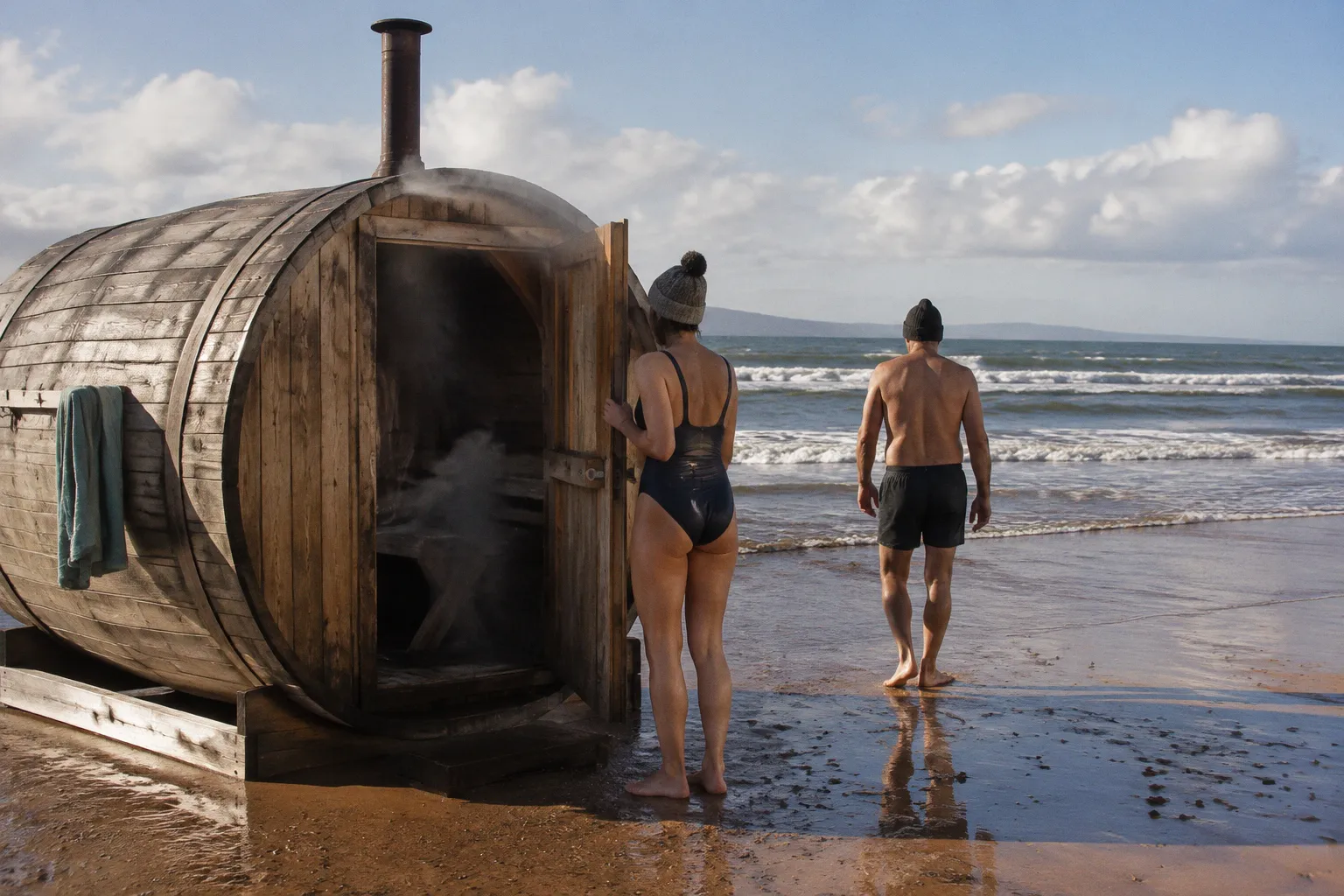
Along this shoreline, a wood-fired mobile sauna has become part of the present-day bathing culture. Soul Water Sauna sits directly on the Portobello promenade, at the quieter end of the residential street area, close enough to the beach that a sauna session can be paired with an optional cold-water dip in the Firth. The experience is not a spa retreat removed from its surroundings. It is heat, sea air and public shore access, arranged around the practical habits of swimmers.
The portobello beach sauna experience is best understood as a rhythm rather than a single attraction: arrive at the promenade, settle into the heat, step outside into the coastal air, and decide whether the water belongs in the session that day.
The rise of shoreline heat on the Portobello promenade
Outdoor sauna culture has found a natural setting at Portobello. The beach is close to the city without being enclosed by it, and the promenade gives swimmers a place to meet, change direction and watch the conditions before entering the water. A mobile sauna extends that existing use of the shore rather than replacing it with an entirely private leisure model.
The unit is wood-fired and positioned directly beside the Firth of Forth. That location changes the character of the session. Heat does not arrive as an interior product, separated from weather and tide; it is constantly measured against them. A door opens and the temperature falls away into salt air. The horizon is visible. The surface of the water can look flat from the promenade while the wind is already moving across it. On another day, the beach may be bright and open, with the sea carrying the low light typical of an eastern Scottish coast.
Portobello’s appeal here lies partly in its ordinariness. This is not an isolated thermal complex reached by a long drive into the hills. It is a working urban seafront, bordered by homes and connected to Edinburgh’s everyday transport and walking patterns. People can come for a booked session, but the sauna remains within the visual and social life of the promenade: walkers passing outside, swimmers gathering near the water, residents using the beach in every season.
That public setting matters. Coastal bathing culture depends on repetition and familiarity. Swimmers learn where the sand shelves, how quickly the tide reaches the promenade, which sections feel more exposed, and how the weather changes the water entry. The sauna offers warmth, but it does not erase the shoreline’s conditions.
The sauna is not a substitute for the sea’s character; it makes that character more legible between one swim and the next.
The Portobello mobile sauna holds up to seven people during community sessions and up to eight for private hire. Those numbers keep the atmosphere closer to a shared bathing room than a large commercial facility. You are not disappearing into a resort complex. You are sharing a small, heated space beside a public beach, with the Forth just beyond the door.
Craftsmanship and comfort inside the mobile sauna
The structure itself carries some of Portobello’s coastal language. The sauna has been handcrafted using storm-rescued larch, silver birch and hazel wood. These are not merely decorative material choices. Timber gives the space a tactile quality that suits a shoreline setting, where the strongest sense of place often comes from surfaces: wet sand underfoot, weathered promenade railings, the grain of a wooden door warmed by the stove.
A barrel-shaped sauna is often associated with outdoor bathing because its compact form can be transported and heated efficiently. At Portobello, the mobile unit is part of a broader arrangement: the sauna, the promenade, the beach and the open water form one experience. The barrel itself is the warm centre, but the session extends beyond its walls.
Inside, the scale is important. With capacity limited to seven people for community sessions and eight for private hire, the space encourages a quieter kind of sociability. Conversation may begin easily, especially among swimmers who already know one another, but the central activity is less complicated: sit, breathe, sweat, and allow the body to adjust to the heat. A sauna beside a firth does not need much additional programming.
The available session durations are 60 or 90 minutes. That gives a useful distinction between a short coastal reset and a more unhurried bathing sequence. A 60-minute booking can accommodate heat and a single outdoor break without turning the visit into a full half-day occupation. Ninety minutes leaves more room for pauses, conversation and, for experienced swimmers, a considered approach to the water.
The timing should not be treated as a race against the clock. Cold-water swimming has a tendency to become performative when the emphasis falls on endurance. The better measure is whether the body remains under control and whether the swimmer can make sensible decisions before entering the Firth. The sauna can make a dip feel more approachable, but it does not remove the effects of cold water, wind or tide.
For visitors staying in a beach guest house or seaside accommodation around Joppa and Portobello, the sauna also offers a way to organise a coastal day without leaving the neighbourhood. A morning walk along the sand, a booked session on the promenade and a meal nearby can form a complete itinerary, but the beach should not be reduced to a backdrop for the booking. Its scale and public character are the point.
The Firth of Forth ritual: heat, air and the optional cold dip
The familiar pattern of sauna followed by cold water is simple, though the decisions within it are not. Heat raises the body’s temperature and changes how the skin feels against the air. Stepping outside produces an immediate contrast. Entering the sea adds another layer entirely.
At Portobello, the cold-water element is optional. Nobody needs to enter the Firth to justify a sauna booking, and the session should not be understood as incomplete without a plunge. Some visitors may use the promenade and beach air as the cooling phase. Others may walk down to the water, pause at the edge and decide against going in. That hesitation is often the correct response to changing conditions.
The Firth of Forth is not a controlled plunge pool. It is a tidal estuary with moving water, weather exposure and a shore that changes through the day. The safest decision may vary between two sessions at the same location. A calm-looking surface does not provide a complete assessment of what is happening beneath it, and a bright winter day can still carry sharp wind and difficult entry conditions.
Portobello Beach’s Central and West sections received a “Sufficient” water-quality classification from SEPA for 2025. This is useful public information, but it should not be mistaken for a real-time guarantee of conditions on the day of a swim. Water quality classifications describe an assessment framework; they do not tell you whether the tide, wind, visibility or your own physical state make a particular entry sensible.
A practical cold-water sequence is therefore less about bravado than about restraint:
1. Read the beach before reading the booking. Look at the wind, the tide, the water surface and the route back to the promenade. The same beach can feel materially different at high water and low water.
2. Keep the first entry modest. There is no requirement to swim a distance simply because the water is accessible. A brief dip can be enough, particularly when the air is cold or the conditions are unfamiliar.
3. Leave before the body becomes difficult to control. Cold water can affect breathing, movement and judgement. The point of the ritual is not to test the limit of those systems.
4. Use the sauna as recovery, not as permission to take unnecessary risks. Warmth can be restorative, but it does not cancel the need for a measured entry and a clear exit.
5. Let local advice and current conditions overrule habit. Experienced swimmers still change plans when the beach, weather or water is wrong.
The language of a “winter ritual” can suggest that the season itself is the attraction. It is more accurate to say that winter makes the contrast more pronounced. The heat feels immediate because the air is cold; the sea feels more demanding because the body loses warmth quickly. There is no virtue in romanticising difficult weather, and Portobello’s coastal culture is stronger when it remains practical.
The sauna may also serve people who do not swim. A visitor can enjoy the wood-fired heat, step out onto the promenade and watch the Forth without entering the water. This matters for mixed groups, where one person may be a committed sea swimmer and another may prefer dry land. A good beach sauna does not force everyone into the same relationship with the sea.
Planning an Edinburgh beach sauna booking
The operational details are straightforward, but they shape the experience. Soul Water Sauna offers sessions of 60 or 90 minutes, with capacity of up to seven people for community sessions and up to eight for private hire. The difference between those arrangements is not only numerical. A community booking places the visitor within the shared rhythm of the promenade’s bathing culture; private hire gives a group more control over who occupies the small space.
Because the sauna is mobile and positioned on the promenade, visitors should plan for a beach environment rather than an indoor spa. The sea is adjacent, but changing and drying arrangements should be understood in relation to the booking information rather than assumed. The indoor facilities at Portobello Swim Centre are separate from the mobile beach sauna structure.
A useful way to think about the options is this:
| Arrangement | Capacity | Best suited to | Character of the experience |
|---|---|---|---|
| Community session | Up to 7 people | Solo visitors, couples and swimmers comfortable sharing | Social, open to the wider bathing culture of the promenade |
| Private hire | Up to 8 people | Friends, families or a small organised group | More control over pace, conversation and the decision to dip |
| 60-minute session | — | A compact visit alongside a walk or coastal meal | Focused heat, cooling air and a short shoreline pause |
| 90-minute session | — | Visitors wanting a slower bathing sequence | More time for breaks, conversation and considered water access |
Before travelling, the sensible preparation is local and physical rather than elaborate:
- Check the booking details for the current season, including arrival instructions and what is or is not provided.
- Bring clothing that can be managed easily on a windy promenade, along with a towel and warm layers for the journey home.
- Allow time to walk from the accommodation or transport stop without arriving flustered and overheated.
- Treat the tide and weather as part of the booking. A session may be fixed, but a sea dip does not have to be.
- If you are new to cold-water swimming, go with someone experienced or choose the sauna without entering the Firth.
- Leave the beach as you found it. The promenade is shared by residents, swimmers, families, walkers and local businesses.
For those searching for an Edinburgh beach sauna booking, the most important distinction is between availability and suitability. A space can be available while the sea is unsuitable for a dip. A session can be enjoyable without any water entry at all. The booking reserves access to the sauna; it does not prescribe how you should use the beach.
This is also where community impact enters the picture. Portobello is not a blank leisure zone. It is a residential coastal district, and the promenade is part of local daily life. Visitors should avoid treating the shore as a private event space, particularly around access points and residential streets. The best coastal hospitality leaves room for the people who live beside it.
Portobello’s older indoor bathing culture
The mobile beach sauna is not the only place where Portobello meets bathing culture. Portobello Swim Centre, also located on the promenade, contains indoor Turkish Baths, a sauna and pool facilities. The indoor baths belong to a different architectural and operational tradition, but they reveal that public bathing in Portobello has more than one form.
The distinction between the two settings is useful. The swim centre offers an enclosed environment with established indoor facilities. The mobile sauna places the bather directly beside the beach, where wind, tide and public movement remain part of the experience. One is not a replacement for the other.
Together, they create a fuller picture of the district’s relationship with water. Portobello’s coast is not used only for picturesque walks or seasonal recreation. It supports swimming, exercise, social contact, outdoor heat and the quieter forms of observation that happen when people stand on the promenade watching the Forth change colour.
That continuity also helps explain why a barrel sauna feels at home here. It is contemporary, mobile and deliberately small, but it belongs to an established culture of public access to the shore. Its presence is new enough to attract attention while still depending on older habits: meeting by the water, making conversation in weather, and treating the beach as part of the city rather than as an escape from it.
For visitors staying nearby, this is the difference between adding a sauna to an itinerary and understanding the place where the sauna operates. The session can be paired with a coastal walk, local food or a stay in one of the guest houses around Portobello and Joppa, but the geography should remain visible. The Firth is not scenery placed behind the experience. It sets the conditions.
What the Portobello experience is really offering
The Portobello beach sauna experience has an attractive simplicity: a handcrafted wood-fired unit, a two-mile sandy shore, and the Firth of Forth close enough to enter or simply observe. Its appeal does not depend on luxury or distance from ordinary life. It comes from the contrast between concentrated heat and open coast, between the small interior of the sauna and the broad tidal reach beyond it.
For swimmers, the sequence can become a winter habit. For non-swimmers, it can remain a warm coastal visit without the plunge. Both uses are legitimate. The sea is optional; attention is not. Read the weather, respect the water, keep the promenade shared, and allow the local setting to determine the pace.
Portobello’s shoreline has always been shaped by the meeting of city and firth. The mobile sauna adds another layer to that meeting, one made from rescued timber and sustained by communal use. It works because it does not try to turn the beach into somewhere else. You sit in the heat, step into the Edinburgh air, and decide what the tide is asking of you today.