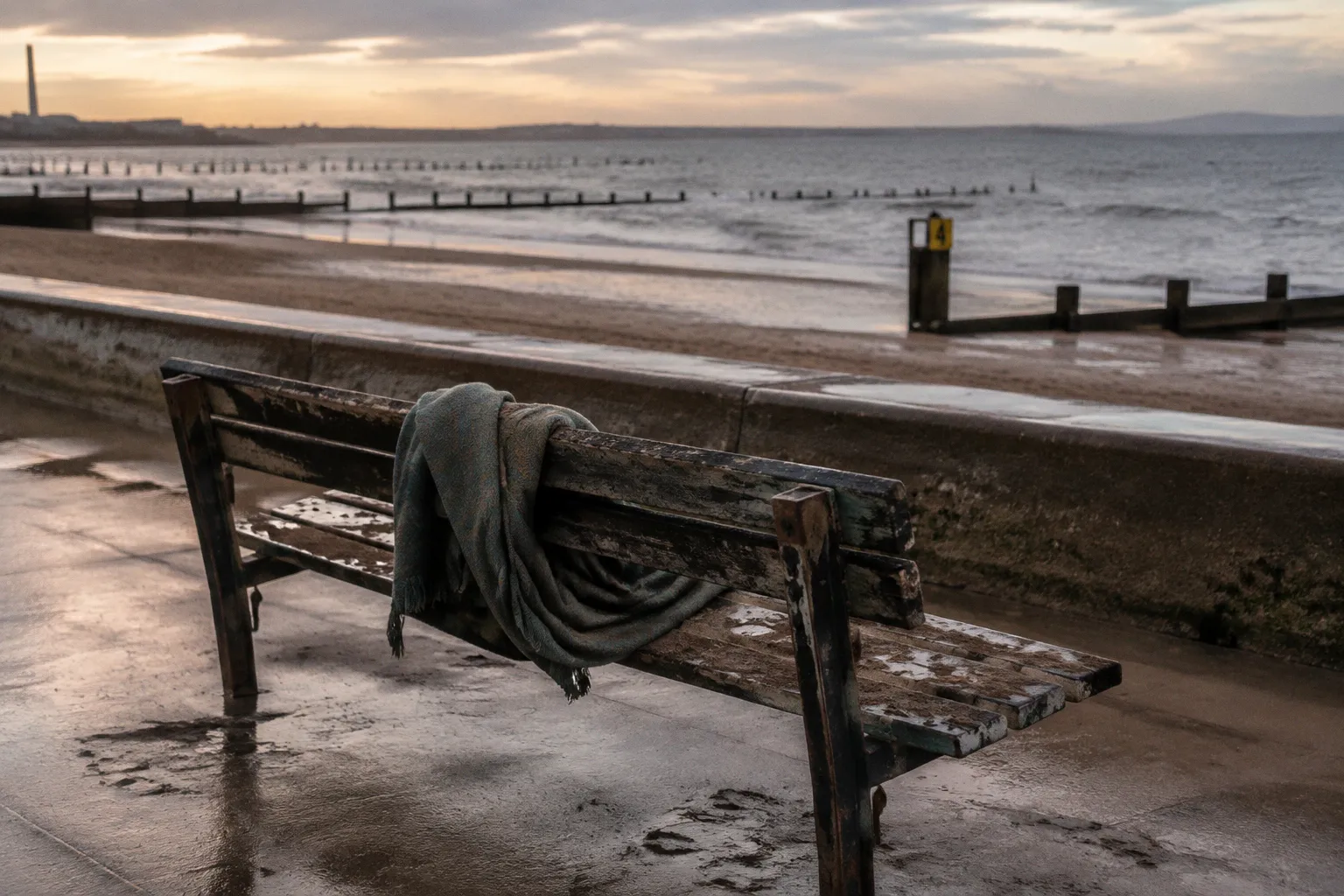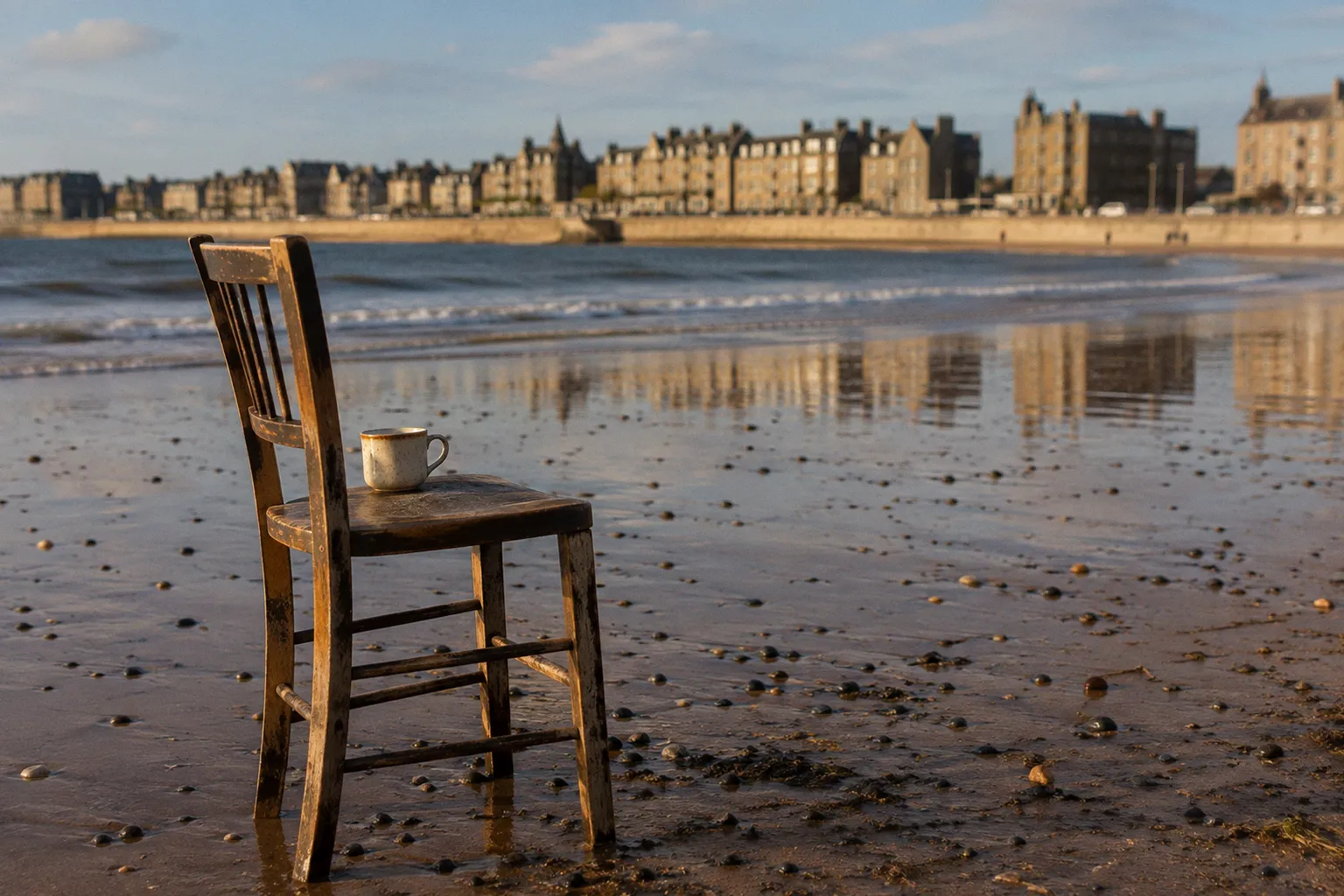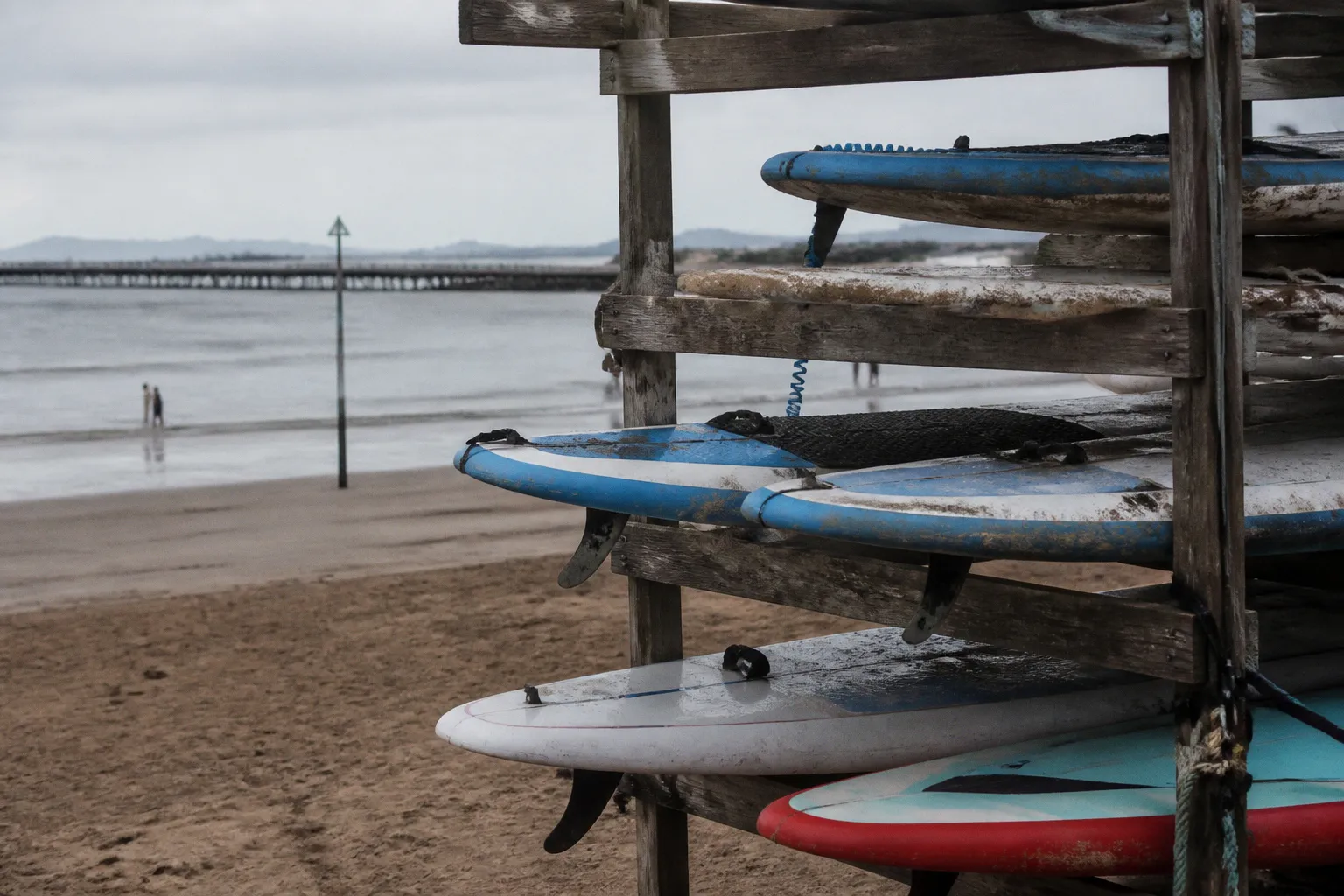
Stand-up paddleboarding lessons here, in those conditions, feel less like an extreme sport than a slow-moving ferry ride across a sheltered bay: the tide barely lifts, the haar has not yet burned off, and the only sound beyond the gulls is the creak of a paddle against a board. That calm, however, is a condition, not a constant. The difference between the two is what separates a memorable Saturday on the Forth from a coastguard callout on the shipping lane.
The beach sits roughly three miles east of Edinburgh city centre, tucked between Joppa to the east and the Victorian prom at Portobello proper. It draws everyone from first-timers clutching rented boards to seasoned club paddlers cutting a measured line through the shallows. What all of them share, whether they know it or not, is exposure to the same tidal and atmospheric forces that have shaped this coastline for centuries. Understanding those forces is the first lesson the Firth insists on — and the one most easily missed.
The Reality of the Firth of Forth: Understanding Tidal Risks
The Firth of Forth is not a lake. It is a broad, navigable estuary fed by rivers and shaped by a tidal range that, even on Portobello's relatively sheltered side, can move a paddler faster than they realise. Neap tides can offer wider windows of glassy water; spring tides narrow those windows, exposing more of the sandy foreshore and pulling harder through channels to the east. Visitors who paddle out at low water may return to find their chosen exit point no longer lined up with the sea wall, scrambling over wet shingle with a board under one arm.
That change does not always announce itself dramatically. A board can remain upright, the surface can stay smooth, and the shoreline can still look close while the paddler is being carried sideways or away from the point where they launched. The visual scale of Portobello makes this easy to underestimate. From the water, the prom can look like one continuous edge. On the return journey, a difference of a few hundred metres matters if it leaves the paddler facing a sea wall, a groyne, or a stretch of exposed stones rather than the beach.
Local paddlers learn to read the tide the way a coastal fisherman reads the barometer — by instinct as much as by timetable. The seabed shelves gradually here, which means small paddle strokes in chest-deep water feel safe. The same depth, on the same outgoing tide, can become a long pull back to shore against a current that is difficult to see from board level. The safer water sits close in, between the bathing area off the prom and the inner edge of the main channel. Beyond that line, the Forth deepens quickly, and so does the seriousness of any mistake.
For visitors planning paddleboarding Firth of Forth sessions for the first time, the practical lesson is unglamorous: spend ten minutes on the sand watching the water before launching. Note where the ripples bend, where the surface glassiness breaks, and where seabirds are feeding on a slick. Look at the direction in which swimmers, small craft, and floating debris are moving. These are small signatures of the tide at work. They will not replace a tide table or a local briefing, but they can tell you whether the conditions in front of you match what you expected.
The launch point matters as much as the time of launch. A broad sandy beach gives a beginner room to get comfortable, but it also encourages the idea that the whole bay is equally forgiving. It is not. Sandbanks, groynes, rocky edges, and the deeper water farther out all change the way a fall or a tired return will play out. A route that looks simple on a map can feel very different when the board is being pushed across the tide rather than directly towards shore.
A sensible first session therefore stays short and close in. Learn how the board responds, practise falling away from it, and make sure you can climb back on before committing to a longer crossing. The aim is not to cover the greatest distance. It is to finish with enough energy to deal with a change in wind, a misplaced landing point, or the ordinary inconvenience of having to carry the board farther along the beach than expected.
Navigating Offshore Winds and Sudden Drift Hazards
If the tide is the Firth's patient current, the wind is its sudden hand. The beach faces roughly north, which means prevailing south-westerly winds blow largely offshore here — from the land out across the water, not onto it. That distinction matters enormously. A north or north-easterly wind pushes waves and chop towards the prom, making the ride uncomfortable but generally helping a paddler stay closer to shore. A south or south-easterly wind can do the opposite: carry a boarder steadily out into open water, often without them registering the speed at which they are travelling away from the beach.
The August 2024 rescue by the RNLI tells the story more clearly than any safety briefing. A paddleboarder was blown 1.6 nautical miles — 2.9 kilometres — offshore from Portobello Beach and had to be recovered by lifeboat. That distance, on a board and against a steady breeze, takes longer to cover than most beginners expect and far longer to swim back. Wind at your back feels like help. In the wrong direction, it is the reason Paddle Scotland and the RNLI repeat the same warning: do not paddle when offshore winds are forecast.
A flat sea can make this hazard harder to spot. Onshore wind usually advertises itself through chop and white water. Offshore wind can smooth the surface close to the beach while moving everything floating on it away from land. A beginner may interpret the absence of waves as an invitation to go farther. The more useful question is not whether the water looks calm, but whether the wind is carrying you away from a safe return.
The tell is in the flags, in smoke from chimneys on the prom, and — most usefully — in the small detail of kiosk awnings along the front. If they are straining seaward, the wind is working against you, and the decision to launch should be postponed, not negotiated. Check the forecast before leaving, then check the actual wind at the beach. Weather apps provide a starting point; the shoreline tells you what the wind is doing now.
Among the mistakes that recur in Edinburgh coastal watersports, launching into an offshore breeze is the one that can turn a calm-looking session into a long drift offshore. The practical response is straightforward: if the wind is moving out to sea, stay on land or choose a supervised session with conditions judged suitable by an experienced local instructor. Do not assume that a short paddle from the beach will remain short once the board is under sail.
There is another trap in trying to correct the problem too late. A paddler who notices the drift after ten minutes may already be tired from repeatedly steering back towards shore. Turning across the wind can expose the board to side chop; heading directly against it may demand more strength than a beginner has left. If the beach is no longer getting closer despite sustained paddling, that is not a moment to prove determination. It is a moment to stop, stay with the board, and consider calling for help.
Essential Gear for Coastal SUP: Beyond the Board
A board and a paddle are the obvious kit. They are also, on this stretch of coast, the least important part of what keeps a paddler safe. The Firth rewards preparation, and the paddlers who come home without incident are usually the ones who have packed for the worst case rather than the best forecast.
| Item | Why it matters on the Forth | Common mistake |
|---|---|---|
| Personal Flotation Device (PFD) | Helps a paddler stay afloat during a fall, re-entry, or extended wait for assistance | Launching without one on a calm-looking morning |
| Mobile phone in a waterproof pouch, worn on the body | Allows the paddler to call 999 and ask for the Coastguard directly | Leaving the phone in a drybag on the shore |
| Wetsuit, appropriate to the season | Reduces the consequences of cold-water immersion and protects against a rapid loss of energy | Wearing a light summer suit in colder conditions |
| Leash | Keeps the board close after a fall, where the board is often the best visible flotation aid | Choosing or using the wrong leash for tidal water |
| Whistle and small drybag | Provides an audible signal and carries essentials such as a flask or snack | Treating the whistle as decorative or inaccessible |
A properly fitted Personal Flotation Device sits at the top of every safety list the RNLI and Paddle Scotland publish. It is not optional, and it is not the bulky lifejacket associated with fishing boats. Modern SUP PFDs are slim, unobtrusive, and designed not to ride up when the wearer falls. Harness-style versions clip around the torso and stay put through repeated re-entries to the water.
Skipping one because the morning looks settled is the kind of judgement that turns a small problem into a serious one. A PFD buys a conscious paddler time in the water; it does not replace the need to get back on the board quickly, signal for help, and move towards shore. In the Forth's colder months, when water temperatures can sit well below ten degrees Celsius, that window of effective self-rescue shortens as cold-water shock and exhaustion take hold. Treating a PFD as a guarantee rather than a critical buffer is one of the quieter Edinburgh coastal watersports mistakes, but it has serious consequences.
The second non-negotiable is a mobile phone in a waterproof pouch, worn on the body — not tucked into a drybag left on shore, and not lashed to the board where a capsize can rip it free. If something goes wrong, the call to 999 and the request for the Coastguard needs to go out from the paddler, not from a worried friend watching from the prom. Coastguard rescue here is professional, swift, and free, but only if it can be reached.
The phone should remain usable while the paddler is wet, cold, and possibly separated from the board. A pouch under a buoyancy aid or attached securely to the body is more useful than a device sealed away in equipment that is difficult to open. Before launching, check that the phone has charge and that the pouch can be operated with cold or wet hands. It is a small piece of preparation, but emergencies rarely provide the time or dexterity for improvised solutions.
Beyond those two essentials, the rest of the kit follows the season. April to November is the realistic window for open-water SUP lessons and club sessions, while outside that period the water temperature makes proper thermal protection increasingly important. Local outfitters and club coaches can advise on thickness. A 4/3mm full suit covers much of the season, while colder months may push paddlers towards 5/4mm or semi-dry suits.
A leash keeps the board within reach after a fall, and that matters both for flotation and visibility. It must, however, be suitable for the environment and the board. Coiled leashes can create snagging problems in tidal water or around fixed objects. The choice should be discussed with an instructor rather than made solely on the basis of convenience or appearance.
A whistle belongs where it can be reached immediately. A small drybag can carry a drink, a snack, spare layers, and other modest essentials, but it should never become an excuse to leave the phone behind. None of this equipment is exotic. All of it, in a cold estuary with shifting wind, matters more than the brand of the board itself.
A board, a paddle, and the sea in front of you is not a kit list. The Firth does not give points for enthusiasm.
Community Resources and Local Training at PSKC
The most reliable way to learn these lessons properly is to learn them from people who paddle the Forth every week. The Portobello Sailing, Kayaking and Rowing Club sits at the bottom of Bath Street, right on the Promenade, and it has been quietly producing competent paddlers for far longer than most of the city's SUP population has been on the water. The club runs training across rowing, sailing, and kayaking, and hosts stand-up paddleboarding activity through the spring and summer months alongside its core programme.
PSKC's value to a beginner is not really the equipment, although the club has storage, boats, and training craft available to members. It is the institutional memory. Coaches know which corner of the bay collects weed after rain, which tidal window produces cleaner water, and how to read the haar when it rolls in off the Firth. That kind of knowledge is difficult to extract from a generic forecast. It is also the reason a local lesson should feel different from simply hiring a board and following the shoreline.
A first Portobello beach paddleboarding lessons session through PSKC, or through one of the regional activity outfits operating along the Lothian coast, will normally begin with a shore-based safety briefing. It may run longer than the paddling itself. That briefing is not padding. It covers launching, falling, re-entry, wind direction, group spacing, equipment, and the point at which a session should be shortened or abandoned. It is the cumulative answer to the incidents and near misses that a tidal coast produces over time.
Beginners sometimes want to use the lesson to get immediately beyond the familiar part of the beach. Good instruction often works in the opposite direction. It builds confidence close to shore, where a fall is manageable and a coach can correct a poor stance before fatigue takes over. Balance, paddle placement, turning, and remounting are not separate from coastal safety. They are the skills that determine whether a small mistake remains small.
For visitors arranging sessions around Joppa, local knowledge makes an even more visible difference. Joppa sits at the eastern edge of the bay and offers somewhat different water from Portobello proper. Currents run more strongly past the rocky outcrops, and the shelter from the prom wall that benefits parts of Portobello is largely absent. A coastal SUP session here without local input is a different proposition from one farther west, even though the two beaches are essentially continuous at low tide and separated by little more than a stretch of weathered groyne.
The same applies to anyone staying nearby and fitting a lesson around a weekend in Edinburgh. A guest house close to the shoreline may make an early launch convenient, but convenience should not decide the route or the timing. Ask instructors what the water is doing that day, whether the wind direction is suitable, and where a beginner should enter and leave. Local advice is not a substitute for personal judgement, but it gives that judgement a better starting point.
Emergency Protocols: When to Call the Coastguard
The cold arithmetic of water rescue is that the first few minutes matter. If a paddler ends up in the water unexpectedly — because of a leash failure, a gust that flips the board, or a cramp on a long paddle back — the priority is to stay with the board, get back on if possible, and signal. A PFD buys critical time by keeping a conscious paddler at the surface, but it does not compensate for prolonged immersion in the Forth's cold water, especially during the shoulder months when the air feels mild and the estuary has not warmed with it.
Cold water can make simple movements difficult. Breathing becomes harder to control, hands lose dexterity, and the effort required to climb back onto a board can feel much greater than it did during practice on the beach. The sensible order is therefore simple: keep hold of the board, regain a stable position if you can, and make yourself visible. If you cannot make meaningful progress towards shore, call for help early rather than waiting until exhaustion removes the option.
The phone, in its waterproof pouch on the body, becomes the single most important tool. The number is 999, and the service to ask for is the Coastguard. Not the police, not the fire service, and not the local harbour: the Coastguard coordinates the maritime response and can task the lifeboat or another suitable asset along the Forth. The RNLI crews on this coast are highly trained and routinely recover people who have underestimated the wind, but they need to be reached quickly and accurately to do that work well.
A few practical details make that call function under stress:
1. Name the beach and your launch point. Portobello is a long frontage, so say whether you are near the Bath Street slipway, the old lido site, or another recognisable point.
2. Describe what has changed. Explain whether you are in the water, separated from the board, drifting offshore, injured, or unable to paddle back.
3. Give landmarks and direction. Look back at the shore from time to time during any session so that you can describe the prom, groynes, buildings, or other fixed features.
4. Share a GPS position if you can. A phone may provide a location even when the paddler cannot identify the exact stretch of water.
5. Stay visible and conserve energy. Keep one arm raised when possible, keep the bright underside of the board visible, and use the whistle in repeated bursts rather than exhausting yourself shouting.
If you cannot reach 999 yourself because of cold or injury, keep the whistle going and remain with the board. The front at Portobello is busy enough that a sustained signal may be noticed, but the Coastguard still needs a clear report before a coordinated response can begin. Do not leave a board to swim for shore unless an instructor or rescue professional tells you to do so. The board is larger, more visible, and easier for rescuers to locate than a person in the water.
Calling for help is not an admission that the session has gone badly. The session has already become an emergency if a paddler is drifting offshore, cannot make headway, or is losing the ability to self-rescue. The earlier call gives rescuers more options and gives the paddler more time.
Reading the Water Before You Read the Forecast
A forecast gives wind speed and direction. The Firth, on any given morning, gives you the same information in a hundred smaller forms: the shape of ripples near the shoreline, the way gulls are working the water, and the temperature of the air against the small of your back. Paddlers who stay safe on this coast are usually the ones who have learned to compare those local signs with the forecast rather than trusting a single weather-app glance.
A short, useful habit before launching is to stand on the prom for ten minutes, face the water, and watch. Where is the surface smoothest? Where does it chatter against the board of an early-morning swimmer? Are flags and awnings pointing towards the sea or back along the beach? Is the water moving across your intended route? Where would you land if the wind strengthened and the tide carried you east?
The beach answers these questions without being asked. A paddler who has paid attention is already safer before stepping onto the board. This pause also creates a natural point at which to change plans. If the conditions look different from the forecast, or if the wind is carrying floating material away from shore, there is no obligation to launch simply because the board has been hired or the lesson has been booked.
For an introductory session, the best conditions are not necessarily the warmest or the brightest. They are the ones that allow a beginner to practise without being forced to fight tide and wind at the same time. Clear visibility, modest wind, manageable water temperature, and an instructor who knows the local launch all matter more than a photographically perfect sky.
The Long View from the Prom
Portobello is a generous coastline for paddleboarding: long, flat, accessible, and rooted in a working community of rowers, kayakers, and club paddlers who know it well. It is also a tidal estuary with a wind that can turn a calm-looking session into an offshore drift, and a sea that has taken paddlers far from shore before they fully understood what was happening.
The lessons the Firth offers are not complicated. Wear the PFD. Carry the phone on your body. Check the wind direction, not only the wind speed. Watch the water before launching. Use the club at the bottom of Bath Street or another reputable local training provider. Treat Joppa and Portobello as related but not identical stretches of coast. Call 999 and ask for the Coastguard if the session goes wrong.
None of that requires heroic gear or technical mastery. It requires the quiet attention that the coast rewards, season after season, to anyone willing to learn it. The right paddleboarding lesson on Portobello Beach is not simply an hour spent standing on a board. It is an introduction to the Forth's habits — its tides, its wind, its cold water, and its ability to look harmless right up until it demands respect.