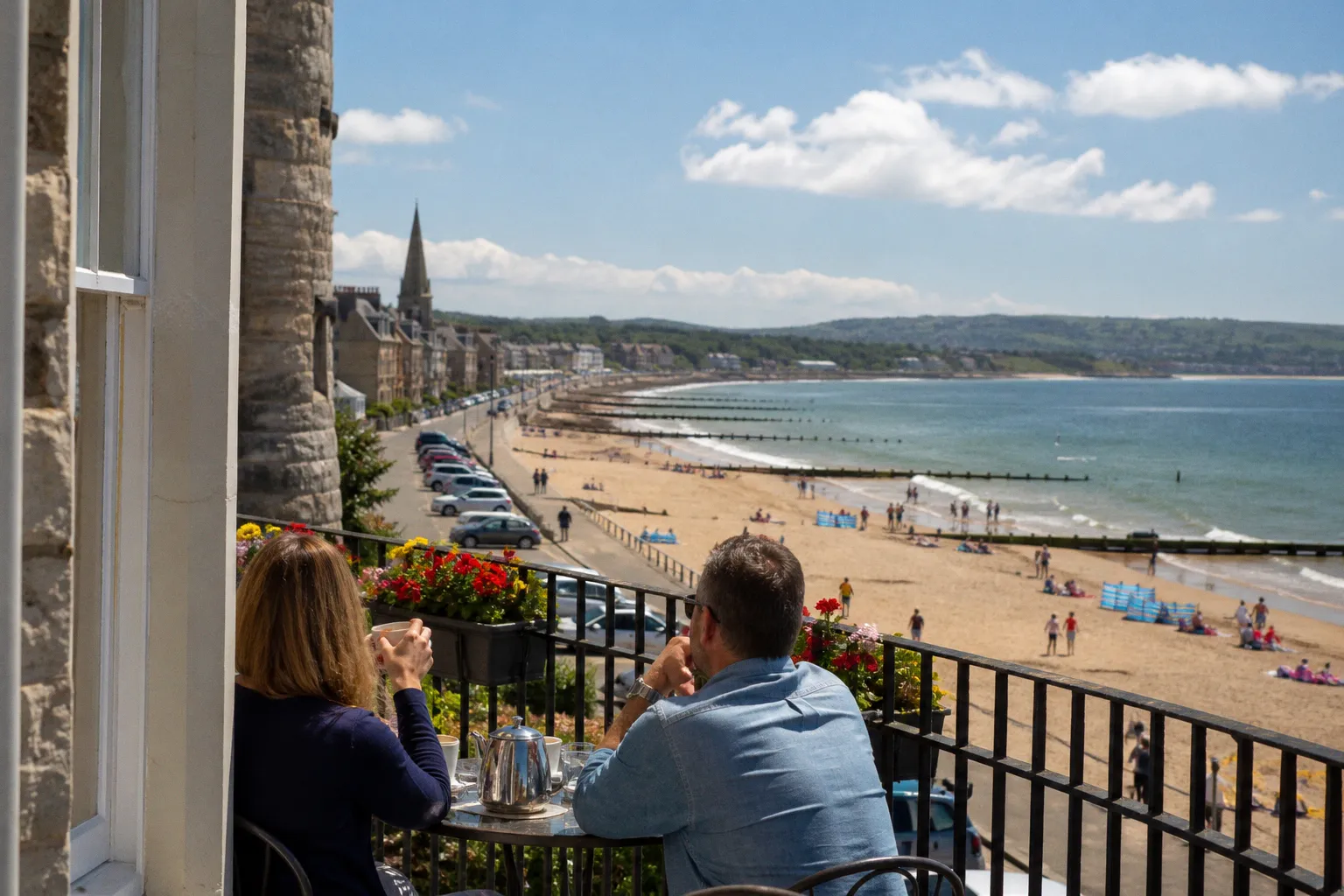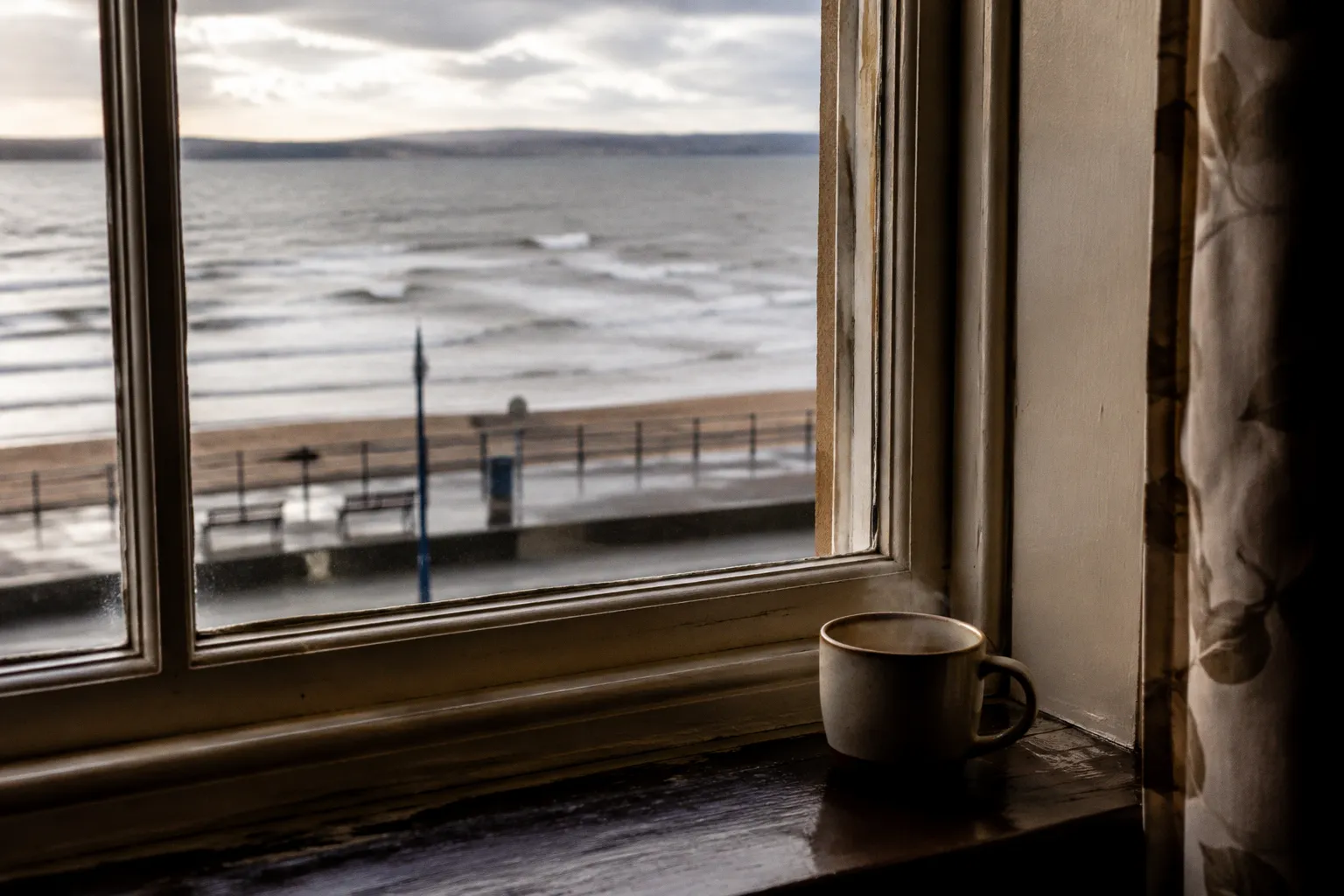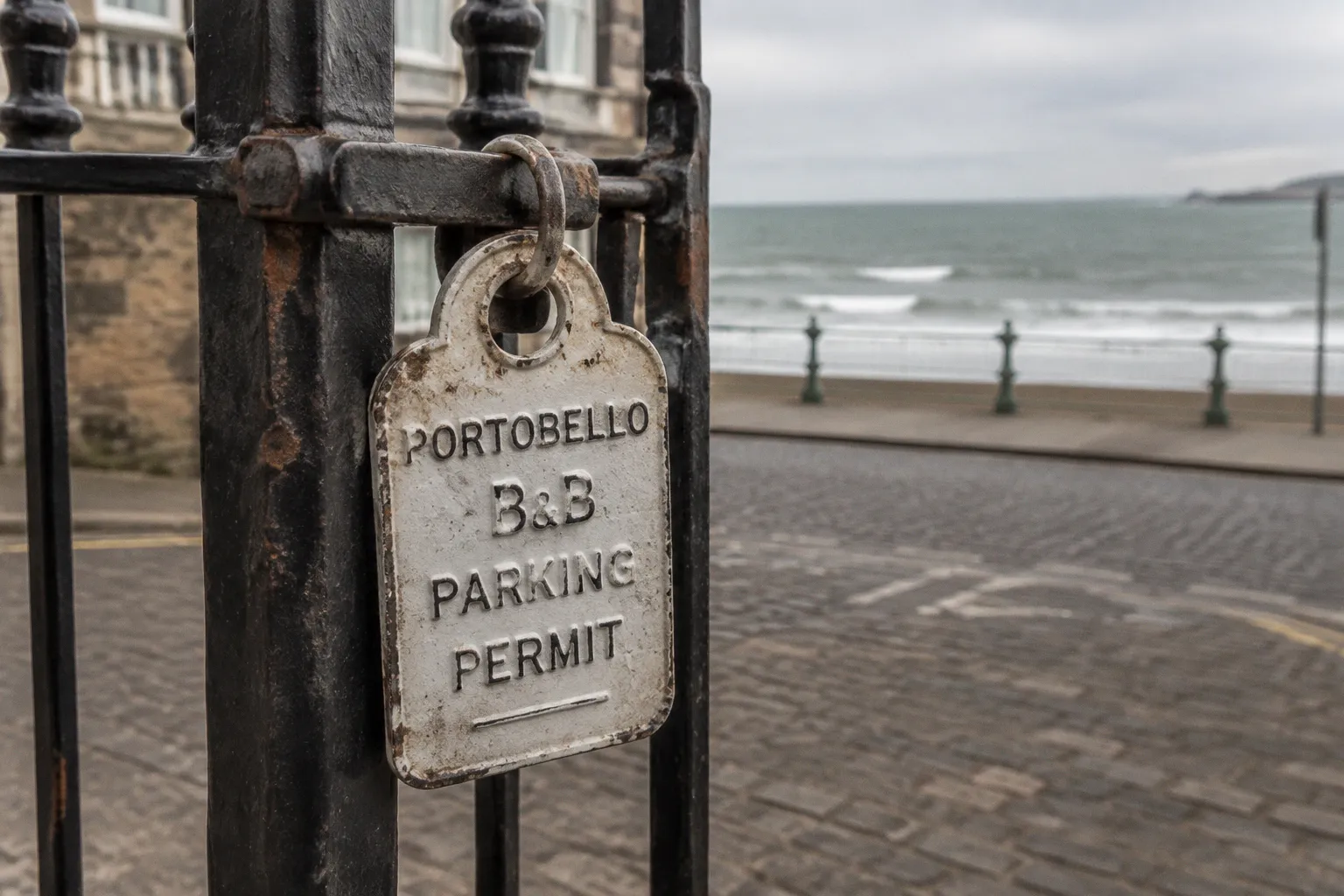
Most local B&Bs do not have private off-street parking. Guests generally rely on free, unrestricted on-street spaces on nearby residential streets and adjoining roads. That arrangement has worked because the beach is close, the area is served by public transport, and many visitors arrive without a car. It also creates a familiar operational problem: accommodation can be marketed as being near the promenade, while the parking space may be several streets away and impossible to guarantee at the time of arrival.
The position changed politically in December 2025, when the City of Edinburgh Council dropped plans for a Controlled Parking Zone in Portobello after receiving more than 2,000 objections from residents and businesses. The proposal would have introduced parking controls and pay-and-display meters in parts of the area. It did not proceed.
For guests searching for Portobello beach guest house parking, the practical conclusion is narrower than the headlines. There is no new Portobello CPZ to budget for under the abandoned proposal, but that does not mean a B&B has a private space waiting outside the front door.
The reality of on-street parking in Portobello and Joppa
Portobello’s accommodation model is shaped by its building stock. Guest houses occupy existing townhouses, converted homes and smaller coastal properties rather than purpose-built hotel sites with large car parks. The commercial offer is therefore based on location, room capacity and access to the beach—not on a guaranteed parking bay for every room.
That distinction should be visible in the booking process.
A property may be close enough to the promenade that the beach is only a short walk away. Some accommodation is advertised as being around 50 yards from the seaside. But proximity to the water and proximity to a usable parking space are separate operational questions. A guest arriving with luggage may be satisfied with a short walk to the beach and still be frustrated by having to circle residential streets after a long drive.
The phrase “free parking nearby” also carries more ambiguity than it appears to. It can mean:
- unrestricted public parking on an adjacent street;
- spaces on a residential road within walking distance;
- parking that is usually available but cannot be reserved;
- a public car park near the promenade rather than at the property;
- or simply the absence of a charge, without any guarantee of proximity.
For a guest house operator, the difference matters. The property is not selling the same product in each case, even if all five descriptions are reduced to the word “parking” on a booking platform.
Joppa adds another layer to the picture. The initial council proposal for Portobello explicitly excluded Joppa because parking surveys indicated that Joppa did not show the same level of parking pressure. That does not create a blanket guarantee of easy parking outside every Joppa guest house. It does, however, explain why parking discussions for the two neighbouring areas should not be treated as identical.
What guests should expect from a coastal B&B
A realistic parking description should answer four separate questions:
1. Is there private parking at the property?
In Portobello and Joppa, this is uncommon among guest houses. It should not be assumed from photographs, a beach-facing address or the word “guest house”.
2. If parking is on-street, is it unrestricted?
The current local arrangement is predominantly based on free, unrestricted spaces on residential side streets and nearby roads. Operators should still describe the location precisely rather than implying that a space is reserved.
3. Can the space be guaranteed?
Public on-street parking cannot normally be allocated to an individual booking. A guest house can provide directions and local knowledge, but it cannot control demand on the road.
4. What happens at peak arrival times?
Availability may be more difficult when visitor demand rises or when several properties receive arrivals at once. The exact pattern will vary by street and day, so confident promises are commercially risky.
In Portobello, “free parking” describes the charging arrangement. It does not describe the certainty, distance or convenience of the space.
This is the point at which many listings become operationally weak. They treat parking as a feature, when it is actually a process: where the guest unloads, where the vehicle is left, how far the driver walks back, and what happens if the first available street is full.
A better arrival note gives the guest a sequence rather than a vague assurance. It can explain where to stop briefly for luggage if appropriate, which surrounding streets are normally used, whether the driver should expect to walk, and whether the property has an alternative such as Bridge Street Car Park. It should not suggest that a public space is held for the guest.
Why the proposed Controlled Parking Zone was scrapped
The proposed Controlled Parking Zone became a test of how quickly a parking policy can affect a hospitality market before a single sign is installed.
The council’s plan for Portobello included controlled parking restrictions and pay-and-display meters. More than 2,000 objections were submitted by local residents and businesses, and the proposal was officially dropped in December 2025. That decision is now part of the operating context for Portobello guest houses: the proposed permits, charges and restrictions should not be presented to visitors as current requirements.
This is particularly important for evergreen accommodation content. A page written during the consultation period can become misleading after the policy is abandoned. A guest reading old advice might arrive expecting to buy a permit, pay at a meter or comply with a residents’ scheme that was never implemented.
For operators, the lesson is not simply to remove outdated wording. It is to separate three kinds of information:
| Parking information | What it tells the guest | How an operator should present it |
|---|---|---|
| Current local arrangement | Most properties rely on nearby public on-street parking | State that spaces are public and cannot be reserved |
| Abandoned CPZ proposal | A policy considered by the council but dropped in December 2025 | Mention only when correcting outdated advice |
| Private parking | A facility controlled by the property | Claim it only where the property actually provides it |
| Public alternative | A separate parking location such as Bridge Street Car Park | Give the name and area, without implying guaranteed availability |
The dropped CPZ also demonstrates why property owners should monitor council decisions rather than relying on old listing copy. A change in parking regulation affects more than signs and meters. It changes the guest’s cost calculation, the wording of confirmation emails, the advice given by reception or hosts, and the likelihood of complaints after arrival.
In this case, the immediate commercial effect is that guests should not be told they must purchase a Portobello parking permit or pay council fees under the proposed scheme. But the absence of a new restriction does not turn public parking into a hotel amenity. It remains a shared local resource.
That distinction is useful when managing expectations. A guest who is told that parking is free may interpret the statement as a promise of convenience. A guest who is told that the property relies on free public parking nearby understands the trade-off before travelling.
Portobello promenade parking and the Bridge Street option
Bridge Street Car Park, near Portobello Promenade and the beach area, is a public alternative for visitors who do not want to search residential side streets. It gives operators a named option to include in arrival information instead of sending guests into the area without a plan.
It should still be described accurately. The existence of a public car park does not establish that spaces will always be available, particularly during busy summer periods. Current capacity and real-time availability should not be assumed. For that reason, Bridge Street works best as an alternative route in the guest information pack, not as a guaranteed extension of the B&B’s own facilities.
The choice between on-street parking and a public car park is usually a trade-off between proximity, predictability and walking distance. A guest with heavy luggage may prefer to search for a closer street space. A guest arriving late may value a clearly identified public facility more than the possibility of finding a space outside the property. A family staying for several nights may accept a walk if it avoids moving the car repeatedly.
The right advice depends on what the property can actually support. A practical arrival message might explain:
- that private off-street parking is not provided;
- that nearby residential streets generally offer free, unrestricted public parking;
- that spaces are subject to availability and cannot be reserved;
- that Bridge Street Car Park is a public alternative near the promenade;
- that guests should allow time to unload and walk to the accommodation;
- and that the property can be reached by public transport for visitors who prefer not to drive.
The last point is not incidental. Portobello and Joppa are connected to Edinburgh city centre by bus, with a journey of approximately 25 minutes. For a short stay, especially one focused on the beach and local area, arriving without a car can remove the most uncertain part of the visit. It also changes the value proposition of the accommodation: a guest may care more about a reliable route from the city centre than about storing a vehicle outside the property.
Parking information is part of yield management
Parking is often treated as a facilities issue. In practice, it is also a yield and conversion issue.
A room close to the beach may command a different rate from a room farther inland. If the listing implies private parking when it only offers public street parking, the property may achieve the booking but create a preventable service failure. The cost appears later through poor reviews, support messages, refunds or staff time spent managing arrival problems.
The commercial logic is straightforward:
1. A car-owning guest searches for accommodation near the beach.
2. The listing presents parking as available but does not define the arrangement.
3. The guest books on the assumption that availability is reasonably certain.
4. Arrival takes longer because the nearest streets are occupied.
5. The guest evaluates the entire stay through the lens of an avoidable mismatch.
This is not a reason to undersell the property. It is a reason to describe the product correctly. A guest house without private parking can still be a strong option for visitors who value the promenade, local access and a coastal base within reach of central Edinburgh. It should not compete by implying a facility it does not control.
Joppa guest house parking: a different pressure profile
Joppa is adjacent to Portobello, but the parking context is not interchangeable. The council’s original CPZ proposal excluded Joppa after parking surveys indicated that it did not show high levels of parking pressure. That is a relevant distinction for guests comparing addresses across the coastal strip.
It does not justify a universal promise that parking will be easy. Street layout, property position, arrival time and local demand still determine the experience. But it does mean that a Joppa listing should not automatically inherit every warning associated with the proposed Portobello zone.
For operators, this is a copywriting and customer-service issue. Location-specific information performs better than area-wide shorthand. A guest booking in Joppa needs instructions for that property, not a generic paragraph written for Portobello and copied across every room type.
A useful set of arrival instructions should identify:
- the nearest practical streets for public parking;
- the walking route from the likely parking area;
- any access limitations around the property;
- where luggage can be unloaded without obstructing neighbours;
- whether the property is easier to reach by bus than by car;
- and what guests should do if they cannot find a space immediately.
The final point is often omitted because it sounds negative. It is better operationally to address it directly. The guest may need to continue to a public car park, leave luggage with one member of the party, or contact the property for updated directions. Silence does not make the problem disappear; it simply transfers the responsibility to the guest at the most inconvenient moment.
The parking policy is only half the product. The other half is the arrival instruction that turns an uncertain public resource into a manageable guest experience.
What a serious parking policy looks like for coastal accommodation
A serious policy does not need to be long. It needs to remove the ambiguous words that cause guests to form the wrong expectation.
“Parking available” is too broad if the property has no private spaces. “Free parking” is incomplete if it does not explain that the spaces are public and subject to availability. “Beachfront parking” may describe the district rather than the accommodation.
For an Edinburgh seaside B&B, the strongest wording usually has five components:
1. Facility status
Say whether parking is private, shared, public or unavailable at the property.
2. Control and reservation
State whether the guest house can reserve a space. If it cannot, say so plainly.
3. Cost position
Confirm that the relevant nearby on-street arrangement is free and unrestricted, while avoiding references to the cancelled CPZ as if it were active.
4. Alternative location
Name Bridge Street Car Park as a public option near Portobello Promenade where appropriate.
5. Arrival behaviour
Tell guests to allow time to park and walk, particularly if travelling with luggage or arriving during a busy period.
The policy should appear in more than one place. Booking-platform copy attracts the reservation, but the confirmation message controls the arrival. If the information exists only on the property website, a guest who booked through another channel may never see it. If it appears only after payment, the guest may feel that a material condition was withheld.
This is also where regulatory compliance and customer communication intersect. The dropped CPZ proposal is a reminder that local parking rules can change, but it is not a licence to publish speculative restrictions. Property owners should update wording when council decisions are made, retain a dated internal record of the information supplied to guests, and avoid presenting uncertain local practice as a formal guarantee.
A practical arrival workflow
For operators managing several rooms or properties, a consistent workflow is more useful than ad hoc advice from whichever staff member answers the phone.
- Before booking: describe the parking arrangement in the room or property listing.
- After booking: send a concise arrival note with the public-parking explanation and the alternative car park.
- Before arrival: repeat the key instruction if the guest has identified that they are driving.
- At check-in: confirm where the vehicle has been left and whether any further guidance is needed.
- After a policy change: revise the website, channel listings, automated emails and printed information together.
This is basic operational control, but coastal accommodation often loses accuracy at the boundaries between platforms. One listing says “free parking”, another says “street parking”, and the confirmation email says nothing. The guest then experiences three different versions of the same product.
The solution is not to make every description identical. It is to make every description compatible.
What guests should do before arriving by car
Guests booking Portobello or Joppa accommodation should treat parking as part of the travel plan rather than as an assumed hotel facility.
The sensible approach is to ask the property three direct questions before arrival:
- Is there a private space at the guest house?
- If not, where is the nearest likely public parking?
- What is the recommended alternative if the surrounding streets are full?
The answers will distinguish a property with controlled private parking from one that relies on the local street network. That difference may matter more than a small variation in room rate, particularly for guests travelling with children, mobility equipment or several pieces of luggage.
Visitors should also allow time for the final part of the journey. A property can be only a short walk from the beach and still require a separate parking search. Bridge Street Car Park provides a public option near the promenade, but availability should not be treated as guaranteed. The current position does not support telling guests that Portobello streets operate under the proposed CPZ or that they must buy a council permit to park there.
For guests staying near the coast without a car, the approximately 25-minute bus journey to Edinburgh city centre offers a practical alternative. It avoids the search for a space and may be adequate for an itinerary divided between Portobello, Joppa and central Edinburgh.
The commercial lesson for Portobello accommodation
Parking is not the feature that sells a seaside stay. It is the detail that can undermine one.
Portobello and Joppa guest houses benefit from a coastal location, but most do not control the parking immediately outside their doors. The current model depends largely on free, unrestricted public on-street parking, with Bridge Street Car Park providing a separate public alternative near the promenade. The proposed Portobello CPZ was dropped in December 2025 after more than 2,000 objections, so operators should not describe the abandoned permit and pay-and-display system as current policy.
The correct commercial response is precision. State what the property provides, what it does not provide, and what the guest should do on arrival. Do not turn public parking into a guaranteed amenity. Do not bury the walking distance in a confirmation email. Do not copy Portobello rules into Joppa without checking the local context.
For property owners and managers, this is a small operational change with a disproportionate effect on trust. Clear parking information will not create more spaces on the street. It will, however, ensure that guests arrive with the right expectations—and that the accommodation is judged on the stay it actually sells.