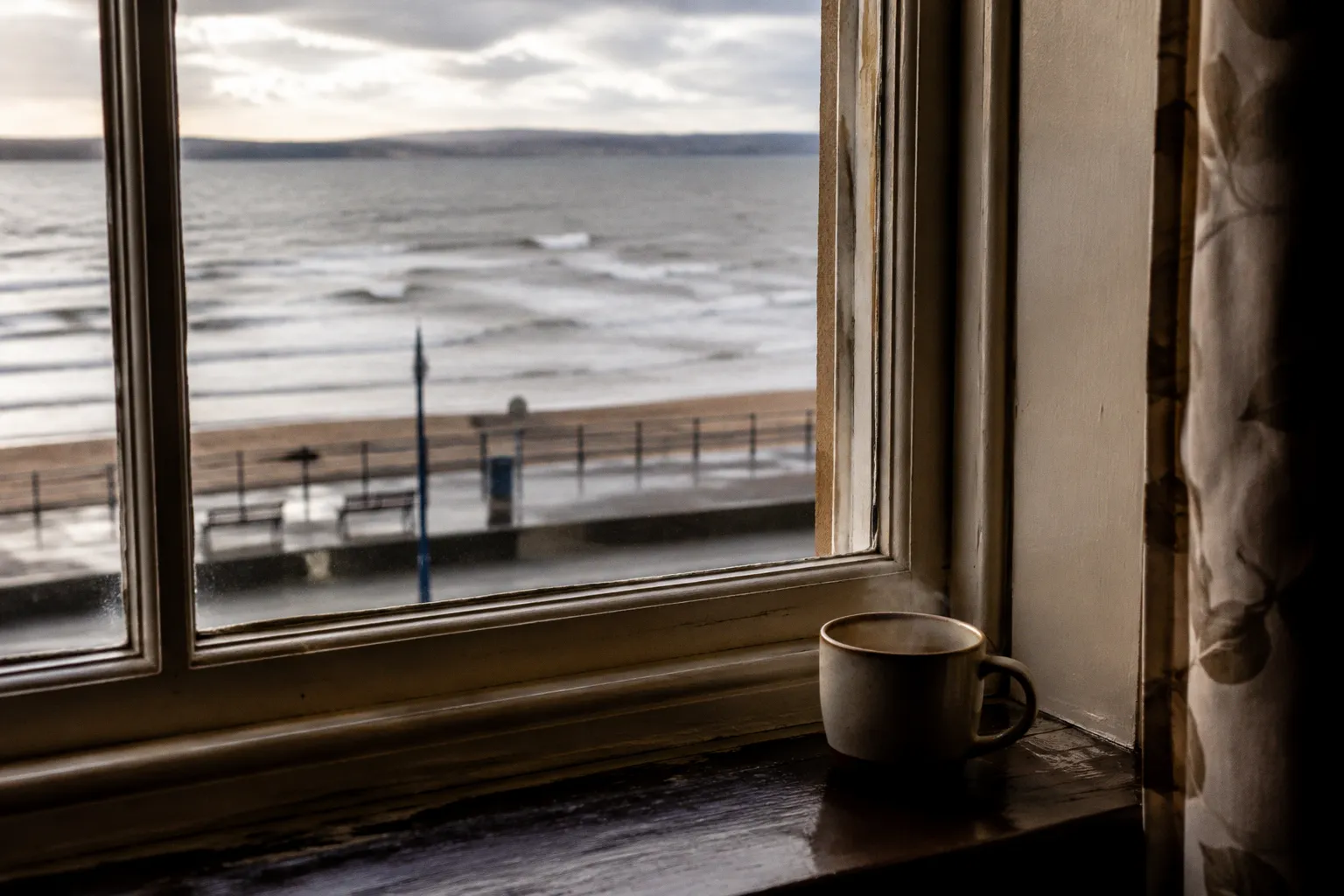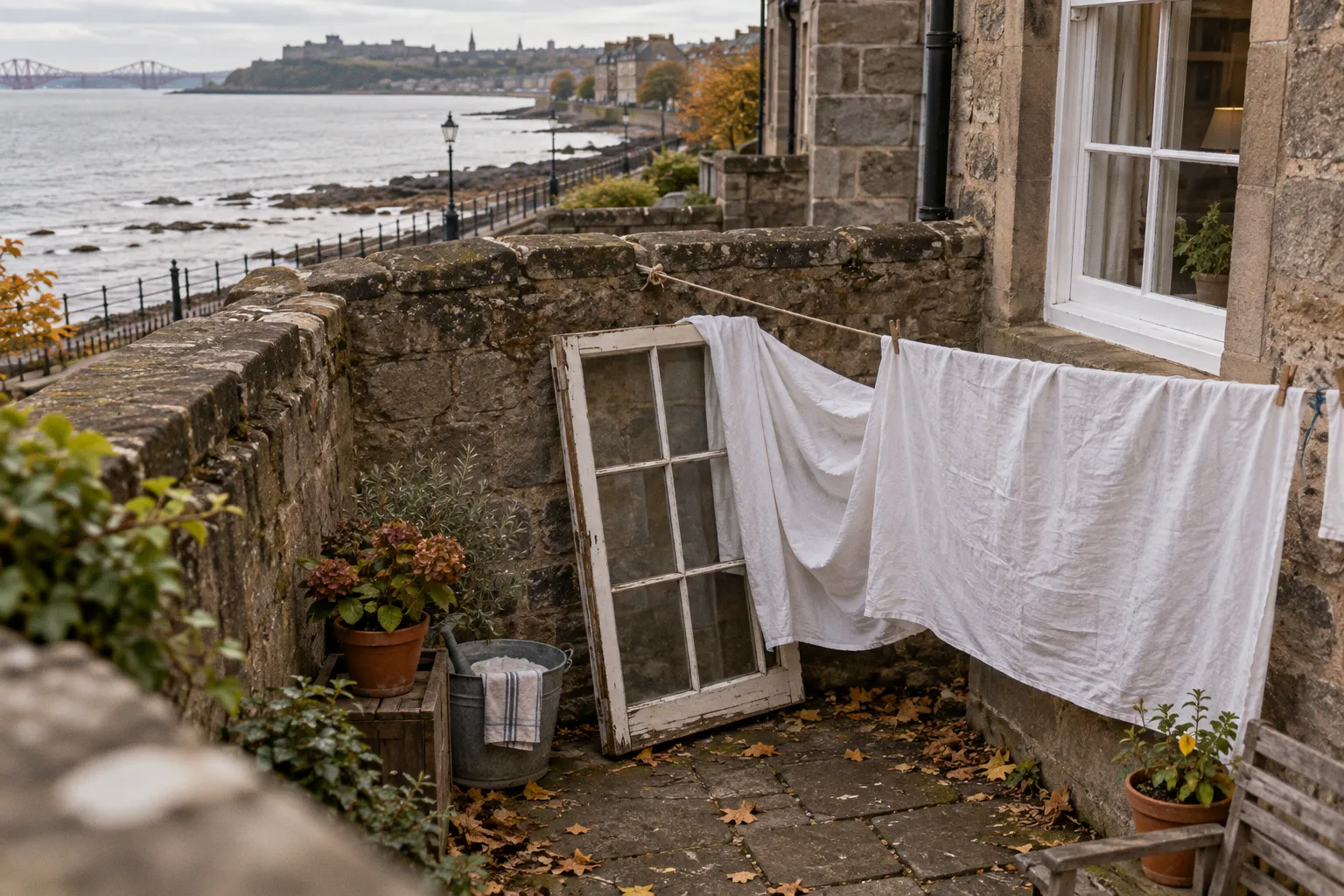
In a Portobello townhouse or a Joppa villa, the original windows may be part of the building’s character. They may also be the least forgiving part of its envelope on a gusty night.
Guest house soundproofing for coastal winds is not the same job as reducing traffic noise in a newer suburban house. The buildings are often old, the façades may be protected, and the exposure to wind off the Firth of Forth is difficult to compare from one property to the next. There is no single pane, seal or cavity depth that fixes every room. The useful work is more exacting: identify how noise is getting in, preserve what matters about the existing window, and specify an interior system that can be fitted and sealed properly.
The Acoustic Challenge of Edinburgh’s Waterfront Heritage
Edinburgh’s coastal accommodation includes converted townhouses, villas and older properties whose windows were designed for a different balance of priorities. Sash and case frames are a conspicuous part of that heritage. They also have joints, moving parts and meeting rails that can become routes for air and sound as they wear or shift.
Wind makes those weaknesses more noticeable. A steady draught through a small gap can become a whistle; a loose sash can chatter against its frame; and gusts can make a pane or fitting vibrate. Those are not all the same problem, even when a guest describes them simply as “wind noise.” A sound that comes through the glass calls for a different response from one that appears at the perimeter, and neither is necessarily solved by adding insulation somewhere else in the room.
That distinction matters in older buildings. Thick masonry may help reduce some airborne sound, but it cannot compensate for a leaky window. Nor will loft insulation address a whistle coming through the sash or a rattle in the frame. Curtains can soften a room and make it feel less exposed; they are not a reliable substitute for treating the window itself.
A sensible first step is to listen closely in more than one set of conditions. Does the noise change when the sash is pressed gently into place? Is it strongest at the meeting rail, at the edges, or across the pane? Does the frame visibly move when a gust hits? These observations are not a formal acoustic survey, but they can help a host explain the problem clearly to a joiner or glazing specialist.
In a coastal room, “wind noise” is a description, not a diagnosis. Find the route in before choosing the remedy.
Why Traditional Sash Windows Fail Against North Sea Gales
An unrestored sash can lose performance in several places at once. The glass may be thin; the timber may have moved; the sash may no longer sit squarely; and the original arrangement may have little or no effective draught-proofing. Even a well-maintained frame can leave small openings where the two sashes meet or where the moving sash runs against the box.
It is tempting to treat glass as the whole story. It is only part of it. Replacing a pane or adding a heavier one may do little for a room if air is still passing around the sash. Conversely, a draught-proofed window can feel noticeably calmer without eliminating every sound transmitted through the glass. The result depends on the condition of the existing window and on the particular noise affecting the room.
A gap does not need to look dramatic to matter. A continuous opening around a frame can provide a path for sound and air, while a loose latch or imperfect corner can produce a distinct rattle. The common thread is continuity: a seal that stops short at the corners, or fails where two parts meet, leaves the route open.
That is why a useful inspection looks at the whole assembly rather than asking only whether the glass is single or double. Check the meeting rail, the sides of the sashes, the corners, the putty and the condition of the timber. Note whether the window closes evenly and whether the latch draws it into place. A specialist can then distinguish between repairs to the original sash, draught-proofing, and the addition of secondary glazing.
For guest houses, there is a practical reason to make that distinction before work begins. A room that is merely draughty may need a different intervention from one where a frame vibrates in a gale. Choosing a system before establishing the source risks paying for an upgrade that treats the wrong path.
The Science of Secondary Glazing for Listed Properties
Secondary glazing adds a separate glazed frame to the room side of an existing window. The original sash remains in place; the new pane creates another layer, with an air space between the two. That separation can improve acoustic performance, but it is not a guaranteed result in itself. Glass type, the size and arrangement of the gap, the frame, the seals and the quality of installation all matter.
For a listed building or a property in a conservation area, an internal system may offer a way to improve comfort without changing the external appearance. That does not mean permission is automatically unnecessary in every case. The rules depend on the building’s designation and the proposed work, so owners should confirm requirements with the relevant planning or conservation authority before commissioning an installation. Reversibility can be an advantage, but it is not a substitute for checking.
Secondary glazing also needs to suit the room and the window it sits behind. A frame that is difficult to open or clean can become a nuisance in a guest room. The installer should explain how the unit will be operated, how the original sash will remain accessible, and how the new frame will meet the reveal. In a heritage property, the detail of that junction matters as much as the product description.
The performance figures often used in sales material should be read as system-specific, not as promises for every window. Results depend on the complete assembly and the conditions under which it is tested. A figure quoted for one combination of glass, frame and seal should not be transferred to a different opening without evidence. Ask for the basis of any claimed noise reduction and whether it relates to a comparable installation.
| Approach | What it may help with | What to establish before choosing |
|---|---|---|
| Repair and draught-proof the sash | Air leakage, rattling and some noise entering at the frame | Whether the timber, joints and moving parts are sound enough to repair |
| Replace the original window | A broader change to the window assembly | The impact on heritage features and whether consent is required |
| Add secondary glazing | Noise and draughts, while retaining the original window behind it | The specified glass, frame, seals, cavity and access for cleaning and operation |
No table can rank those options without knowing the building. Secondary glazing is often worth considering where the original window should remain, but a poorly fitted interior unit can disappoint just as a poorly maintained sash can. The installation is the system.
Precision Sealing: The Critical Role of BS 7386 Standards
A secondary pane cannot do its job if air can bypass it around the edges. Sealing is not the decorative last step after the glass has been chosen; it is part of the acoustic design. Gaps at corners, uneven reveals or a frame that has not been fitted squarely can compromise the result and may create their own whistles or rattles.
BS 7386 is associated with draught-proofing systems for windows and doors. It can be a useful reference when discussing seals, but invoking a standard is not enough to show that a particular installation will control wind noise. Ask the contractor to state what system is being specified, where it will be fitted, and how the corners and opening sections will be treated. If a performance claim is made, ask what test or evidence supports it and whether it applies to the proposed assembly.
For original sash windows, the right detail depends on how the sash moves and how much the frame has shifted over time. Brush or pile seals may suit some arrangements; compression seals may suit others. What matters is that the chosen seal works with the movement of the window and forms a continuous line when it is closed. A product selected without regard to the actual frame can bind the sash, wear quickly or leave a gap at precisely the point where the wind is strongest.
The same scrutiny belongs on the secondary frame. A sample corner or a clear drawing can tell you more than a broad assurance that the unit will be “fully sealed.” Ask how the installer will deal with irregular plaster, uneven timber and the meeting point between the new frame and the reveal. Those are ordinary features of older properties, not exceptional complications.
A useful conversation with a contractor might cover:
- Which seal is proposed for the original sash, and which for the secondary frame?
- How will the seal remain continuous at corners and moving joints?
- How will the new frame be fitted to an uneven reveal?
- What evidence supports any promised acoustic performance?
- How will the original window be opened, cleaned and maintained after installation?
These are not questions for their own sake. They help separate a product specification from a complete installation proposal.
The seal is not an accessory to the glass. It is one of the paths the sound has to get past.
Maximising Performance with Optimal Air Cavity Depth
The space between the original window and the secondary pane affects how the two layers work together. In general, a larger separation can improve acoustic isolation, but the best arrangement depends on the opening, the panes and the frequencies involved. There is no universal cavity depth that can be prescribed for every sash window in Edinburgh.
An installer may recommend a particular depth for a particular system. Ask what that recommendation is based on and how it fits the room’s existing reveal. A deep reveal can offer more room for a secondary frame; a shallow one may call for a different design. Simply pushing the new pane as far from the old one as possible is not a complete specification. The frame still needs to be stable, sealed and usable.
The gap also needs to be considered alongside the glass. Different pane thicknesses or an acoustic laminated pane may be proposed to help with particular sound conditions, but the combination should be chosen as a system. If a supplier gives a headline reduction figure, ask whether it describes the glass alone, a tested window assembly, or a completed installation. Those are not interchangeable claims.
There are practical details to settle as well. Will the secondary unit open for cleaning? Can the original sash still be reached? Is there enough space for curtains or blinds to operate without fouling the frame? In a guest room, an acoustic improvement that makes the window awkward to use is a poor piece of design.
A careful specification therefore brings several parts together: the state of the original window, the position and construction of the secondary frame, the type of glass, the cavity, the sealing detail and the way the room will be used. None of those items works in isolation. The installer should be able to explain the choices in relation to the actual opening, not just repeat a standard product description.
A quieter room starts with the window that is there
For an Edinburgh guest house with original sash windows, the first decision is not whether to buy the thickest glass or the most elaborate frame. It is whether the main problem is leakage, vibration, sound through the pane, or a combination of all three. That diagnosis guides the work and helps avoid replacing a heritage feature when repair or an internal addition may be more appropriate.
Secondary glazing can be a strong option where the original window needs to remain, but its performance depends on the whole installation. Check the planning position for the specific property. Ask for the proposed glass, seals, cavity and frame details in writing. Treat acoustic figures as claims to be substantiated, not as universal outcomes.
Coastal wind will always be part of the setting. A well-considered window should make it less of a presence in the bedroom: not by promising silence in every gale, but by preventing avoidable gaps, rattles and weak junctions from turning exposure into a sleepless night.